A soil moisture meter costs less than a bag of feed, somewhere between 7 and 15 pounds (about 9 to 19 dollars) for the simple probes sold at most garden centres and online, and it removes the single biggest source of waste in lawn care: watering when you cannot actually see whether the lawn needs it. The surface of a lawn tells you almost nothing about what is happening down where the roots live. Grass can look green and feel dry on top while the root zone below is still damp, or look perfectly healthy while the soil beneath it has gone bone dry and is days away from browning. A meter reads the moisture at root depth, which is the only number that matters when you are deciding whether to turn the sprinkler on, and it ends the guesswork that leads to both over watering and drought damage.
What a moisture meter actually measures
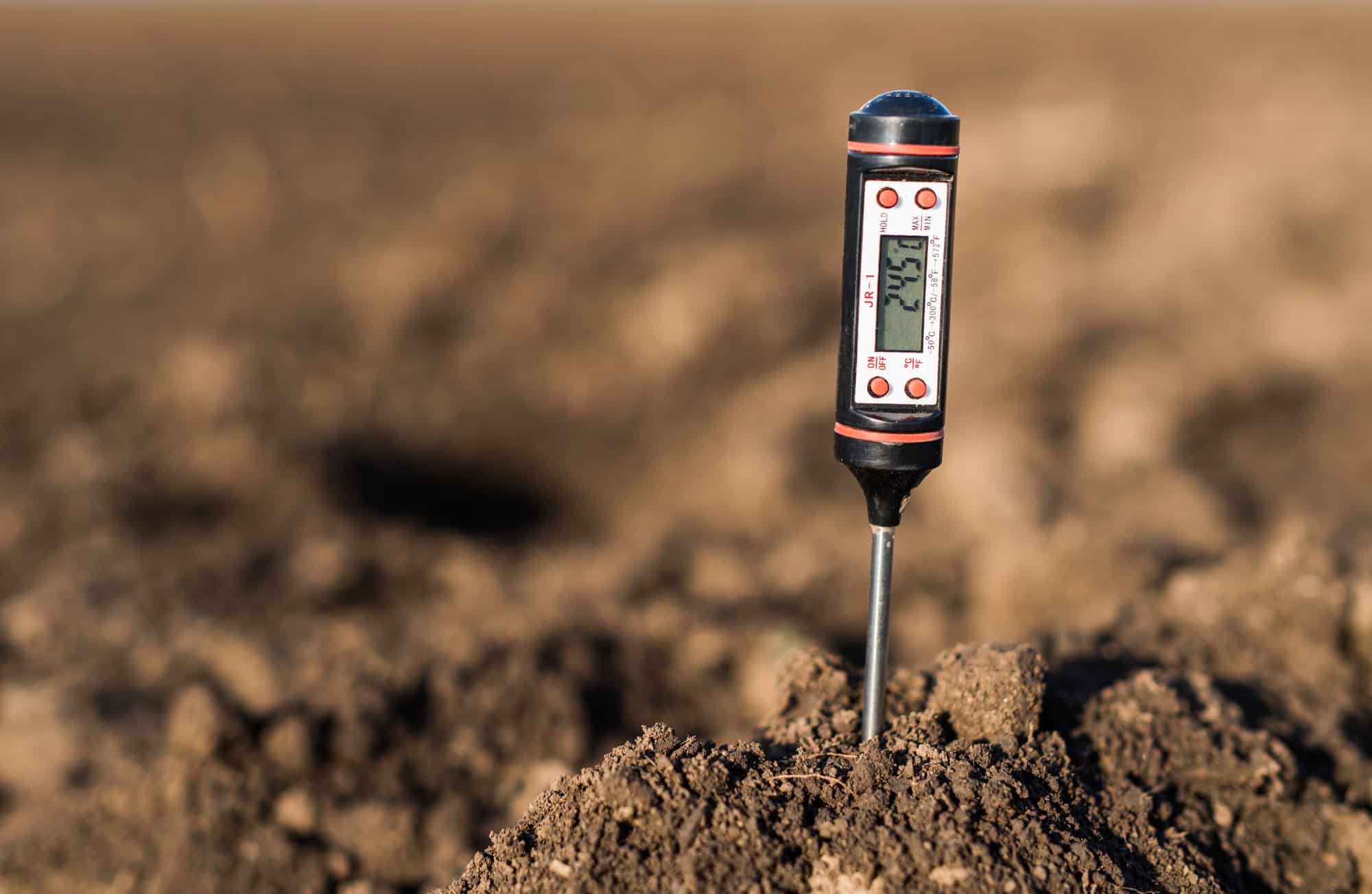
Most inexpensive garden meters work by passing a tiny electrical signal between two metal prongs and reading how easily it travels through the soil. Water conducts, dry soil resists, so the meter converts that resistance into a reading, usually a needle on a dial marked from dry through moist to wet, or a number from one to ten. The popular battery free probes, such as the XLUX type at around 10 pounds (about 13 dollars), work exactly this way and need no power at all. More expensive digital and smart meters do the same job with a screen and, in some cases, a phone app that logs the trend over time.
It helps to understand what professionals are actually trying to track, because it explains how to read your own meter sensibly. Soil scientists measure volumetric water content, which is simply the volume of water held in a given volume of soil, written as a percentage. A reading of 25 percent volumetric water content means a quarter of that scoop of soil, by volume, is water. Two numbers bracket the useful range. The upper one is field capacity, the amount of water soil holds a day or two after heavy rain or watering, once gravity has pulled away the excess. Field capacity depends heavily on soil type, sitting at roughly 15 to 25 percent for sandy soils, 35 to 45 percent for loams, and 45 to 55 percent for clay. The lower one is the wilting point, where the remaining water is held so tightly that grass roots can no longer pull it free and the plant starts to wilt. Healthy lawn care is about keeping the soil somewhere between those two points, and a meter is what lets you see where you are within that band instead of guessing.
How to use one properly on a lawn
The most common mistake is pushing the probe in just a couple of centimetres and reading the surface, which is the layer that dries first and tells you the least. Push it down to root depth, around 10 to 15cm (4 to 6 inches), so you are reading the soil the grass actually drinks from. Take several readings rather than one, because moisture varies enormously across a single lawn. A spot in full sun will read far drier than one in shade, the top of a slope drains faster than the bottom, and soil near walls, fences and paving dries out quickest of all. Four or five readings across the lawn give you a real picture instead of a single misleading number.
To turn the readings into a watering decision, first establish what full looks like for your soil. After heavy rain or a deep watering, wait 12 to 24 hours for the excess to drain, then take a reading. That value is your field capacity, the practical maximum your soil holds. From there, the simple rule is to water again when the root zone has dried to around half of its available range, which on a one to ten dial usually means acting once the reading drops into the dry zone at roughly three or four rather than waiting for it to hit one. Read at a consistent time of day, ideally morning, so your readings are comparable from day to day. Cross check the meter now and then against a long screwdriver pushed into the soil, which should slide easily through moist ground and stall in dry, and clean the probe after each use rather than leaving it stuck in the lawn, because the metal corrodes and the readings drift if you do.
What the readings reveal that your eyes miss
The real value of a meter is in the surprises. The most common is a lawn whose surface looks and feels dry but reads moist at root depth, which happens constantly after light rain or a short sprinkle. The grass looks thirsty, instinct says water, but the meter says the roots have plenty, and watering would only waste it and encourage the shallow rooting and disease that come with constantly damp soil. The opposite case is more dangerous. A lawn can stay green on top while the root zone has gone dry, because the grass is coasting on its reserves and is about to brown suddenly. The meter catches that days before your eyes do and tells you to water now, while it still helps.
A meter also maps the hidden faults in a lawn. A patch that reads wet for days after everywhere else has dried is usually a sign of compaction or poor drainage, where water cannot move down and roots are slowly suffocating, which is the same ground that grows moss and breeds disease. That is a clue to look at aeration, though timing matters and we explain why aerating in the heat of midsummer can backfire. A patch that always reads dry no matter how much you water points the other way, towards a hydrophobic dry patch where the soil or thatch has started repelling water rather than absorbing it, which needs a wetting agent or aeration to break. Readings that drop fastest along edges and beside paving explain why those strips brown first, as reflected heat and faster drainage gang up on them.
Treat a cheap meter as a guide to trends, not a laboratory instrument. The conductivity probes can be thrown off by fertiliser salts in the soil, which make the ground read wetter than it really is for a while after feeding, and individual meters drift over time. That is why it pays to cross check against simple field tests rather than trusting a single reading blindly. The footprint test and a screwdriver probe cost nothing and confirm what the meter is telling you. Used together, and combined with deep, infrequent watering as set out in our guide to watering a lawn deeply, a meter turns watering from a daily guess into a decision you can actually see the reason for, which saves water, lowers bills and grows a deeper, tougher lawn.
Choosing a meter and what to expect from it
For a home lawn, an inexpensive analogue probe at around 7 to 12 pounds (about 9 to 15 dollars) does almost everything you need, and the fact that it needs no batteries means it is always ready in the shed. The main thing to look for is a probe long enough to reach root depth, since some of the cheapest models have short prongs that only sample the surface and so report the very layer you most want to ignore. Digital meters that read moisture, light and pH together can be useful if you also want to track shade and soil acidity, and smart probes that log readings to a phone suit anyone managing a larger lawn or wanting to watch the trend over a dry month, but neither is necessary to make better watering decisions than guesswork allows.
Set your expectations correctly and a basic meter will serve you for years. It will not give you a laboratory grade percentage, and two meters side by side may not read identically, but that does not matter once you learn what your own meter shows for soil that is too wet, just right and too dry. Use it the same way each time, at the same depth, at the same time of day, and read it as a relative guide rather than an absolute figure. Within a couple of weeks you will know your lawn’s pattern: which areas dry first, how long the root zone holds water after a soaking, and the exact reading at which it is time to water. That knowledge, far more than the gadget itself, is what keeps a lawn green through summer without a drop of water wasted.