Aeration is one of the best things you can do for a tired, compacted lawn, but doing it in the middle of summer is a mistake that can leave the grass worse than before. The reason is timing, not technique. Cool-season grasses are already under their heaviest stress in summer heat, and punching holes through them at that moment opens the crown of every plant to drought and bakes the soil out through the very holes you have made. For most lawns the right move in midsummer is to wait. Aerate in autumn instead, when the grass is recovering and has weeks of growing weather ahead to heal. The exception is warm-season grass, which thrives in heat and can be aerated now, and that distinction decides everything.
What Aeration Does and Why It Helps
Over time, foot traffic, mowing, rain and the natural settling of soil press the ground tight, squeezing out the air spaces that roots depend on. In compacted soil, water runs off instead of soaking in, fertiliser cannot reach the root zone, and roots cannot push through to find moisture, so the lawn thins and struggles even when you feed and water it. Aeration breaks that hardpan open. A hollow-tine or core aerator drives hollow spikes into the turf and pulls out small plugs of soil, typically 5 to 10cm (2 to 4 inches) long, leaving channels that let the surrounding soil expand and breathe. Turf specialists put the relief from core aeration at up to around 30 per cent reduction in compaction, with a matching jump in how well water and nutrients move down to the roots.
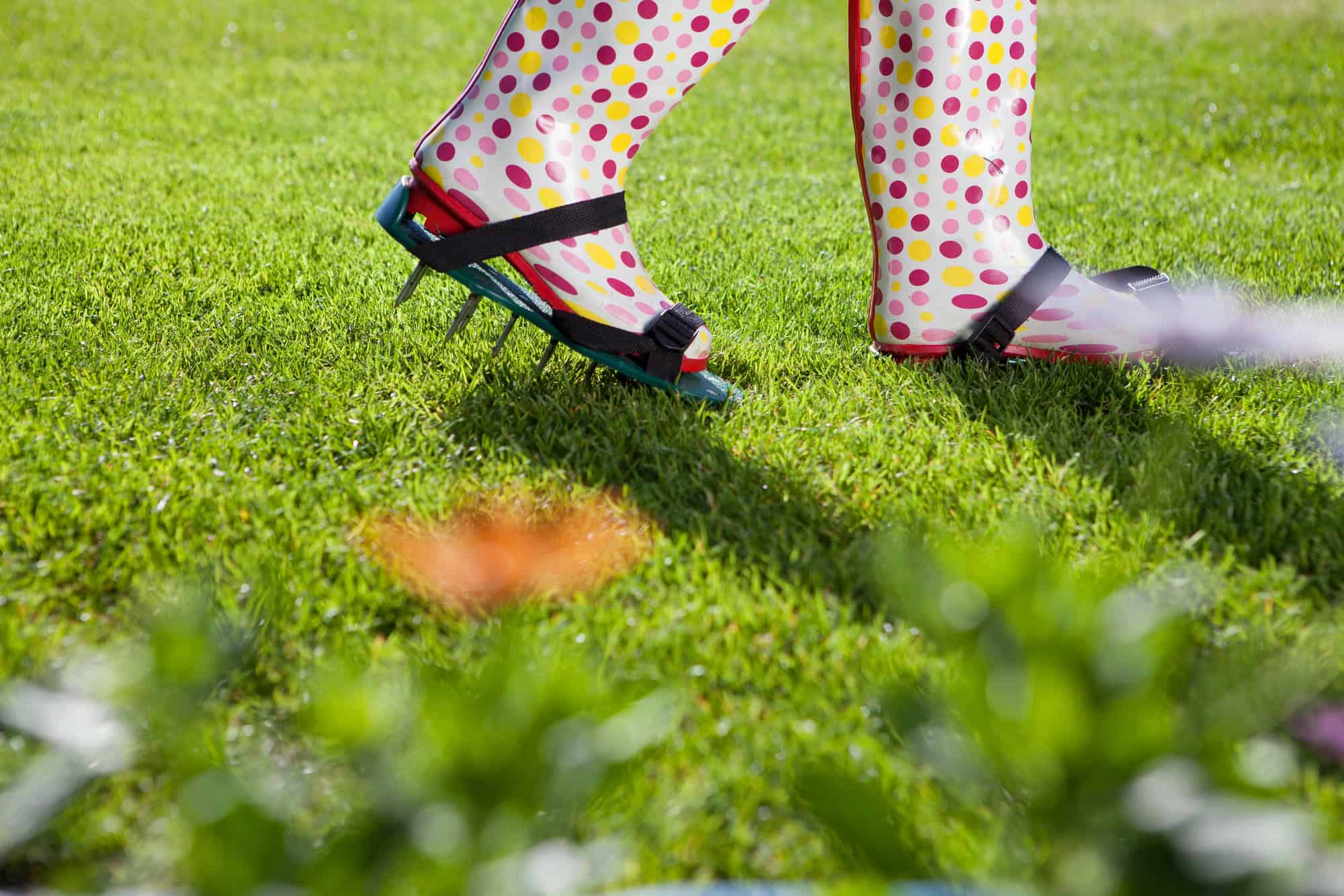
A solid-tine or spike aerator, including the strap-on aerating shoes many people own, pushes solid spikes in without removing any soil. It is gentler and useful for routine maintenance on a lawn that is not badly compacted, but it relieves perhaps only 10 per cent of compaction and can even press the soil tighter around each hole. For genuinely hard, tired ground, hollow-tine coring is the treatment that works, which is also why it is the more disruptive of the two and the more important to time correctly.
Core aeration does a second useful job beyond relieving compaction: it helps control thatch. Thatch is the spongy layer of dead stems and roots that builds up between the green grass and the soil, and a thick layer stops water and air reaching the roots much as compaction does. When a hollow tine pulls a plug, it brings soil microbes up into contact with the thatch and opens the layer so it breaks down faster. The soil cores left scattered on the surface after coring are part of the process, not mess to clear away: leave them to dry for a day or two, then break them up by raking or simply by mowing over them, and the soil works back down into the holes and across the thatch, helping it decompose. This is exactly why timing the job for a period of active growth is so important, because the breakdown and the knitting-over both depend on the grass and the soil life being busy. Do it in autumn on a cool-season lawn and the whole cycle, from coring to healed turf, runs in a couple of weeks; our guide to what thatch is and why a thick layer could be killing your lawn explains how the two problems overlap.
Why Midsummer Is the Wrong Moment for Most Lawns
Whether summer aeration helps or harms comes down to what type of grass you have. Cool-season grasses, the fescues, ryegrasses, bent grasses and meadow grasses that make up most temperate lawns, do their growing in the milder weather of spring and autumn. Summer is their hardest season, and in a hot, dry spell many of them slow right down or slip into a protective dormancy, going pale and slow-growing to conserve energy until cooler, wetter weather returns. Aerating a lawn in that state stacks one stress on top of another at the worst possible time.
The damage is concrete, not vague. Coring a cool-season lawn in midsummer opens the crown of every plant, the growing point at the base, directly to heat and drying air just when it is least able to cope. The holes themselves accelerate moisture loss: each channel exposes more soil surface to the sun, so the ground dries out faster through the very openings meant to help it, and on a lawn already short of water that can tip stressed grass into dead grass. Recovery is slow because the grass is not growing vigorously enough to knit the holes closed, so the lawn sits open and damaged for weeks. Worse, those open holes in warm soil are perfect seedbeds for summer weeds such as crabgrass, which germinate in the bare, sunlit gaps and colonise the lawn while the grass is too weak to compete. You can end up creating a weed problem in the act of trying to improve the turf.
When to Aerate, and the One Lawn That Can Do It Now
For cool-season lawns, the right window is autumn. The grass is coming back into active growth as the heat fades, the soil still holds warmth, and there are weeks of mild, moist weather ahead for the holes to heal and the roots to thicken before winter. The accepted sweet spot is roughly the start of September to the middle of October, a little earlier in colder northern regions and a little later in milder southern ones. Spring is a workable second choice once the grass is growing strongly, but autumn is better because it does not coincide with the flush of weed-seed germination that spring brings. Aerating then, rather than now, gives you all of the benefit and none of the heat-stress risk.
The exception is the warm-season lawn. Grasses such as bermuda, zoysia, centipede and St Augustine do their fastest growing in the heat of summer, so for them summer is the ideal time to aerate: they recover quickly, knitting the holes closed within days because they are growing at full tilt. If you are not sure which you have, the simplest tell is how the lawn behaves in a heatwave. A lawn that goes pale and slows down in peak heat is cool-season and should wait for autumn; a lawn that is greenest and growing hardest in the hottest weeks is warm-season and can be cored now. Our guide on why compacted soil could be the real reason your lawn looks tired helps you confirm compaction is the problem in the first place.
So what should you do if a cool-season lawn looks tired and compacted in midsummer and you are itching to act? Hold off on full aeration and support the grass through the heat instead. Water deeply and less often to draw the roots down, raise the mowing height so the longer leaf shades the soil and the crowns, and leave the clippings to return moisture and nutrients. If one small, shaded, well-watered patch is badly compacted and you cannot bear to wait, a few gentle passes with a garden fork there will relieve it without the wholesale stress of coring the whole lawn; our piece on hand aerating with a fork on small lawns covers the method. But the full job, the hollow-tine coring that really opens hard ground, belongs in autumn.
The instinct to fix a struggling lawn straight away is understandable, but aeration is the one job where acting at the wrong time does the opposite of what you intend. Core a stressed, half-dormant cool-season lawn in July and you dry out the soil, expose the crowns, invite weeds into the holes, and leave the grass too weak to recover for weeks. Wait for autumn and the same job heals in days and transforms the lawn. Read your grass type, support it through the heat now, and save the aerator for the season the grass can actually make use of it.