You can keep a lawn largely weed-free without spreading anything that forces you to fence off the garden from children and pets for days. The safest approach is also the most effective long term: pull or spot-treat the weeds you have, then build grass so thick that new weeds cannot find space to germinate. Where you do reach for a product, choose a natural one and follow one rule above all others, which is to let any treatment dry fully before letting children or animals back on the grass. Most natural sprays are safe again within an hour or two of drying.
Why Thick Grass Is the Real Weed Killer
Weeds are opportunists. Dandelions, plantain, clover and the rest establish in the gaps, the thin, bare or compacted patches where grass is struggling. A dense lawn shades the soil surface so completely that weed seeds never get the light they need to germinate, and the grass roots take the water and nutrients before a weed seedling can. This is why professional groundkeepers treat weed control as mostly a feeding and mowing job rather than a spraying one. Fix the conditions that let weeds in and you remove the need for most chemicals entirely.
The practical steps are simple. Mow high, keeping a family lawn at around 4 to 5cm (1.5 to 2 inches), so the grass shades out low-growing weeds rather than being scalped short where they thrive. Feed in spring and early summer with a gentle, natural fertiliser to thicken the sward. Overseed any thin or bare areas in spring or early autumn so grass, not weeds, fills the gap. And relieve compaction with a garden fork, because hard, airless soil favours weeds like plantain that tolerate it while grass suffers.
Hand Weeding: Still the Safest Method There Is
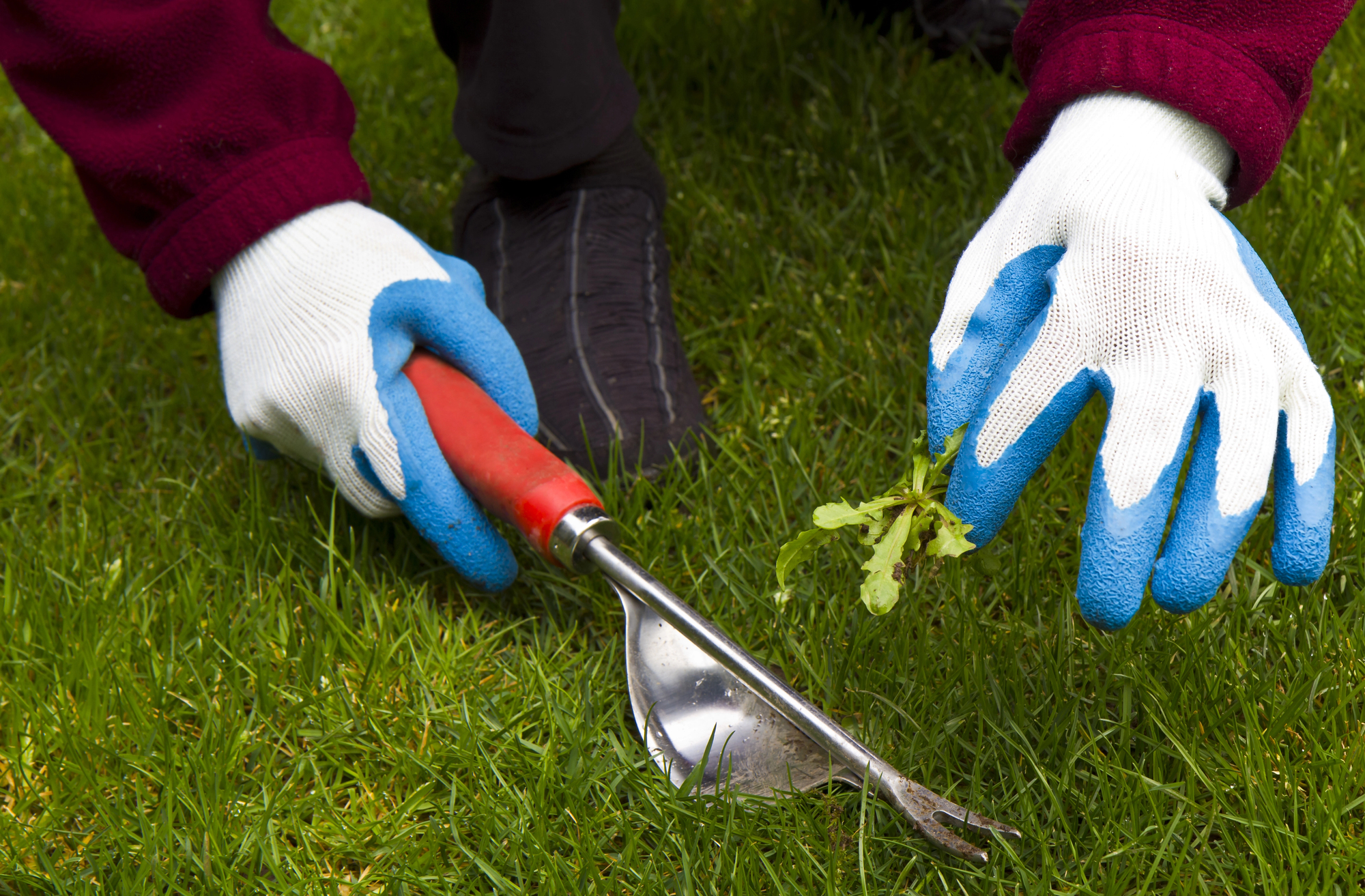
For a small number of weeds, nothing beats pulling them out, and there is no re-entry time to worry about at all. The trick with taprooted weeds like dandelions and dock is to remove the entire root, because any piece left behind regrows. A long, narrow tool called a daisy grubber or a dandelion weeder, costing around 6 to 12 pounds (8 to 15 dollars) from Wickes, Amazon, Home Depot or any garden centre, levers the whole root out in one go. Weed after rain or after watering, when the soil is soft and the root slides out rather than snapping.
For wider patches of low, spreading weeds such as clover or speedwell, a spring-tine rake dragged firmly across the lawn before mowing lifts the runners up so the mower cuts them, weakening them over several mows. Hand weeding takes a little time, but on a typical family lawn a ten-minute pass once a week through the growing season keeps the weed population down to a level the grass itself can then suppress, with nothing applied that anyone needs to stay away from.
It helps to know your enemy, because the most common lawn weeds respond to different handling. Dandelions, daisies and plantain are taprooted, so they come out cleanly with a grubber when the soil is damp and rarely return if the whole root is lifted. Clover, creeping buttercup and speedwell spread sideways by runners or low stems, so raking before mowing and then feeding the grass to outcompete them works better than trying to dig each one. Annual weeds like chickweed and annual meadow grass set seed quickly, so the priority there is removing them before they flower, which stops next season’s flush before it starts. Matching the method to the weed saves a great deal of wasted effort.
Timing helps too. Weeds are easiest to weaken when they are growing strongly in late spring and early summer, because they are pulling resources up into leaf and flower and a setback then hits them hardest. A weed dug or knocked back in June has far less chance to recover and seed than one left until late summer. If you are using any product, apply it on a dry, still day so it stays on the target and does not drift, and never just before rain, which would wash a contact treatment off before it has worked and send it into drains.
Natural Products and When the Lawn Is Safe Again
When you do want a product, the gentlest option for whole-lawn weed and moss control is a natural feed such as Westland SafeLawn, a granular fertiliser made from natural ingredients with reduced iron to limit staining and transfer onto skin and paws. A 2.8kg box costs around 9 to 10 pounds (roughly 12 dollars) and covers about 80 square metres. Because it works by feeding the grass to crowd weeds out rather than by spraying a toxin, the manufacturer states children and pets can use the lawn safely once the granules have been watered in and the surface is dry.
For spot-treating individual weeds, acetic acid (concentrated vinegar) products are widely sold as pet-safe and child-safe weed killers. They burn off the top growth of the weed on contact, and the guidance from suppliers is consistent: keep everyone off the treated area until the spray has dried, after which the lawn is safe to use. Vinegar-based sprays do not always kill the root of established perennial weeds, so they suit annual weeds and seedlings best, and may need repeating. They are non-selective, meaning they scorch grass too, so apply carefully to the weed alone with a targeted nozzle rather than spraying broadly.
Iron-based products deserve a word of caution that surprises many people. Liquid iron and iron-rich moss and weed treatments are often marketed as natural, and once dried they are touch-safe, but pets that graze or nibble grass should be kept off lawns treated with iron-based granular products for around two weeks, because ingesting iron is harmful to animals. The lesson is to read the specific label every time rather than assuming that natural means there is no waiting period. The only no-wait options remain hand weeding and improving the grass itself.
What to Avoid and the Mistakes That Cost You
The biggest mistake is reaching for a strong selective herbicide or a weed-and-feed product on a lawn used by young children or pets and then letting them straight back on. Conventional lawn herbicides carry their own re-entry guidance, often until the product has dried or for a stated period, and that guidance exists for a reason. If you ever use one, follow the label to the letter, keep everyone off until it says it is safe, and water it in if instructed. A second mistake is homemade salt-and-vinegar brews poured liberally on the lawn, which can sterilise the soil so that nothing, grass included, grows back for a long time.
The third mistake is treating symptoms while ignoring the cause. Spray the dandelions today and, if the lawn stays thin and the soil stays compacted, more will appear by next month. Overseeding deserves its own mention as the most child-safe and pet-safe weed control of all, because it adds nothing but grass. After clearing weeds from a patch, scratch up the surface, scatter a hard-wearing seed mix such as a ryegrass-based family lawn blend, around 5 to 8 pounds (6 to 10 dollars) for enough to cover a typical bare area, keep it damp, and let new grass claim the space before a weed can. A bag of seed sitting in the shed is the cheapest insurance a lawn can have, since every gap filled with grass is a gap denied to dandelions. Put the effort into feeding, mowing high and overseeding, and the weed problem shrinks year on year until the occasional hand-pull is all that is left. That is the version of weed control that keeps a lawn safe for the people and animals who actually use it, which is the whole point of having a lawn in the first place.