Small, round, straw-coloured spots scattered across a summer lawn, each roughly the size of a coin and sometimes joining into bigger bleached patches, are most often the lawn disease called dollar spot. It is a fungus, it loves exactly the warm days and cool, dewy nights that summer delivers, and the good news is that you can usually beat it without ever reaching for a chemical, because the conditions that let it spread are largely ones you control. The trick is reading the spots correctly, because the same lawn can show several different problems that look similar from a distance, and the cure for one is useless against another. Here is how to identify what you are actually looking at and how to put it right.
How to Identify Dollar Spot
Dollar spot is caused by a fungus, Clarireedia jacksonii, and it shows three telltale signs. First, the spots are small and roughly circular, typically 2 to 6cm (1 to 2.5 inches) across, bleached to a tan or straw colour, and on a closely mown lawn they really do look like scattered silver dollars, which is where the name comes from. Second, and this is the detail that confirms it, look closely at an individual grass blade inside a spot. You will see a tan or bleached lesion running across the blade, often shaped like an hourglass and edged with a reddish-brown or purple border. That hourglass band is the signature that separates dollar spot from simple drought browning. Third, on dewy mornings you may spot a fine, white, cobweb-like growth, the fungal mycelium, sitting on the affected grass, which burns off as the sun dries the lawn.
The conditions tell you as much as the symptoms. According to turf pathologists at Penn State, dollar spot thrives in temperatures between roughly 15 and 32 degrees C (60 to 90 degrees F) with humid days and cool nights that leave long dews, which is why outbreaks build through summer and peak in late summer. The fungus is most aggressive on lawns short of nitrogen, because hungry, slow-growing grass cannot outgrow the infection or repair the damaged leaf. That last point is the key to the whole problem, and it points straight at the cure.
Treating It Without Chemicals
For a home lawn, the first and most effective treatment is to feed it. A light dose of nitrogen pushes the grass into steady growth so it grows out the infected leaf tissue faster than the fungus can spread, and a well-fed lawn is naturally far more resistant. Reach for a slow-release summer feed rather than a quick high-nitrogen hit, because a gentle, sustained supply avoids forcing soft, disease-prone growth. A spring and summer feed with an NPK around 11-5-5 costs roughly £39/$49 for a 25kg bag covering about 1000m2 at 25g per square metre, and lighter, gentler options such as a 6-1-3 lawn feed are sold at most garden centres, B&Q, and Amazon for around £12/$15. Apply at the rate on the box and water it in. In many cases the spots stop spreading within a week or two as the grass thickens.
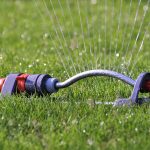
The second treatment is to break up the moisture the fungus depends on. Dollar spot needs long periods of leaf wetness to spread, so anything that dries the grass sooner starves it. Water deeply but infrequently, and water in the early morning rather than the evening, so the blades dry quickly in the day instead of staying damp all night. A single soak of around 15 to 20mm (just under an inch) once or twice a week encourages deep roots and lets the surface dry between waterings, which is far better than a daily sprinkle that keeps the lawn permanently moist. On lawns prone to heavy dew, dragging a hose or a long cane across the surface in the morning to knock the dew off, a trick borrowed from greenkeepers called dew whipping, removes the film of water the fungus rides on and noticeably slows the disease.
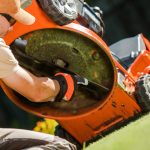
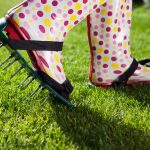
Two more cultural fixes round it out. Improve airflow and reduce thatch, because a thick thatch layer holds moisture and harbours the fungus, so scarifying out excess thatch in early autumn and aerating compacted ground both help the surface dry. And collect your clippings while the disease is active rather than mulching them back, because the fungus travels on infected clippings and on mower blades, so bagging the cuttings and rinsing the mower deck between uses limits how far you spread it. Mow at a sensible height, never scalping, since longer grass carries more leaf area to absorb the damage and recovers faster.
When to Reach for a Fungicide, and What Else It Might Be
Most home lawns never need a fungicide for dollar spot, because feeding and watering correctly clears it. If you have tried the cultural fixes and the disease is still spreading aggressively across a prized lawn, the active ingredients that work are propiconazole and chlorothalonil. A consumer propiconazole concentrate costs around £30/$42 for a bottle that makes many litres of spray, sold through specialist turf suppliers and Amazon. Two rules matter if you go this route. Apply at the labelled rate and timing, and rotate between different chemical groups rather than spraying the same product repeatedly, because dollar spot is well known for developing resistance to a fungicide used on its own too often. Treat chemicals as the last line, not the first.
Before you treat anything, rule out the look-alikes, because getting the diagnosis wrong wastes money and time. Simple drought stress browns the grass in irregular, larger areas that follow the dry, sunny parts of the lawn and recover after rain, and the blades show no hourglass lesion. Red thread disease produces pinkish-red threads at the leaf tips and tends to favour nitrogen-starved lawns in summer too, but the colour and the fine red strands set it apart. Chafer grub or leatherjacket damage shows as patches that lift easily like a loose carpet because the roots have been eaten, often with birds or animals tearing at the turf. And the green-ringed dead patches left by dog urine are a nitrogen burn, not a fungus at all. The hourglass lesion on the blade is your single most reliable check for dollar spot, so get down on your knees and look before you act.
What happens if you ignore dollar spot is a slow thinning that opens the door to bigger problems. The small spots merge into larger straw-coloured patches, the grass density drops, and the bare, weakened areas are quickly colonised by weeds and moss that are far harder to shift than the original disease. On a lawn that was simply hungry, that whole decline can be reversed with a bag of feed and a change to your watering routine. Read the spots correctly, feed the grass, dry the surface, and dollar spot usually retreats as quietly as it arrived, leaving you to enjoy the rest of the summer rather than fighting your lawn through it.
Stopping It Coming Back Next Summer
Beating dollar spot once is easier than keeping it away, and the prevention work is the same handful of habits that produce a healthy lawn anyway. The foundation is steady, balanced feeding through the growing season so the grass is never starved of nitrogen during the warm, dewy weeks when the fungus is active. A lawn fed little and often with a slow-release product stays dense and keeps growing out minor infection before it takes hold. Pair that with a watering routine of deep, infrequent soaks in the early morning, never light evening sprinkles, so the surface dries each day and the fungus loses the long leaf wetness it needs.
Over the longer term, the makeup of the lawn itself decides how often you fight this disease. Some grass species and cultivars carry far more natural resistance to dollar spot than others, and if you overseed a chronically affected lawn each autumn with a modern dollar-spot-resistant perennial ryegrass or fescue blend, you gradually shift the balance in your favour. A 1.5kg box of quality overseeding mix costs around £25/$32 and covers roughly 50m2 at the 35g per square metre rate, available from B&Q, Amazon, and garden centres. Add an early-autumn programme of scarifying out thatch and aerating compacted ground so the surface dries quickly and the roots run deep, and you build a lawn that shrugs off the warm, humid spells that would have freckled it with straw-coloured coins the summer before.