
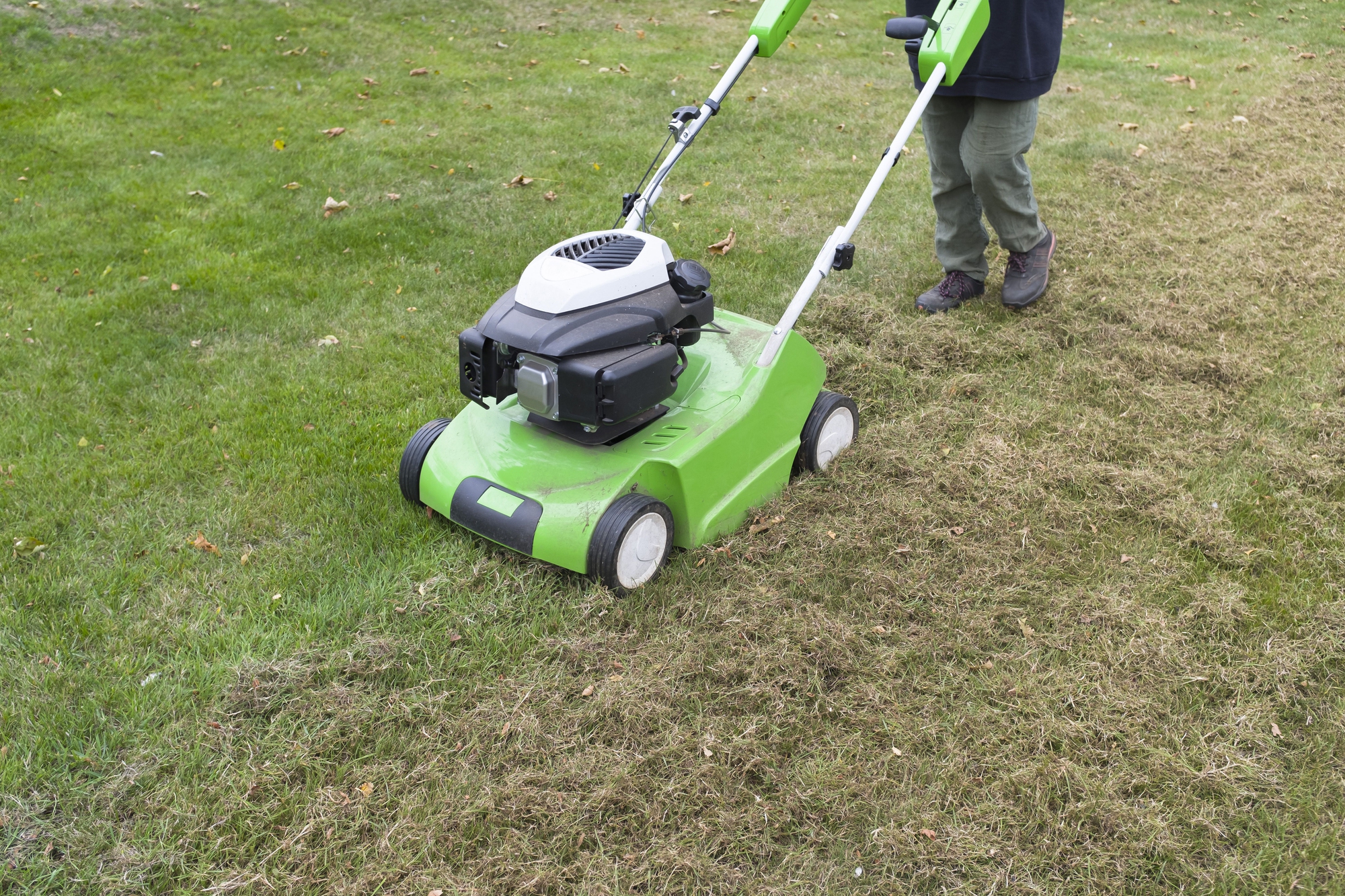
If your lawn sinks slightly underfoot in summer, like walking across a thin mattress, the cause sits just below the green blades. That soft, springy feeling points to thatch, a dense band of dead and living stems packed between the grass leaves and the soil surface. A thin layer of it helps a lawn. A thick one starves the grass of water and air at the exact moment summer heat makes both scarce.
The spongy sensation is worth acting on fast. A thatch band thicker than about 1cm (roughly half an inch) traps water at the surface, drives roots to stay shallow, and hands fungal diseases a warm, damp place to spread. Get the balance right and the same layer shields roots from heat and holds moisture through a dry spell. This guide shows how to tell which side of that line your lawn sits on, and what to do about it in the middle of the growing season without tearing the turf apart.
What That Spongy Feeling Actually Tells You
The bounce underfoot comes from a mat of tough plant material that resists rotting down. Thatch is made mostly of lignin-rich tissue: stem bases, crowns, and old roots. Grass leaves break down quickly, but these woody parts decompose slowly, so they pile up between the living lawn and the earth. When the mat grows thicker than the soil microbes can digest, it turns spongy and starts to work against you.
Walk across the lawn in bare feet or press a heel down firmly. A healthy sward feels firm with a little give, and the grass springs straight back. A thatchy one feels like a sponge or a trampoline, and the blades rebound slowly. You will often find the problem worst on lawns that get frequent light watering and heavy feeding, both of which push top growth faster than the soil life can recycle it. Moss sitting on the surface adds to the same soft, uneven feeling and often travels with a thick thatch layer.
Summer makes the sensation obvious for a second reason. Warm, dry weather pushes cool-season grasses to lean on their surface roots, and a thick thatch band keeps almost the entire root mass trapped in the top 2cm to 3cm (about an inch) of the profile. The lawn then wilts fast in heat, browns in scattered patches, and feels most bouncy where the mat is deepest. The sponginess is both a symptom of a problem and a warning of worse trouble to come once the temperature climbs.
How Thatch Builds Up Faster Than It Breaks Down
Thatch is a balance between what the grass adds and what soil organisms remove. Four things tip that balance the wrong way, and most gardens with a spongy lawn have at least two of them at work.
The first is shallow watering. Light daily sprinkling trains roots to hug the surface, feeding more root and stem tissue into the exact zone where thatch forms. Deep, infrequent soaking sends roots downward instead, and turf specialists at Penn State Extension link deep watering to thinner thatch for this reason. Water enough to wet the top 15cm (6 inches) once or twice a week, rather than a little every evening. A tuna tin left on the grass catches about 15mm of water, which is a useful gauge of when to stop.
The second is overfeeding. Heavy nitrogen drives fast leaf and stem growth, and the plant then produces tissue quicker than microbes can rot it down. A lawn hit with high-nitrogen feed every few weeks builds thatch far faster than one fed two or three times a year. Aim for a total of roughly 100 to 150g of nitrogen per square metre spread across a whole year, split into a spring feed, an early summer feed, and an autumn feed, not a heavy dose every month.
The third is the grass type itself. Spreading grasses such as Kentucky bluegrass and creeping bents throw out horizontal stems that pile into the mat. Tuft-forming perennial ryegrass and tall fescue produce far less. If you overseeded with a fine ornamental or bowling-green mix, expect to manage thatch more often than a neighbour with a hard-wearing ryegrass lawn.
The fourth is soil life. Earthworms and fungi are the workforce that eats thatch, dragging it down and blending it with soil. Heavy use of fungicides and some insecticides kills that workforce, and the mat then grows unchecked. A lawn treated hard with chemicals often carries more thatch than a neglected one next door, which catches out people who assume more treatment always means a better lawn.
The Wedge Test That Measures Your Thatch in Two Minutes
Guesswork wastes effort, so measure before you act. Push a hand trowel or a spade into the turf and lift out a wedge about 8cm (3 inches) deep. Look at the cut face. You will see green blades on top, dark soil at the bottom, and a brown, fibrous, felt-like band in between. That brown band is your thatch, and its thickness tells you everything.
Hold a ruler against it. Under 1cm (less than half an inch) is healthy, and that layer earns its place by cushioning roots and holding moisture. Between 1cm and 2cm needs attention this autumn. Over 2cm (three-quarters of an inch) is a real problem that thins the grass, harbours disease, and calls for a proper renovation. Lawn specialists at Lawnsmith use the same spongy-underfoot signal as the first clue, then confirm it with a cut exactly like this one.
Take the test in three or four spots across the lawn, as thatch is rarely even. Shady, damp corners and heavily fed strips near the house usually carry the thickest mats, while dry, sunny banks carry the least. Note where the worst readings sit, so you can target the work later rather than ripping up the whole lawn for the sake of two bad corners.
How to Cut Thatch Back Without Wrecking the Lawn in Summer
Timing counts for more than most people expect. Heavy scarifying rips out thatch, but it also tears the grass, and a lawn cannot heal that wound in the heat of high summer. The safe window for deep work is early autumn, roughly September, when the soil stays warm, rain returns, and the grass grows fast enough to knit back together within a few weeks. Scarify hard in July and you risk trading a spongy lawn for a brown, half-dead one.
For now, in high summer, hold to gentle measures. A light going-over with a spring-tine rake lifts loose surface debris without opening the turf. Raise the mowing height to between 4cm and 5cm (about 1.5 to 2 inches) so the grass keeps more leaf and stands stronger against the heat. Cut watering back to deep, occasional soaks, and hold off nitrogen feed until autumn. These steps stop the mat thickening while you wait for the right moment to strip it out.
When September arrives, scarify properly. A powered scarifier such as the Bosch UniversalVerticut 1100 (around £120/$150 at B&Q, Amazon, or most garden centres) or a petrol model hired from a tool shop for roughly £40/$50 a day cuts vertical slots through the mat and drags it clear. Set the blades shallow to start. Turf professionals warn against going deeper than about 9mm, and many stay at 3mm to 4mm, running the lawn in two directions rather than one aggressive pass. Rake up the debris, overseed any bare patches with a matching seed, topdress with a thin layer of sandy loam, and water it in well.
Skip the job entirely and the thatch keeps thickening year on year. Roots stay locked in a shallow mat, the surface holds water that feeds red thread and fusarium patch, and the grass browns at the first hint of drought while a neighbour’s firmer lawn stays green. That spongy feeling underfoot is the lawn asking for help early, while the fix is still a spring-tine rake and one September afternoon rather than a full and costly re-turf next spring.