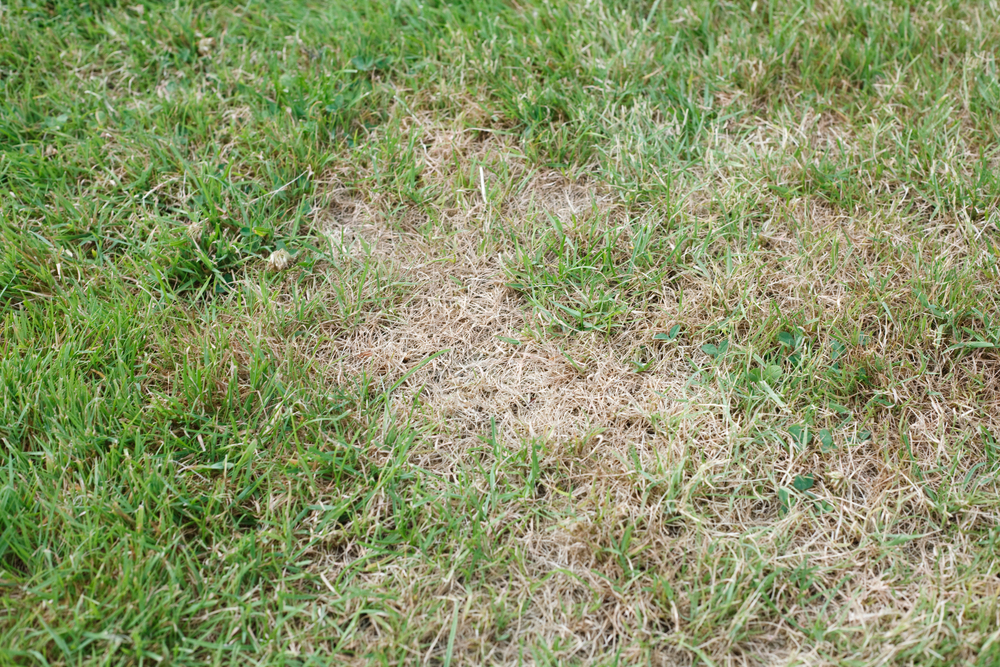
A splash of petrol from the mower, a drip of engine oil, or an overturned handful of lawn feed leaves the same result: a dead, straw coloured patch within days. Move fast and you can save most of the grass. Soak up the spill, flush the ground with water to dilute what soaked in, and in the worst cases lift out the poisoned soil before you reseed. Handled in the first hour, a fuel or fertiliser spill becomes a small patch to reseed rather than a bare scar that lingers for a season.
Why a Spill Kills Grass and Soil
Petrol and oil kill grass in two ways at once. They coat the leaf and root surfaces and block the tiny pores the plant breathes through, and they poison the soil microbes that recycle nutrients around the roots. A petrol spill can leave ground sterile for months, so nothing you sow into it will grow until the fuel has broken down or been washed away. Oil is thicker and clings harder, forming a water repellent film that stops rain reaching the roots long after the spill.
Fertiliser burns by a different route. Granular lawn feed is a concentrated salt, and when a heap of it sits on wet grass it pulls water out of the leaf and root cells by osmosis, the same way salt draws water from a slug. The grass wilts and browns in a sharp outline that matches the spill, a scorch that looks like drought but appears far faster. Knowing which of the two you are dealing with tells you how hard to flush and whether the soil can stay.
The First Hour: Blot, Then Flush
Reach for something absorbent before you reach for the hose. Cat litter, dry sand or sawdust tipped over a fresh petrol or oil spill soaks up the liquid still sitting on the surface, and lifting that away removes the bulk of the chemical before it sinks in. Scrape up the soaked material with a trowel and bag it. A high pressure jet at this stage would only push the spill sideways and widen the damage.
Once the surface liquid is gone, dilution is your main tool. Run a hose onto the patch and soak it for several minutes, let it drain, then soak it again, repeating three or four times to wash the remaining chemical down and away from the root zone. For a fertiliser spill, skip the absorbent step and go straight to heavy watering: 15 to 20 minutes of flooding leaches the excess salt through the soil and can rescue grass that has only just begun to brown. The sooner you flush, the more grass you keep.
When You Have to Dig Out the Soil
Sometimes flushing is not enough. If a petrol or oil spill has soaked in before you caught it, and the ground smells of fuel after you flush, the soil itself has to go. Dig out the top 5 to 8cm (2 to 3 inches) across the whole stained area, a little wider than the visible patch, and bag it for disposal at a household waste site, not the compost heap. Fill the hole with fresh topsoil or a soil and compost mix, firm it gently and rake it level with the surrounding lawn.
Fertiliser spills rarely need digging. A thorough flush usually carries the salt away, and the soil life recovers on its own. Wait a week after flushing, then push a finger into the ground and check for the fuel smell or an oily sheen in any puddle; if both are gone, the patch is ready to reseed. Sowing into ground that still holds chemical is the most common mistake here, as the new seed germinates, then dies in the same spot, and you are back where you started.
How to Stop Spills Before They Start
The easiest spill to fix is the one that never reaches the grass. Fill the mower’s fuel tank on a hard path or driveway rather than out on the lawn, so any splash lands on concrete you can rinse rather than soil that holds it. A pouring spout or a can with a spout costs a few pounds and turns a wobbling glug into a controlled stream, and wiping the filler neck before you start the engine stops fuel dripping onto the deck and down onto the grass as you mow.
Oil changes deserve the same care. Drain the sump over a tray on a hard surface, not on the lawn, and spread out a sheet of cardboard or a drip mat to catch the inevitable dribble. When you spread granular feed, sweep any that lands in a heap straight off the grass rather than leaving a concentrated pile to burn, and water the lawn in afterwards so the feed dissolves and spreads rather than sitting as hot spots of salt.
Judging Whether the Grass Will Recover on Its Own
Not every spill kills. A small splash of petrol that you flush within minutes often browns the tips without killing the crown, the growing point at the base of each plant, and grass like that greens up again within a fortnight. Give it a week or two after flushing before you decide to dig and reseed, as tearing out grass that would have recovered wastes both the plants and your time.
A simple tug tells you which way it has gone. Pinch a few blades in the browned area and pull gently: if the plants hold firm and show a trace of green at the base, the crown is alive and the lawn will recover with watering alone. If they lift away with no resistance and the base is brown and dry, the plant is dead and that patch needs the full clean, flush and reseed. Reading the damage before you act saves you from digging out ground that only needed a drink.
Reseeding and Blending the Patch
Prepare the surface first. Rake the cleaned area to break up the top centimetre of soil and lift out any dead grass, which lets air and water reach the new seed. Choose a grass seed that matches the rest of your lawn, a hard wearing ryegrass mix for a family lawn, or a fine fescue blend for an ornamental one, so the repair blends in rather than standing out as a different colour and texture. A 1kg box of quality lawn seed costs around £8 to £14 ($10 to $18) at B&Q, Home Depot or most garden centres, and covers a generous repair.
Sow at about 35 grams per square metre for a light repair, or up to 50 grams per square metre on a bare patch that needs to fill fast, scattering the seed evenly and raking it lightly into the surface. Firm it down with the back of the rake so each seed sits in contact with the soil, then keep the patch consistently damp, not waterlogged, until the seedlings appear in one to three weeks. The strongest results come from sowing in spring or early autumn, when the soil is warm and the air is cool and moist. If you are patching in high summer, sow in the cooler evening, shade the seed with a light layer of grass clippings or fleece, and water lightly twice a day so the surface never dries out. Full blending with the lawn around it takes a season, but the scar is gone and the grass is growing where a spill had left bare, dead ground.