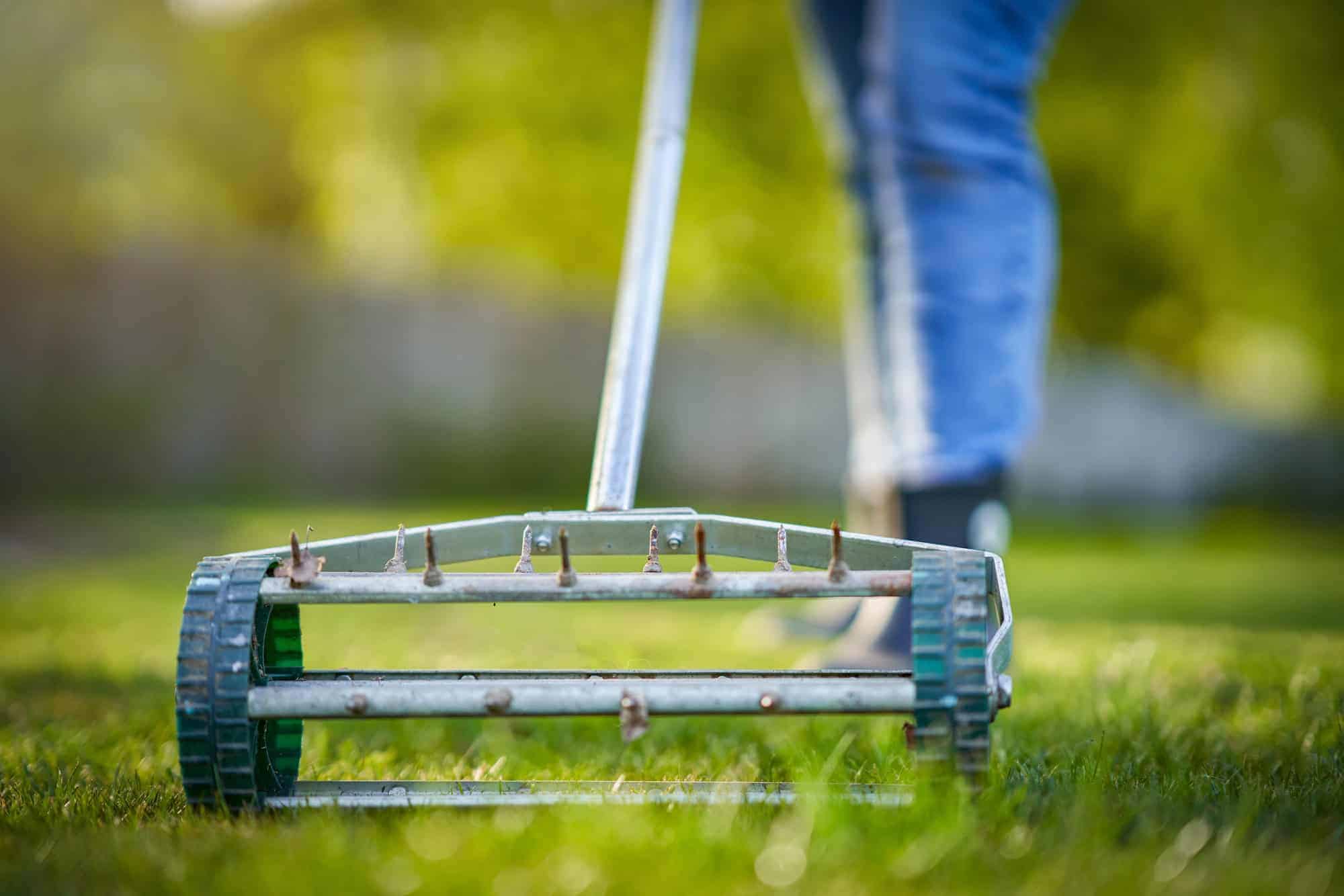
A lawn that has gone thin and brown by the end of a hot summer does not need stripping and returfing. It needs air in the soil, organic matter on the surface and fresh seed, applied in that order.
That is the sequence contractor Lee Gilliam worked through when a homeowner called Ask This Old House about a lawn turning brown. Aerate, topdress with compost, feed with a phosphorus-heavy starter, sow a seed blend, cover it, then water it properly for three weeks. Each step has a mechanism behind it, and getting the order wrong wastes the seed.
Aeration Comes First, and Hollow Tines Beat Solid Spikes
Gilliam aerates several times a year: early spring, midsummer and autumn. The aim is to let the soil breathe and to give water, fertiliser and grass seed a route below the surface rather than a sealed lid to sit on.
Grass roots respire. They take in oxygen and give off carbon dioxide, and they do it through the air spaces between soil particles. Foot traffic, mower wheels and months of dry weather collapse those spaces. Soil density climbs, oxygen falls, and root growth stalls long before the grass above shows any sign of it.
Hollow tines and solid spikes are not the same tool. A solid spike pushes soil sideways and compresses the wall of the hole it makes, so the ground immediately around each hole ends up denser than it started. A hollow tine removes a core roughly 1.5cm (0.6in) across and 5 to 8cm (2 to 3in) deep, and takes that volume of soil away entirely. Nothing gets squeezed. The machine Gilliam hires is self-propelled, digs into the soil, pulls plugs and drops them on the surface to break down.
Hire costs sit at roughly £90 to £120 a day ($115 to $155) for a petrol hollow-tine machine from a tool hire depot, with a damage waiver on top. Peer-to-peer hire sites list the same machines from around £13 a day ($17). For a lawn under 100 square metres (1,075 square feet), a hand hollow-tine fork at £35 to £45 ($45 to $60) covers the ground in an afternoon.
Soil moisture decides whether the machine works at all. Aerate the day after rain, or the day after you have watered. Tines bounce off bone-dry summer ground and snap on stony soil, and saturated ground smears instead of lifting clean cores.
Compost Goes Down Before the Seed Does
Gilliam starts the overseeding stage by casting compost across the lawn with a shovel and levelling it with the back of a metal rake, using it to fill any noticeable high or low spots.
Roger Cook, the This Old House contractor, calls compost “the one best thing you can add to a lawn.” His method after aerating is to broadcast it straight over the holes. “What you’re trying to do is get a nice even mix” across the surface, so the compost works its way down into the soil.
The mechanism is water retention plus a seedbed. Organic matter holds water that sand sheds and that baked clay refuses to absorb, and it feeds the soil biology that keeps structure open into the following season. On the surface it does a second job: it fills the aeration holes and the low points with fine crumbly material that seed can sit in and stay damp against.
Spread 3 to 6mm (an eighth to a quarter of an inch) across the lawn, roughly 3 to 6 litres per square metre (about 0.6 to 1.2 gallons per square yard). Anything thicker smothers the grass you already have. Work it in with the rake until the blade tips show through again.
The Fertiliser Numbers That Suit New Seed
Gilliam uses an 18-24-12 mix for overseeding. The middle number, phosphate, is doing the work.
Cook has explained the reasoning on an overseeding project: “If the nitrogen number is really high, it’s gonna produce all top growth. That’s not gonna be good for the plant. You’ll be cutting it twice a week. It’s gonna look beautiful. But with new seeds, we’re really concerned about getting the roots down.”
Phosphorus is close to immobile in soil. Nitrogen travels with water and reaches roots wherever they happen to be. Phosphate binds to soil particles and moves a few millimetres at most, so a seedling can only take up what is sitting in the zone its first roots reach. That is the whole reason a starter feed goes down with the seed rather than a fortnight afterwards.
Scotts Turf Builder Starter Food for New Grass carries a 24-25-4 analysis, and a 15 lb (6.8kg) bag covers 5,000 square feet (465 square metres) at around $25 (£20) from Home Depot or Lowe’s. On the seed side, Johnsons Anytime Lawn Seed covers 20 to 60 square metres (215 to 645 square feet) from £7.50 ($10) at B&Q. Halve the bag rate when you are seeding into existing grass, as the established plants are already fed.
Seed Blends Beat Single Varieties, and the Spreader Setting Decides Coverage
Fill the spreader with a mix of grass seed rather than one variety. A blend produces a lawn that stands up to pests and disease and adapts across changing conditions. In cooler northern climates Gilliam pairs Kentucky bluegrass with tall fescue.
Cook puts the case plainly: “Combining varieties increases the yield because each type likes slightly different conditions, so there’s a stronger likelihood that something will thrive under the conditions that unpredictable Mother Nature provides.”
The two grasses in that pairing do different jobs. Tall fescue drives roots well past 60cm (2ft) and keeps colour through dry spells that flatten shallower grasses. Kentucky bluegrass spreads sideways by underground rhizomes and knits over bare ground on its own, and it takes 14 to 30 days to germinate against 5 to 10 days for perennial ryegrass. A blend gives you quick cover and slow self-repair from the same bag.
Set the spreader to around 20 inches (50cm) and run it across the lawn, keeping it clear of beds and borders. Sow 25 to 35 grams per square metre (about three quarters to 1 oz per square yard) into existing grass, or 35 to 50 grams per square metre on bare ground.
Timing is soil temperature, not calendar date. Cool-season seed germinates once soil sits above 8 to 10C (46 to 50F) and moves fastest between 15 and 20C (59 to 68F). Late summer into early autumn hits that window from the right side: the soil is still warm, the air is cooling, and weed competition is falling away. Sowing into the peak of a heatwave with a watering restriction in force throws the bag away.
One mistake catches people out every year. Check the label of any selective weedkiller you used earlier in the season. Most state an interval before reseeding, and sowing inside that window kills the seedlings as they emerge, with nothing on the surface to explain why.
Cover the Seed, Then Water It Like Everything Depends on It
Gilliam covers the seed with peat moss, applied by hand in a light layer, and reads the colour to decide when to water. Light colour means it has dried out. Dark maroon means it is holding moisture.
Peat is the one part of the method worth swapping out. No law currently stops retailers selling peat-based products to home gardeners in cooler northern markets, and the promised legislation has slipped more than once, but B&Q, Homebase and Wickes moved their own-brand bagged compost to peat-free some time ago, and from January 2026 every plant sold through RHS retail outlets is grown fully peat-free. Sieved peat-free topdressing or fine composted bark holds moisture the same way and shifts from light to dark exactly as peat does, so the colour test still works.
Water twice a day for 8 to 10 days, then once a day for the next 10. A midday watering helps in hot weather. Judge it by the colour of the covering rather than the clock.
Cook argues for a lighter touch than most people use: “When you first reseed, you only need enough water to moisten the seed so it can germinate.” He waters lightly once or twice a day depending on the weather, keeping the top quarter inch (6mm) of soil barely moist.
Here is why this step carries more risk than any other. Once a seed takes up water, enzymes switch on and the radicle, the first root, pushes out. That root carries no reserves and reaches no depth. If the surface film dries at that moment the seedling dies outright. It does not pause and restart when the water returns. A single missed afternoon in the first week can wipe out most of a sowing that looked healthy the day before.
Heavy watering is the opposite failure. A hard soak floats seed into hollows and along edges, and three weeks later the lawn comes up in stripes and puddles rather than evenly.
Leave the new grass alone until it reaches 7 to 8cm (3in), then take off no more than a third with a sharp blade. A blunt blade tears young plants out by the crown rather than cutting them, and the roots at that stage are not strong enough to hold on.
Book the aerator, order the seed and starter feed now, and run the whole sequence in the first settled fortnight after the heat breaks. The lawn will not look like much for a month. By mid-autumn it will be thicker than it was in spring.