- A mower that will not start needs spark, fuel and air, and the checks that test each one go from free to fiddly in a sensible order.
- Old petrol, a wet or dirty spark plug and a clogged air filter are the usual suspects, and all three can be dealt with in your own garage.
- Stop at the first job you do not feel safe doing, which is the point where a workshop earns its fee.
The Pull Cord, the Silence and the Repair Bill You Do Not Need Yet
You pull the cord and get a cough, or nothing at all. Perhaps the engine catches, splutters and dies. Either way you are standing there with no idea whether this is a five minute fix or a trip to the workshop.
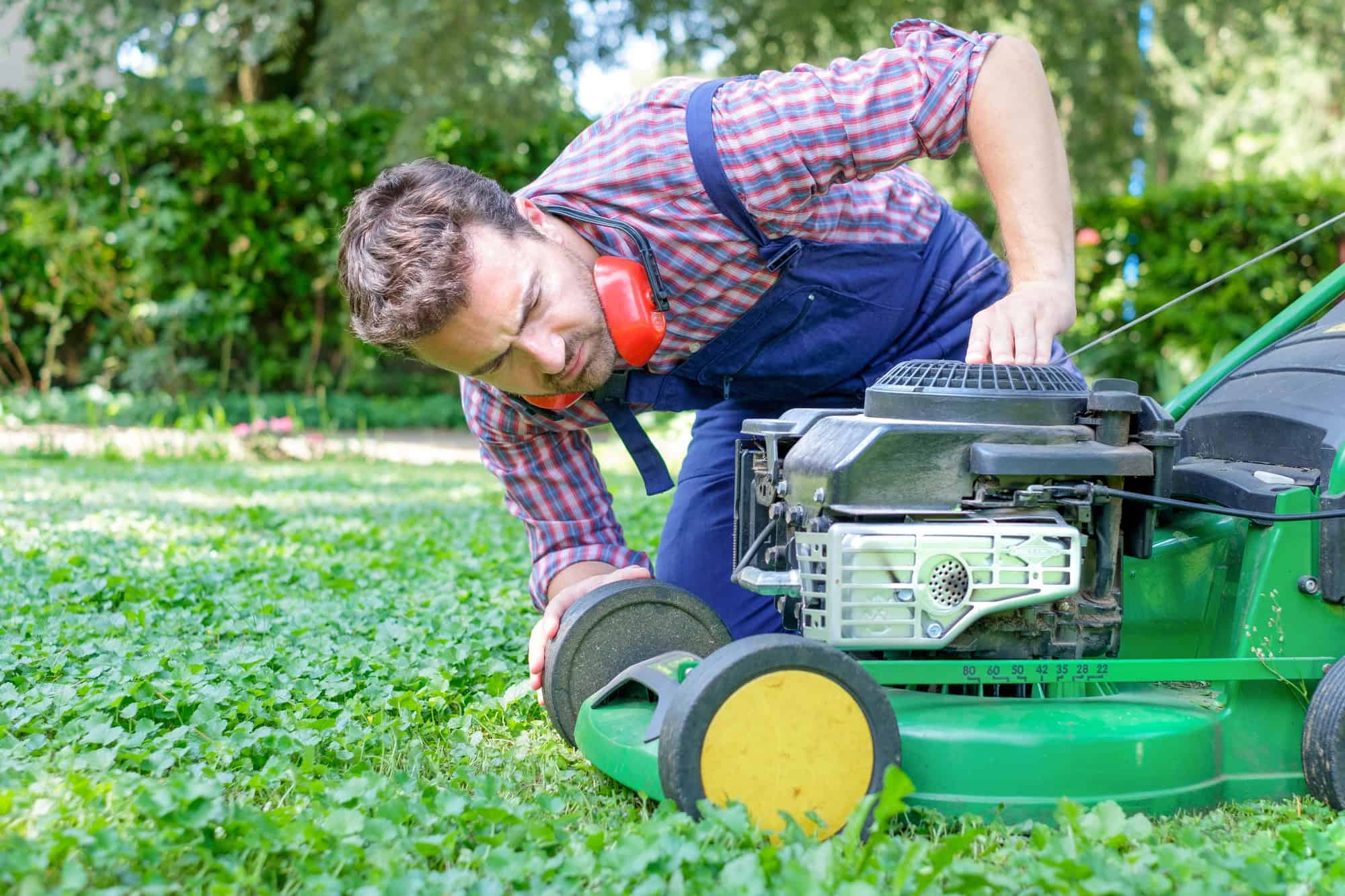
Work through the problem in this order. Start with the checks that need only your eyes: safety, fuel and oil. Move on to the spark plug, the battery if you have one, the air filter and the fuel filter. Then look under the deck. Leave the carburettor until last, and stop the moment a job is beyond you.
The order follows how an engine works. It needs a spark, fuel and air in the right mix. The carburettor regulates the mixture of petrol and air going into the engine, where it is burned to create power, and the spark plug and wire ignite that mixture. Most checks below test one of those three things, and the deck check covers a cord that will not pull. The early ones take minutes. The late ones mean taking components off the engine, so they wait their turn.
Keep the owner’s manual close. It lists action items specific to your mower, and it gives the position of the fuel filter and its model number.
Start With Safety, Then Fuel, Oil and the Primer Bulb
Switch the engine off, and always disconnect the spark plug wire before you service the mower.
Now check the fuel tank for fuel. It sounds silly, but the mistake has happened to most people. Then look at the quality of the petrol and the oil for dirt and moisture. Petrol more than a month old needs draining responsibly, and so does oil that has turned milky white. Add fresh in both cases.
Fuel that has sat in the mower for a long spell, over winter for example, goes stale and can stop the engine starting, or let it start and then quickly die. Ethanol is how moisture gets in: it attracts water and absorbs it into the petrol. Ordinary unleaded works, but Which? notes that a higher quality petrol with a lower ethanol content absorbs less moisture from the air. At the end of the season either run the mower until the tank is empty or add a fuel stabiliser to keep the petrol from degrading.
Expect the first start on fresh fuel to take several pulls, as the new petrol has to be drawn through to the carburettor. You might also have to clean and dry the spark plug a few times. Clean out the fuel cap vent too, so that air can flow.
Check the oil level on flat ground before each use. Wipe the dipstick clean before you reinsert it for an accurate reading, and do not overfill.
Then comes the primer bulb. It pushes fuel into the carburettor to help a cold start. Press it three to five times on a cold engine, and do not press it when the engine is warm. If the mower still does not start, wait about five minutes before trying again so you do not flood the carburettor. A cracked bulb needs replacing. If the engine will not start, check the choke is set the way your manual shows for starting, and move it back once the engine is running. The choke should move freely without sticking.
Check the Spark Plug and the Two Filters Next
If fuel and oil are fine, move to the plug. Angie Hicks, co-founder of Angi, puts it plainly:
“A very common reason why a lawn mower won’t start is faulty spark plugs,” says Hicks. “You can first try to clean and tighten them, but if that doesn’t work, they may need to be replaced.”
First make sure the plug lead is pushed on, as it can get pulled off in storage. Then pull the lead off again, take the plug out and look at it. If it is wet, there is no way the engine will start, so clean it with carburettor cleaner and let it dry. Compressed air is not enough, as you need a solvent to remove oil residue. If the plug is really grimy, a new one is the better choice. Replace a plug that is damaged, corroded or covered in deposits, and clean and re-gap one that is merely dirty, using a spark plug gap tool. The gap should match the maker’s figure.
If your mower has a battery, it is probably good for three to five years. Hicks says:
“So if you’re hitting that time, it may need to be replaced,” says Hicks. “You can also check by looking at the battery for cracks and corrosion or testing it with a multimeter.”
Next is the air filter, the easiest job on the engine. Lee, a small engine repair expert quoted by This Old House, recommends checking the air filter first when troubleshooting:
“So what I like to do is check the air filters. The engine has to breathe.”
The air has to pass through the filter before it reaches the carburettor, and a clogged filter throws the ratio of air to fuel out of balance. The mower then smokes or refuses to start. Lee describes what a new one looks like:
“The engine has to breathe. Look at this. This is brand-new, so we know that. That’s what we want it to look like.”
Compare your filter with that. If it is dirty, clean it or fit a new one. On fitting a new one, Richard says in a This Old House episode:
“You got a nice, good fit there and this filter right here, you can change it out, put a clean one in and they work really well.”
Then check the fuel filter, if your mower has one. Not all do. It sits in the fuel line or in the tank, and sputtering or rough idling when you last mowed points to it. Tap the side of the carburettor first to help the petrol flow. If that does nothing, replace the filter. A filter in the tank means draining the fuel first, and one in the line means clamping the line off before you take it away. Hold the old filter up to the light to see whether it is dirty and clogged. The job is covered in full in replacing the fuel line filter.
If the Cord Barely Pulls, Look Under the Deck and at the Fins
A cord that is hard to pull is a different symptom, and it has its own cheap cause. Grass clippings pack into the deck and stop the blade turning. This is a common problem when cutting wet or long grass. A hard cord is a good sign that debris is clogging the deck.
With the engine off and the plug lead disconnected, tip the mower onto its side or turn it upside down and scrape out the gummed up clippings. Tip it so the air filter and carburettor end up on top, which helps keep oil and fuel from running into them. Wear tough gloves and other safety gear. The whole job, with the reasons the deck clogs, is in scraping caked grass off the deck.
Check the engine’s cooling fins too. They work as the engine’s radiator, shedding heat so the engine does not overheat. A This Old House issue from September 1998 says:
“Grass, mud and other gunk in the cooling fins can make an air-cooled engine run hot.”
If the engine overheats and stalls, clear the fins with compressed air or a brush.
If the deck is clean, the fins are clear and the cord is still stiff with the handle in the start position, stop. That can mean the engine or the blade adapter needs servicing. That is a workshop job.
The Carburettor Comes Last, and So Does the Phone Call
If every check so far is clear, the carburettor is next. A clogged or dirty carburettor is often the culprit when a mower will not start, and it can also cause rough running or black smoke. Reaching it means removing the air filter. Once it is exposed, clean it and look for corrosion. Chalky, powdery white corrosion usually means replacing the part. The full method is in cleaning a gummed up carburettor. Do it only if you are comfortable taking parts off the engine.
That is the point to be honest about your own limits. Call a professional after you have gone through the steps and the mower still will not run, or any time you do not feel comfortable with your safety. Hicks explains why:
“It’s important to understand that lawn mowers are heavy pieces of machinery with sharp blades, and you should never push yourself beyond your skill set and ability or you could end up getting hurt,” says Angie Hicks, co-founder of Angi.
When you do call, you arrive with a list of what you have already ruled out: fresh fuel, a clean plug, a clean air filter, a clear deck.
How to Stop It Happening Again
A short routine keeps the checks above from being needed again.
At the end of the season, run the tank empty or add a fuel stabiliser, and winterise the mower so the fuel system stays clean. Check the oil level on flat ground before each use, and change the oil every year. Replace or clean the spark plug every year, and check the gap against the maker’s figure.
Clean the underside of the deck after each use, so clippings never harden into a plug of grass. Change the oil and air filter as the maker recommends, store the mower somewhere dry, and tighten loose bolts and screws. Do all of that and the order of checks stays a list you read once.