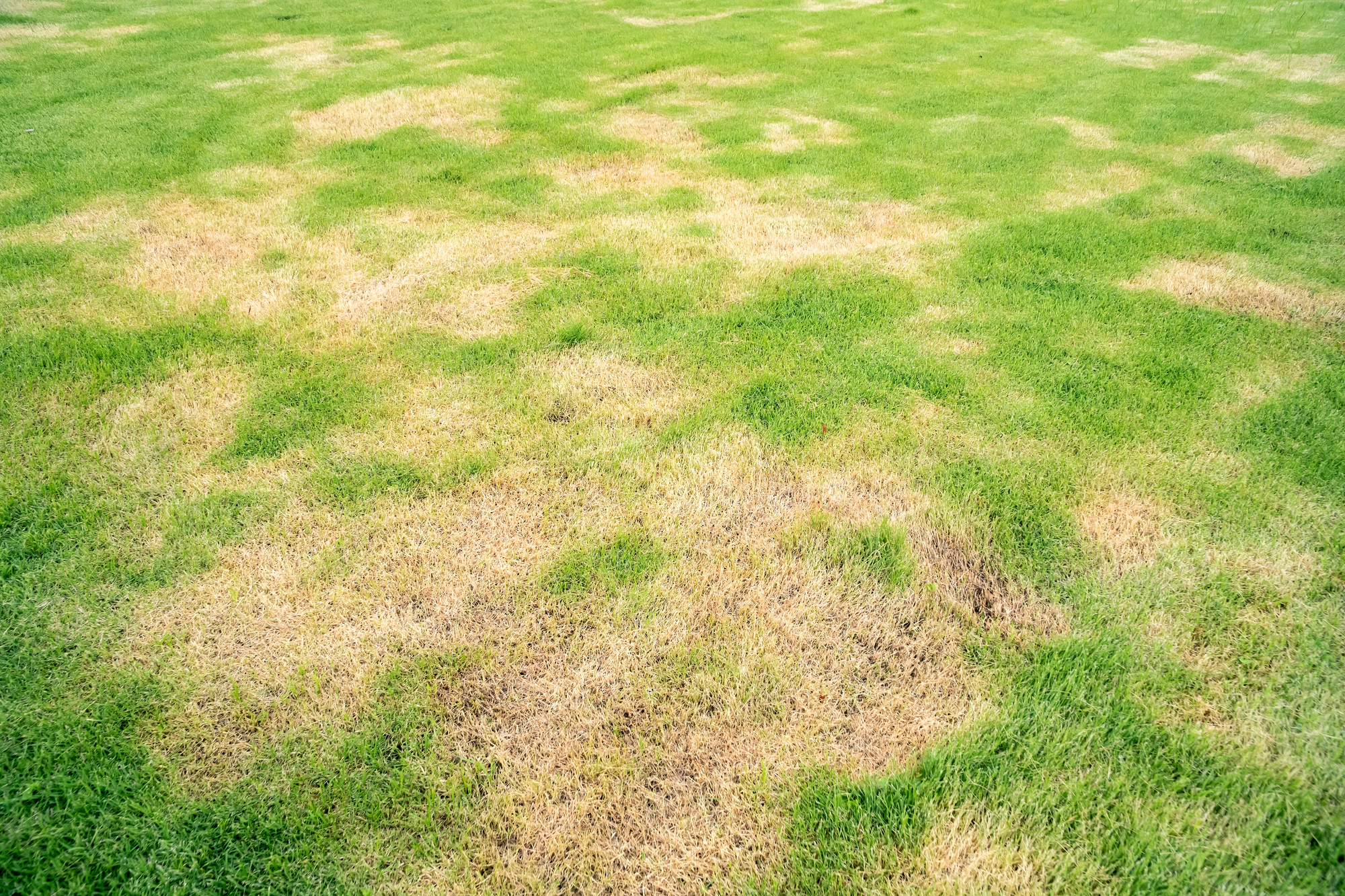
If pink or rust-tinged patches have appeared on your lawn over the past few weeks, the culprit is almost certainly red thread, a fungal disease that turns up on many lawns in late summer and early autumn. The good news is that it looks worse than it is. Red thread feeds on the leaf blades, not the roots, so the grass rarely dies and the patches grow back once you correct the two things that let the fungus in: low nitrogen and long spells of surface wetness. Here is how to spot it, why it takes hold now, and the exact steps that clear it.
How to tell red thread from other lawn problems
Red thread is caused by the fungus Laetisaria fuciformis. It shows first as patches of grass with a reddish tinge that later fade to light brown or an almost bleached, straw colour. The patches usually run from 7.5cm to 25cm (3in to 10in) across, though they can join up into much larger areas on a badly affected lawn.
The name comes from the fungus itself. Under damp or humid conditions you can see two kinds of growth on the affected blades. The first is small, pink, cotton-wool-like tufts. The second is the giveaway: pinkish-red, gelatinous, needle-like threads, only 1mm to 2mm long (less than a quarter of an inch), that grow out from the leaf tips and can bind the blades together. Get down on your knees and look closely, or use a magnifying glass. If you can see those tiny red needles, you have red thread and not something else.
That distinction is worth making, as several lawn problems look similar from standing height. Fusarium patch, also called snow mould, makes orange-brown patches with white or faintly pink mould but no red threads. Lawn rust coats blades in an orange dust that rubs off on your shoes. Dry patch leaves the soil water-repellent so the grass browns even in wet weather. Red thread is the only one that produces those small red or pink threads, and it is the most common of the group on lawns short of nitrogen.
Red thread is hardest on red fescue (Festuca rubra), but it also attacks other fescues, the bents (Agrostis species), perennial ryegrass (Lolium perenne) and annual meadow grass (Poa annua). Most home lawns hold a mix of these, which is why the disease is so widespread.
Why it takes hold in late summer
Two conditions have to line up for red thread, and both peak now. The first is a hungry lawn. The fungus gets the upper hand on turf that is low in nitrogen, where the grass is growing slowly and cannot replace damaged leaf tissue fast enough. A wet summer makes this worse on light, sandy soils, as heavy rain washes soluble nitrogen down past the roots where the grass can no longer reach it.
The second condition is prolonged leaf wetness. The fungus needs the blades to stay wet for long stretches to infect them. Cool August and September nights bring heavy dews that sit on the grass from dusk until mid-morning, and that is more than enough wet time for the disease to spread. Warm days followed by damp, still nights are the classic red-thread setup.
The fungus itself is patient. Its thread-like structures, called stromata, can survive on leaf debris and in the soil for up to two years. It travels on airborne and waterborne spores, and it hitches a ride on mower blades, tools and shoes, which is one reason it can jump from one part of a lawn to another. Knowing this shapes the fix: you cannot wipe out the fungus, but you can take away the food and the moisture it relies on.
The feed that clears it, and the timing trap
The single most effective response to an active outbreak is nitrogen. A light feed pushes fresh leaf growth, and the new blades grow up past the infected tips faster than the fungus can damage them. As the disease never touches the roots or the crown, the plant has everything it needs to recover once it starts growing again.
The traditional turf feed for this job is sulphate of ammonia, applied at 15g per square metre (half an ounce per square yard). Measure the dose out with kitchen scales rather than guessing, spread it evenly by hand or with a spreader, and water it in if no rain is forecast within a day. A 1.5kg tub of sulphate of ammonia costs about £8 to £12 ($10 to $16) at B&Q, Wickes, Amazon or the equivalent garden aisles at Home Depot and Lowe’s, and a little goes a long way at that rate.
Here is the trap, and it catches a lot of people. High-nitrogen feed should not go down after the end of August. Soft, sappy growth pushed out by a late nitrogen hit is exactly what the cool, damp weeks ahead punish, leaving the lawn open to fusarium patch and frost damage. So if your outbreak is happening right at the tail of summer, keep any nitrogen feed light and get it down while the window is still open. Once the calendar turns into autumn proper, switch to a low-nitrogen autumn lawn feed, the kind high in potassium and phosphate that hardens growth for winter rather than forcing it. An autumn or winter lawn feed runs about £10 to £16 ($13 to $21) for a box that treats a small to medium lawn. In practice, red thread often clears on its own within a few days to a few weeks once the weather shifts, so on a mildly affected lawn late in the season, correcting aeration and drainage can be enough on its own.
Scarify and aerate to cut off the damp
Feeding deals with the hunger. Aeration deals with the wetness. Red thread thrives where turf is poorly aerated and where a thick layer of thatch traps moisture against the leaf bases, so opening the lawn up removes the conditions the fungus needs.
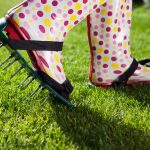
Start by raking out the thatch and moss with a spring-tine lawn rake, which costs around £10 to £20 ($13 to $26), or with an electric scarifier for a larger lawn, typically £60 to £130 ($80 to $170). Scarifying pulls out the dead, spongy material sitting between the green grass and the soil, letting air move through and letting the surface dry more quickly after dew or rain. Follow up on compacted or badly drained areas by spiking the ground with a garden fork pushed in about 10cm to 15cm (4in to 6in) and rocked back, or by using a hollow-tine aerator that pulls out plugs of soil to relieve compaction more thoroughly.
One more habit helps while the disease is active: collect and bin the clippings rather than composting them or leaving them on the lawn. The clippings carry the fungus, and removing them cuts down the amount of material that can re-infect the grass. Wash the underside of the mower and your boots afterwards for the same reason.
Stop it coming back next year
Red thread is a signal, not a disaster. A lawn that gets it most years is telling you it is short of nitrogen, holds too much thatch, or stays wet too long. Fix those and the disease fades into the background.
Build a simple feeding routine so the grass never runs hungry through the growing months, using a spring and summer lawn feed at the rates on the pack, then a low-nitrogen autumn feed to finish the year. Scarify once a year to keep thatch down, and aerate compacted ground each autumn. Mow with a sharp blade and never cut too low, as scalped grass is stressed grass, and stressed grass is what disease moves into first. When you reseed thin or repaired areas, choose a hard-wearing ryegrass and fescue blend, as modern seed mixes carry better natural resistance to leaf diseases than older ones. On lawns prone to heavy dew, brushing or switching the dew off the grass with a besom or a long cane in the early morning shortens the wet spell and is a trick greenkeepers have used for years.
For now, the plan is short. Confirm the red threads with a close look, give the lawn a light feed if you are still inside the late-summer window, rake out the thatch, spike the compacted patches, and bin the clippings until the outbreak passes. Do that and the pink haze will clear, and the grass underneath will green up on its own.