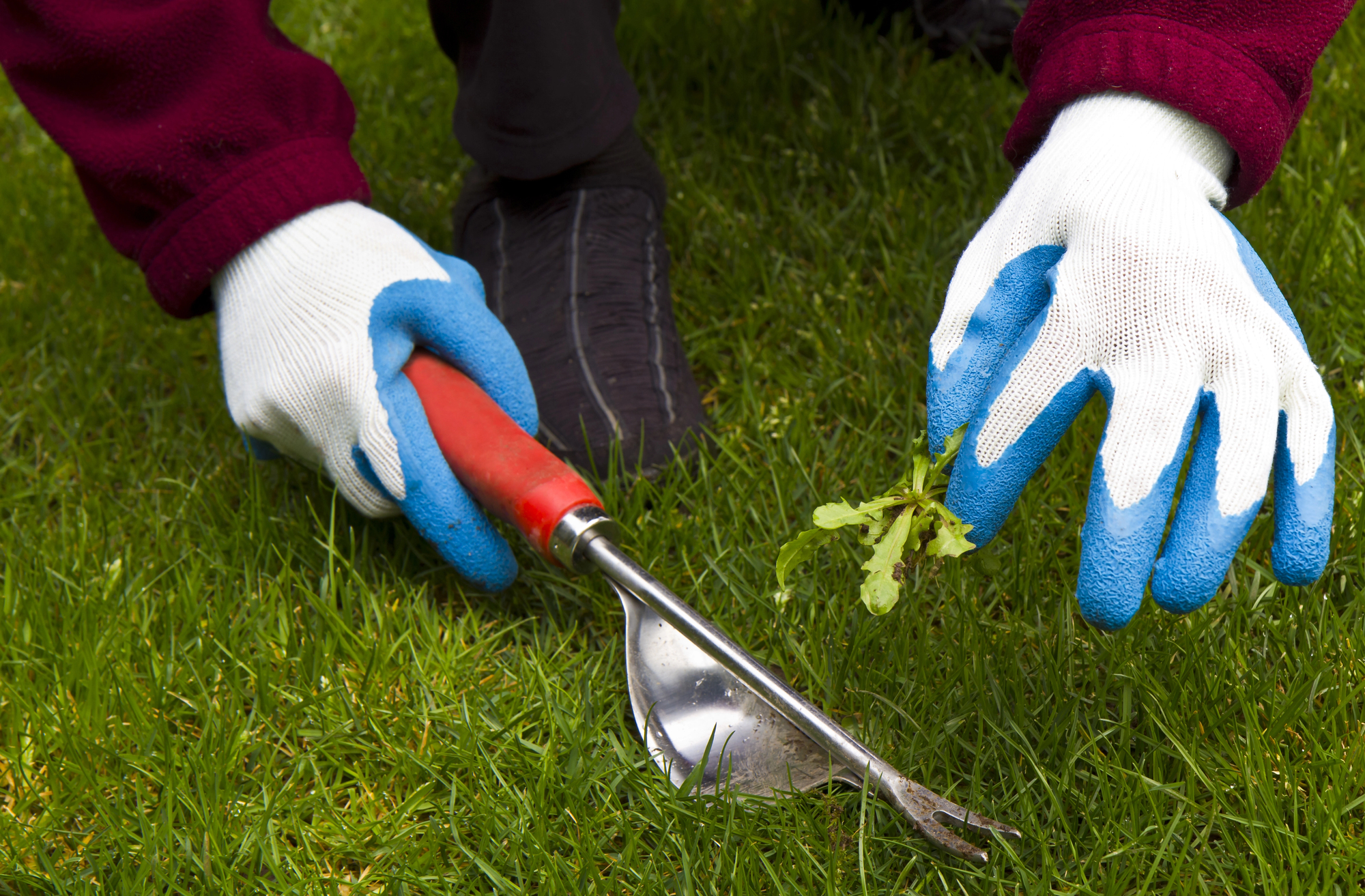
- Daisies shrug off the mower: each plant grows as a flat rosette pressed to the ground, with its growing point sitting below the height your blade cuts.
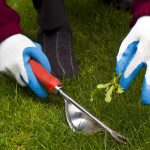
- Lift the plants out by hand with a narrow weeding tool, then thicken and raise the grass so new seedlings have nowhere to settle.
- One daisy can drop around 1,300 seeds a year, so the lasting answer is a denser, taller-cut, well-fed lawn, not a single afternoon of weeding.
Why the mower never touches them, and what actually clears them
Daisies are the little white and yellow flowers dotted through the grass, the ones that reappear a day after you cut the lawn. The reason the mower never kills them is built into the way they grow. Each plant forms a flat rosette of leaves hugging the soil, and the point it grows from sits right at or below the height your blade passes over. You can mow every week all season and the daisy simply carries on. The way to clear them without wrecking the grass around them is to lift the plants out by hand, roots and all, and then make the lawn itself too thick and too tall for new ones to take hold.
That second half is the part most people miss. Dig out every daisy you can see and leave the lawn thin and shaved, and a fresh crop settles into the gaps within weeks. Get the grass growing densely and cut it a little higher, and the daisies fade on their own. Both halves start now, in autumn, while the soil is still warm enough for grass to knit together before winter.
Why daisies take over a lawn in the first place
The common daisy, Bellis perennis, is a native perennial, so it comes back from the same crown year after year rather than dying off each winter. It flowers from March right through to October, and in a mild winter it barely stops, which is why you still see the flowers dotting lawns this late in the season. Each flower head sets an average of around 125 seeds, and a single well-grown plant can produce about 1,300 seeds in a year. Those seeds blow about on the wind and get carried further by birds and ants, so one flowering daisy seeds the whole lawn and the neighbour’s too.
It also creeps. Short runner-like stems, called stolons, grow out from the edge of the rosette and root nearby, so a single plant slowly widens into a patch. The spread by runner is slow, which is good news, but the seeding never lets up, and worms and birds moving through the lawn carry the seed into fresh ground. What really decides whether daisies get a grip is the state of the turf. They thrive in short, closely mown, hungry, compacted lawns, and they do badly in longer grass, where their flat leaves cannot stretch up to reach the light. That one fact is the key to every lasting fix below: anything that lets the grass grow taller and thicker works against the daisy.
Dig them out without leaving a scar
For a handful of plants or a light scattering, hand removal is quick and it keeps every blade of grass intact. The tool for the job is a daisy grubber, a narrow hand weeder with a notched or forked tip, or a slim weeding knife. Push it down alongside the rosette, lever the whole crown and its roots up together, and lift the plant out in one piece. Getting the full root is the thing that counts: snap it off and leave a fragment of crown behind and the daisy regrows from it. The work is easiest a day after rain, when the soil is soft and the roots slide out rather than tearing. A daisy grubber costs about 5 to 10 pounds (roughly 7 to 14 US dollars) from garden centres, Screwfix or Amazon.
Before you mow, rake the area firmly with a spring-tined rake. This lifts the flat rosettes and any creeping stems up off the soil so the mower can catch and cut them, a trick the RHS recommends for low-growing lawn weeds. The RHS advice on removal is to use a hand fork or a specialist weeding tool to dig out individual weeds, then reseed or returf the bare patch left behind. Drop a pinch of grass seed onto each small bare spot, firm it down and keep it damp, so grass fills the gap rather than the next daisy seedling. A 1kg bag of general lawn seed is about 8 to 15 pounds (roughly 11 to 20 US dollars) and covers plenty of small repairs. Our guide to repairing bare patches in autumn walks through the overseeding step.
You do not need a weedkiller for this. The RHS is blunt on the point: it can take patience and persistence to remove lawn weeds, but non-chemical methods work, so there is no need to use a weedkiller. Hand removal also leaves the grass completely untouched, where a sprayed chemical risks thinning or yellowing the turf you are trying to protect.
Stop them coming back: thicker, taller, better-fed grass
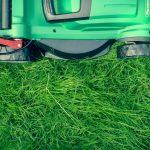
Weeding is the quick win. Keeping daisies out for good comes down to crowding them out, and there are three levers that all pull in the same direction. The first is cutting height. Raise the mower to around 4 to 5cm (1.5 to 2in) through autumn instead of scalping the lawn down to 2cm (0.8in). Taller grass shades the flat daisy rosettes, and their leaves cannot stretch up to chase the light, so they weaken and thin out. Our piece on raising your mowing height in autumn explains what that extra centimetre does over winter.
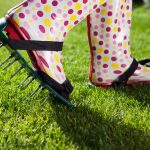
The second lever is feeding and thickening. A thin, hungry lawn is open ground where any of those 1,300 seeds can land and root. An autumn feed followed by a spring feed, plus overseeding wherever the turf looks sparse, builds a dense sward that leaves daisy seedlings no room. The third is relieving compaction: daisies favour hard, squashed soil, so spiking a compacted lawn with a garden fork helps the grass outcompete them. Alongside all three, mow often enough through the flowering months to take the daisy heads off before they set seed. The RHS suggests removing faded flowers before they seed, by snipping or by regular mowing. It pays off in the end, as daisy seed does not survive beyond about four years in worked soil, so a few seasons of steady pressure truly drains the seed bank.
And the case for leaving a few alone
Before you declare war on every last one, it is worth a pause. Daisies feed early bees and other pollinators when little else is flowering, they stand up to children and footballs better than fine turf, and they spread only slowly by runner. They do very little actual harm to the grass. If you are happy with a scattering of white through a green lawn, there is no need to lift a finger. The honest case for removing them is cosmetic, or it is where they have crowded out a lawn already thin and struggling. Decide which lawn you want, then act accordingly.
Whatever you choose, keep one habit off the list: do not scalp the lawn short to tidy up the flowers. Cutting too low weakens the grass and opens the bare patches that let weeds establish, which hands the daisy exactly the short, open turf it loves. The quiet winners are the people who cut a little higher, feed in autumn and spring, and lift out the worst offenders by hand. For another low, creeping lawn weed that spreads the same way, our guide on removing broadleaf plantain uses the same approach.