- A dry patch is bone dry under the surface, however wet the weather and however soggy the rest of the lawn looks.
- Waiting for rain and soaking the patch with a hose both fail, as the water runs off or sits on top and never reaches the roots.
- A garden fork, a little water each day for a few days and a repeat every month for three to four months open the soil back up.
The Brown Patch That Rain Cannot Fix
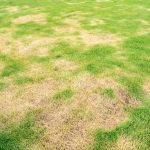
You have watched the rain for weeks. The lawn around the patch is green and squelching, and the patch itself is still brown and dead. It is tempting to blame the grass, the seed or the weather. The cause sits in the soil under it.
This kind of patch is called dry patch, and the soil in it has turned water-repellent. Rain lands on it and runs off, or sits on the surface, while the roots below stay in dry ground. Waiting will not cure it, and a hose will not either.
The fix is mechanical. Spike the patch densely with a garden fork. Then give it a little water each day for a few days. Do the same again once a month for three to four months. A mild, unfrozen spell in November works for the first round. If the ground is waterlogged or the weather is very wet, snowy or frosty, the job waits for spring.
How to Tell Dry Patch From a Patch That Will Recover
Brown grass has a long list of causes, and most of them need a different fix.
Start with the colour sequence. Dry patch first turns a darker green, then brown. The patches are irregular in shape. Dig into the soil beneath one and it will be completely dry. In extreme cases puddles sit on the surface after rainfall, as if the area were waterlogged, while the soil underneath is still bone dry. Occasionally, but by no means always, there is a white fungal growth or a fungus-like smell in the thatch or soil.
Now compare it with the look-alikes:
- Irregular brown patches in dry weather, especially over tree roots or on sandy soil that drains quickly, are plain lack of moisture. This is usually a temporary problem and the dead grass recovers once rain returns. This is the ordinary drought browning that fools people into expecting every brown patch to green up again.
- Regular stripes or patches that appear after feeding are an overdose of fertiliser.
- Footprint-sized dead patches or stripes after using weedkiller or mosskiller are an overdose, or weedkiller carried onto the lawn on shoes.
- Dead patches on raised areas after mowing are grass cut too short.
- Random patches after mowing are spilt petrol or oil.
- Patches that spread rapidly with birds pecking at the surface point to insects feeding on the roots, and leatherjackets and chafer grubs are the most likely culprits.
- Circular patches with bright green margins, on a lawn dogs can reach, are dog urine.
- Dead or discoloured patches that spread rapidly in damp weather are a fungal disease. In November, yellow or brown patches after wet weather can be fusarium patch, and small patches of that should recover while larger areas can call for re-seeding.
The patch you are looking at fits dry patch if it went dark green and then brown, if it has shown no recovery after rain, and if the soil beneath it is dry. A drought patch usually greens up once rain returns. The one that stays brown through weeks of wet weather is the one to treat.
Why the Water Cannot Get In
The causes are complex and not well understood. The most common one is thought to be a coating of water-repellent substances that fungi leave on soil particles as they grow through the thatch layer and among the roots. Water meets a coated surface and cannot soak in.
That is why a root system can be large and healthy and still fail. The roots are there, the rain is falling, and the water cannot get to them, so the grass suffers severe drought in wet weather. In extreme cases that is why puddles form on the surface.
Many of these fungi do not attack the grass. Some are simply breaking down the dead roots, stems and leaves in the thatch.
Some of the fungi behind fairy rings leave water-repellent substances behind as they move through the soil too, so if your patch sits near rings of dead grass and toadstools, the two problems can be linked.
The soil itself can play a part. Chemical or physical changes in the soil can cut the water getting in, and three things make a lawn more prone: compaction, light soil and a thick layer of thatch.
How to Get Water Back Into the Soil
Rewetting a repellent patch is slow work. It takes repeat visits, not one big effort.
1. Spike the whole patch densely with a garden fork. Space the holes 10 to 15 cm (4 to 6 in) apart and push the tines in as deep as you can, ideally to their full depth. Move the fork to and fro in each hole to widen it. The holes give water a way down past the surface.
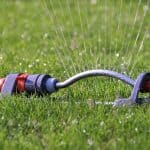
2. Water a little each day for a few days. Do not overwater. A heavy soaking just runs off the surface, which is the problem you started with. Small daily amounts have time to find the holes.
3. Repeat the whole treatment once a month for three to four months.
The timing needs care in November. Autumn lawn care can be done in November as long as the soil is not waterlogged and the weather is not very wet, snowy or frosty. Pick a mild day when the fork goes in without a fight. If the ground is frozen or sodden, leave the patch alone and start in spring.
Wetting agents are the professional extra. Sports turf professionals often use these products to treat dry patch. They are chemicals that help soil particles absorb water. Repeat treatment is likely to be necessary, together with the forking and watering above. Use one alongside the fork, not instead of it. If you choose to use one, follow the instructions on the pack.
When the Patch Is Beyond Saving
Some patches do not respond. Four months of forking, watering and repeat treatment, and the soil still sheds water. In severe cases like that, the last step is to remove the turf and soil.
Remove the affected turf plus 8 to 10 cm (3 to 4 in) of soil. Replace the soil, then re-seed or re-lay the area with fresh turf. Take the soil along with the turf, as the water-repellent coating sits on the soil particles.
Do not skip straight to re-turfing. Dig out only when the forking and watering routine has been tried and has failed.
How to Stop It Coming Back
Dry patch is a summer problem that shows itself in a wet autumn, so prevention starts before the next dry spell. Three jobs do the work.
**Keep the thatch down.** Scarify the lawn in autumn to remove accumulations of thatch. Rake vigorously with a spring-tined rake, aiming to clear loose debris without uprooting the grass. Work first in one direction, then the other. The test is simple: if you cannot see the soil between the blades of grass, the lawn would benefit. Thatch removal also helps the lawn cope with drought, as water gets down into the soil more easily. Scarifying the thatch out of the lawn is a job for autumn, so if the weather this month is wrong for it, do it in spring.
**Avoid compaction.** Aerating improves the movement of air and water among the grass roots. On most lawns, aerating every two to three years is adequate. On clay or waterlogged soil, use a hollow-tined aerator, which makes wider holes and removes plugs of soil. Do this every three to four years. Sweep up the plugs, then rake a top dressing into the holes. The mix is three parts sandy loam, six parts sharp sand and one part well-rotted compost. Apply 2 to 3 kg per sq m (4 to 6 lb per 10 sq ft) and work it in with the back of a rake. If a lot is left on the surface, apply less next time; if it vanishes very rapidly, apply a little more. For a step-by-step on how to aerate a compacted lawn, the full method is on the site.
**Feed at the right time.** Feeding at appropriate times promotes strong, healthy growth with a vigorous root system. Most lawns recover well after summer without feeding, so feed only if the lawn is hungry, and use a feed made for autumn. Apply it just before rain at the rate on the pack, usually about a handful per sq m (sq yd). If no rain falls within a day or so, water it in.
Do these three and the next dry summer is less likely to leave a patch that rain cannot reach. If one does appear, you now know what to look for: dark green, then brown, no recovery after rain, and dry soil under a wet surface. Reach for the fork before you reach for the seed.