- Hard, compacted ground starves grass roots of the air and water they need, which is why a worn lawn thins out, puddles after rain and limps through the colder months.
- Pushing a fork or a hollow tine tool through the turf now, while the soil is damp and still holds some summer warmth, opens channels that roots grow down into over winter.
- Carried out in autumn and finished with a sandy top dressing, aeration gives you deeper roots and thicker grass by spring, and you can do it with a garden fork rather than a contractor’s bill.
The hard ground under your grass is the real problem
You have fed the lawn, cut it at the right height and still it looks tired. The grass is thin in the spots you walk across, rain sits in shallow pools instead of soaking away, and the surface feels solid when you press a heel into it. The grass is not the fault here. The problem sits in the few inches of soil below it, squeezed tight by a summer of foot traffic, mowing and dry spells. Roots cannot push through packed earth, and they cannot breathe in it either. Aeration is the job that fixes that, and early autumn is the best window of the year to do it.
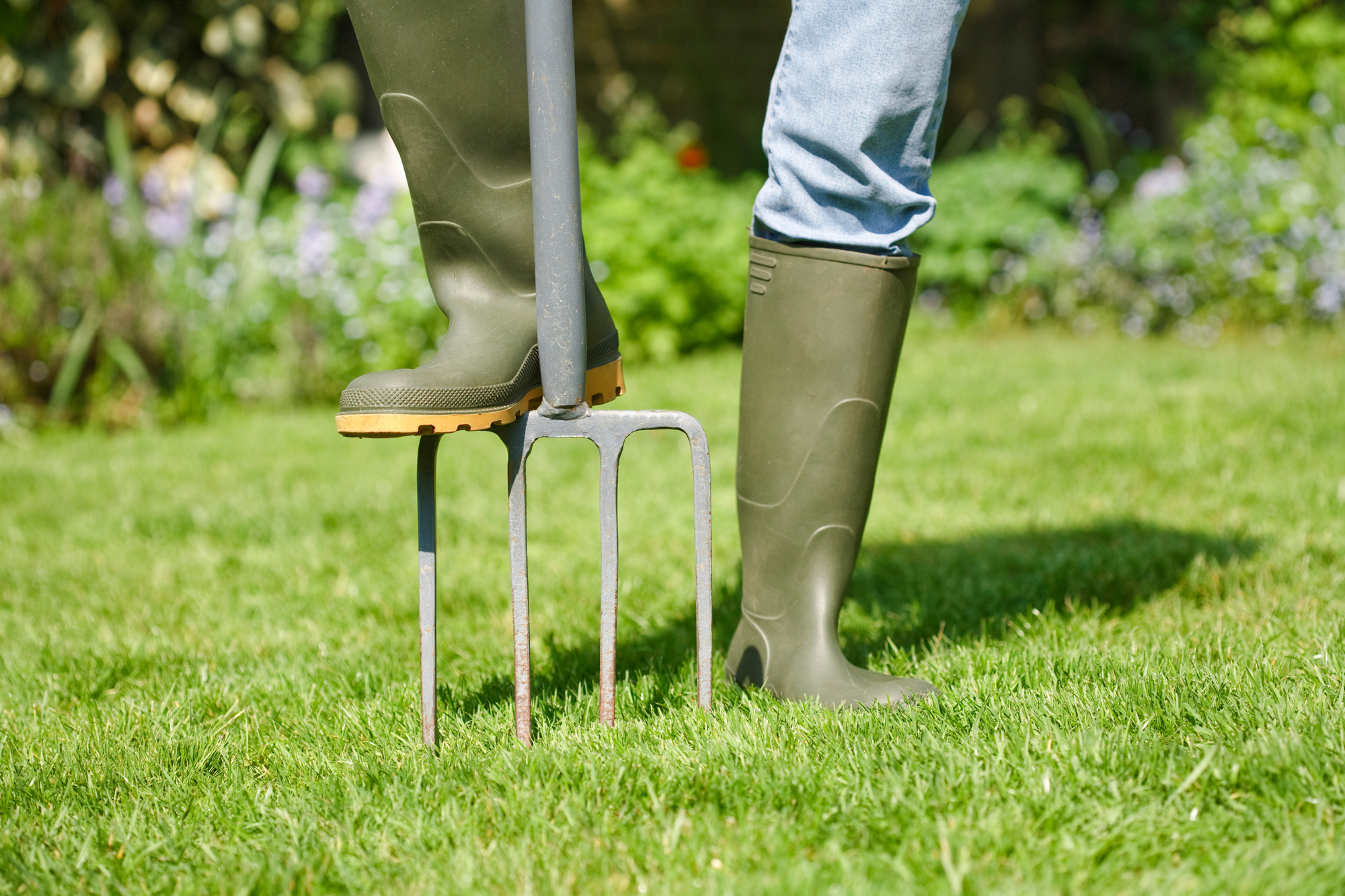
The fix is simpler than most people expect. You make holes in the lawn. On a small or average plot, an ordinary garden fork does the work. Drive the tines straight down to their full depth, rock the fork to and fro a little to widen each hole, pull it out and move on, spacing the holes around 10 to 15cm (4 to 6in) apart across the whole area. That is the core of it. Everything else in this piece is about doing it well, doing it at the right moment, and making the benefit last past a single season.
How to tell your lawn has gone compacted
Compaction creeps up over a year rather than appearing overnight, so the signs are easy to miss until the grass starts to suffer. The clearest test costs nothing. After a spell of rain, look at where the water goes. On open, healthy soil it drains away within an hour or two. On compacted ground it sits on top in puddles or runs off to the lowest point, taking feed and seed with it. Press a screwdriver or a thin trowel into the turf. In good soil it slides in with light pressure. In compacted soil you have to lean on it, and it stops short.
The grass itself gives it away too. The thinnest, weakest strips tend to follow the routes people and pets take across the lawn, along with the spot where the children’s goal stood all summer. Moss often moves into these areas, not as the first problem but as a symptom, settling where grass has given up on airless, damp ground. If the lawn feels hard as a board underfoot and recovers slowly from every dry spell, the soil below has closed up and the roots are trapped in the top inch or two.
Why opening the soil changes everything below the surface
Healthy soil is not solid. Up to a third of it is empty space, a network of tiny pores that hold air and let water move down. Grass roots depend on those pores. Roots are living tissue, and they need oxygen to take up water and nutrients and to keep growing. When pressure squeezes the pores shut, the oxygen cannot get in and carbon dioxide cannot get out. The roots slow down, stop pushing deeper and crowd into the shallow surface layer where a little air remains. Shallow roots dry out fast in summer and sit cold and exposed in winter, which is the whole reason a compacted lawn looks stressed at both ends of the year.
Water tells the same story. On open soil, rain and feed sink to where the roots can use them. On packed soil the water has nowhere to go, so it pools, runs off or evaporates, and the lawn ends up both waterlogged on the surface and thirsty below. The earthworms and soil life that would normally keep the ground loose cannot survive in airless soil either, so the problem feeds itself. Making holes breaks that cycle. Each channel lets oxygen down to the roots and gives water a path to follow, and roots grow down into the looser soil around every hole. That is the quiet work that turns into thicker, stronger grass months later.
How to aerate a lawn step by step
Timing comes first. Aerate after rain has softened the ground, or water the lawn well the day before. Moist soil parts cleanly and dry soil fights the fork. Avoid the job when the ground is waterlogged, frozen or bone dry, and leave it for a milder day if frost is forecast. Autumn beats spring for this work: the grass is still growing and has weeks to knit back together before winter, and you avoid stirring up the weed seeds that a spring opening can wake.
For most lawns, a sturdy garden fork is all you need. A traditional digging fork such as a Spear and Jackson costs around £25 to £30 (about $35 to $40) and lasts for decades. Drive the tines in as deep as they will go, ease the handle to and fro to open each hole a little wider, and work in rows 10 to 15cm (4 to 6in) apart. On the hardest, most worn patches, go over the area twice. It is slow and it is a workout, so break a large lawn into sections and do a different strip each year rather than attempting the whole thing in an afternoon.
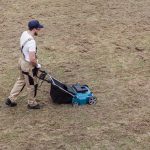
Heavy, clay or constantly wet soil needs more than solid tines. A hollow tine aerator, whether a hand tool at around £25 (about $30) or a rolling push model at around £35 (about $45), pulls out plugs of soil rather than just spiking through it. Removing plugs relieves the pressure properly instead of pressing the walls of each hole tighter, which is what a solid spike can do in sticky clay. Leave the cores where they fall for a few days to dry, then break them up by mowing over them or raking them across the surface. For a large lawn, a petrol or electric aerator hired from a tool shop for around £60 a day (about $75, with core aerator hire running to around $100 a day in warmer regions) saves your back.
Topping the holes so the benefit lasts
Holes on their own close up again within weeks under foot traffic and rain. To hold them open and improve the soil for good, brush a free draining top dressing into them straight after aerating. This is the step that turns a one off chore into a lasting change in the ground. A good homemade mix, by volume, is three parts sandy loam, six parts sharp sand and one part well rotted compost. Use washed, gritty horticultural sharp sand, not builders’ sand, which packs down and makes compaction worse. A 20kg bag of horticultural sharp sand runs around £6 (about $8).
Spread the dressing at roughly 2 to 3kg per square metre (about 4 to 7lb per 10 square feet), working a shovelful at a time, and drag it into the holes with the back of a rake or a stiff broom. The grass blades should still show through once you have finished. If dressing is left sitting on the surface, you have used too much and should brush more of it in or sweep the excess off. If it vanishes into the turf at once, the soil was hungry for it and a little more will help. On a lawn that has thinned badly, scatter grass seed over the dressed area while the soil is open and warm. A box of hardwearing lawn seed costs around £15 (about $20) and the fresh seed roots into the newly loosened soil far better than it would into hard ground.
If the grass is growing poorly, follow up with an autumn lawn feed, not a leftover summer one. Autumn feeds are high in potassium and phosphorus to harden the plant and drive root growth through the cold, while summer feeds carry too much nitrogen and push soft top growth that winter will punish. Water the feed in if no rain follows within a day. You can read more on the rest of the autumn lawn jobs that pair with aeration.
When to leave the fork in the shed
Aeration is not an annual ritual for every lawn, and overdoing it wastes effort. A lawn on free draining soil that drains well and feels springy underfoot does not need it. For most gardens, solid tine forking every two to three years keeps the ground open, and a hollow tine treatment on heavy or waterlogged soil every three to four years is enough. If you spike a lawn that was never compacted, you gain little and you have torn up the surface for no reason.
Walk away from the job entirely when the ground is frozen, waterlogged or set hard in a dry spell, and wait for the settled, damp, still mild days that early and mid autumn usually bring. Push the work much later and the grass will not recover before the cold shuts growth down, which leaves an open, battered surface going into winter. Get the timing right, make the holes, feed them with a sandy dressing, and the change happens out of sight over the quiet months. By spring the roots are deeper, the surface drains, and the grass comes back thicker than the tired lawn you started with.