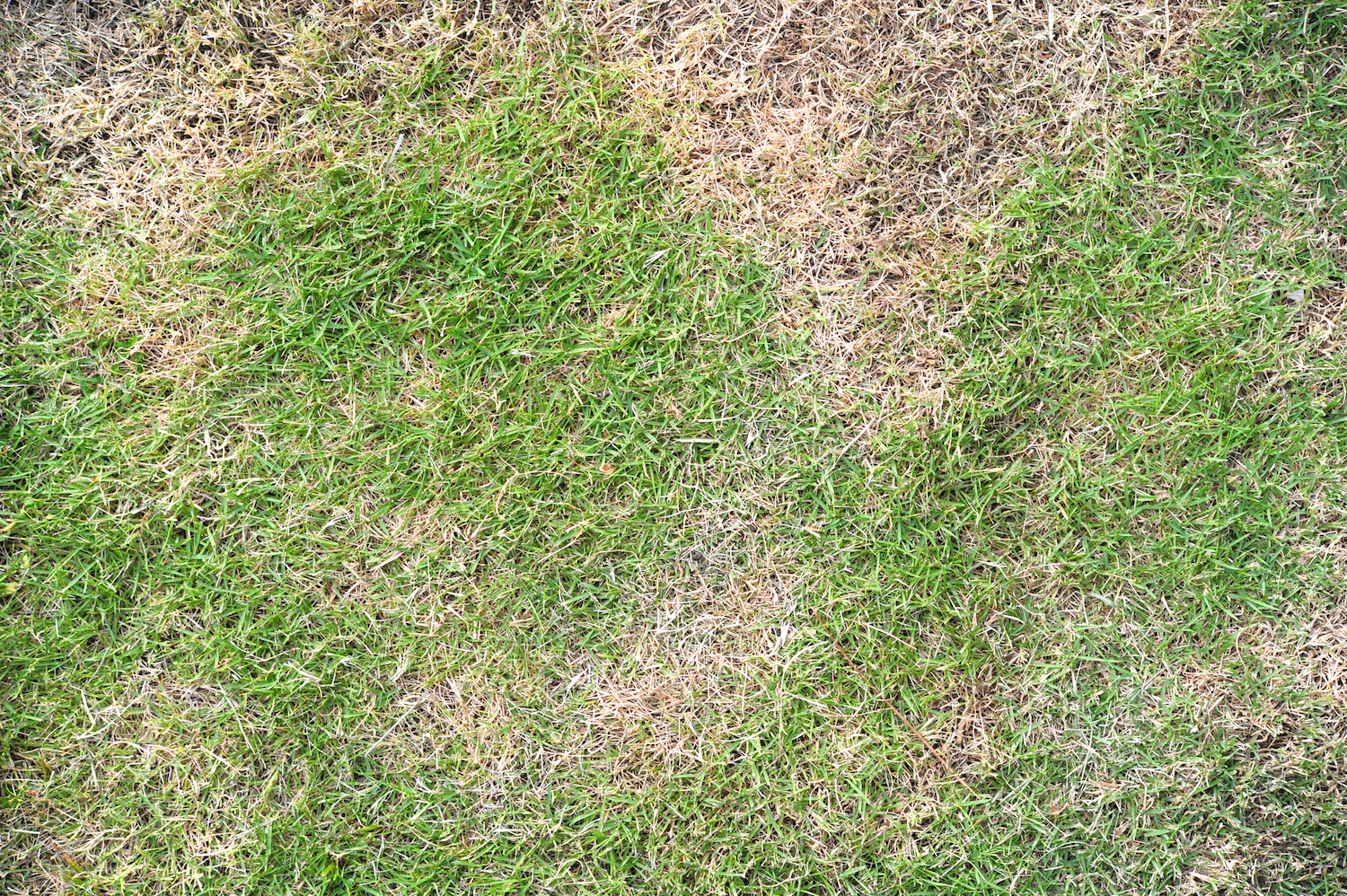
If a patch of your lawn has turned straw brown in early summer and watering does nothing to revive it, billbugs are worth ruling out before you blame the weather. These small weevils lay eggs inside grass stems, and the legless grubs that hatch eat their way down through the plant, hollowing out the stem and killing the shoot from the inside. The damage looks exactly like drought or disease, which is why most gardeners treat the wrong problem for weeks while the grubs keep feeding. A two second tug on the dead grass tells you which one you are dealing with.
Billbugs feed on the grasses that make up most lawns, including ryegrass, fescue, bluegrass and bermuda. The adults are dark grey to black, around 6 to 10mm (0.25 to 0.4 inches) long, with a curved snout they use to bore into stems. You rarely see them at work because they hide in thatch by day. The grubs do the real harm, and by the time the surface shows it, the population is already well established. Knowing how to spot them, when to act, and why the usual fixes fail turns a mystery brown patch into a problem you can solve.
The Tug Test That Separates Billbugs From Drought
Grass killed by drought stays rooted. Pull a handful of dormant brown grass in a dry spell and it resists, because the crown and roots are still anchored even though the leaves have stopped growing. Grass killed by billbugs does the opposite. Grasp a clump of dead stems between finger and thumb and pull straight up. If the shoots snap off at the base with almost no resistance, and the broken ends are hollow and packed with what looks like fine sawdust or pale powder, you have billbug larvae. That powder is frass, the digested waste the grub leaves behind as it tunnels. Professional groundsmen call this the tug test, and it is the single most reliable field check there is.
Look at the pattern of damage as well. Billbug injury starts as small dead spots about 5 to 7cm (2 to 3 inches) across, often near paths, drives and south facing edges where the soil warms first. The spots enlarge and merge as the grubs grow and move outward. The timing counts too. This kind of damage appears from June into August, peaking in the warm weeks of midsummer, which is exactly when a stressed lawn might also be browning from heat. The overlap is what fools people. If you water a drought patch deeply it greens up within a week or two. If you water a billbug patch, nothing happens, because the stems feeding those leaves have already been severed below ground.
One more confirmation: scrape back the thatch at the edge of a dead spot and look in the top 2cm (about an inch) of soil. Young billbug larvae are creamy white, legless, slightly C shaped, with a hard tan or brown head, and they grow to around 6 to 10mm. The absence of legs is the giveaway. True white grubs, the larvae of chafers and similar beetles, have three pairs of obvious legs near the head. Mistaking one for the other sends you to the wrong treatment, so check before you spend money.
The Life Cycle That Decides When You Treat
Treatment fails more often from bad timing than from the wrong product, and the reason sits in the billbug life cycle. Adults overwinter in sheltered spots around the lawn, in leaf litter, cracks and the base of walls. As soil warms in spring they walk out, often across paths and patios where you might notice them on a warm morning, and the females chew small holes in grass stems to lay their eggs. Each egg hatches into a larva that feeds inside the stem first, then chews down into the crown and root zone as it grows. By midsummer the larvae are large, feeding in the soil, and that is when the surface damage suddenly appears.
This sequence explains why a soil drench applied in July often disappoints. The most damaging feeding has already happened, and the grubs are protected deep in the crown. The two windows that actually work are earlier. The first is in spring, when the adults are walking and laying but before eggs hatch, because a treatment then stops the next generation before it starts. The second is just as eggs hatch and the youngest larvae are still near the surface and vulnerable. A useful trick from turf research is the path count: on a warm spring day, watch a stretch of paving beside the lawn for five minutes. If you see several adult billbugs walking across, you have a breeding population and treating that spring is worthwhile.
How to Control Billbugs Without Reaching for Chemicals First
The most durable defence is the grass itself. Many modern ryegrass and fescue seed blends are sold as endophyte enhanced, meaning they carry a natural fungus inside the plant that produces compounds adult billbugs avoid eating. Overseeding a vulnerable lawn with an endophytic blend at around 35g per square metre, roughly 1.75kg for a typical 50 square metre lawn, gradually shifts the sward towards grass the adults dislike. Endophytic ryegrass seed costs around £10 to £15 per kilogram (about $13 to $19), available at garden centres, B&Q, Home Depot or Amazon. Check the bag, since the endophyte content fades in seed stored warm for a long time, so buy fresh and store it cool and dry.
Good basic care also hides and outpaces mild damage. A lawn that is fed in spring with a balanced nitrogen feed and watered deeply during dry spells can produce new tillers fast enough to mask light billbug feeding, because the crown keeps pushing out side shoots faster than the grubs kill them. Reducing thatch helps too. A thick thatch layer above 1cm (about half an inch) gives adults somewhere to shelter and holds the surface moisture young larvae need, so scarifying in autumn removes part of their habitat.
For a biological option that targets the grubs directly, beneficial nematodes work when the timing and conditions are right. Steinernema carpocapsae is the species sold for billbug and weevil larvae. These microscopic worms enter the grub and kill it, and a pack treating around 100 square metres costs roughly £15 to £20 (about $20 to $26). They need warm, moist soil above 12 degrees Celsius (54 degrees Fahrenheit), so water the lawn before and after applying, and use them in the evening because sunlight kills them on contact. Apply when the youngest larvae are active rather than after the damage is done.
If you choose an insecticide, match it to the stage. A pyrethroid such as bifenthrin, applied in spring to the lawn surface and the paving edges where adults walk, targets the egg laying adults. A systemic soil drench, watered in well, suits the egg hatch window when larvae are still feeding near the surface. Always water the product in as the label directs, because a granule or spray left dry on the leaf does little against an insect that lives inside the stem and soil. Read the label for the grass and the season, and keep children and pets off until the lawn has dried.
What Happens If You Leave Them
Left untreated, a billbug population builds year on year because each generation that survives overwinters and breeds again the following spring. A few dead spots one summer become large coalescing patches the next, and once the crowns are destroyed the grass cannot regrow from them. You are then reseeding bare ground rather than nursing thin grass back, which costs more in seed, water and time than an early spring treatment would have. The other hidden cost is misdiagnosis. Every week you spend watering, feeding or dosing a billbug patch as though it were drought or disease is a week the grubs keep feeding unchecked.
The practical takeaway is simple. When a summer patch refuses to green up after a deep soak, do the tug test before anything else. Snapping hollow stems and sawdust frass point to billbugs, and from there the plan is clear: improve the grass with endophytic seed, mask light damage with sound feeding and watering, and time any treatment to the adults in spring or the youngest larvae at egg hatch rather than the large grubs of high summer. Get the timing right and you break the cycle. Get it wrong and you simply feed next year’s generation.