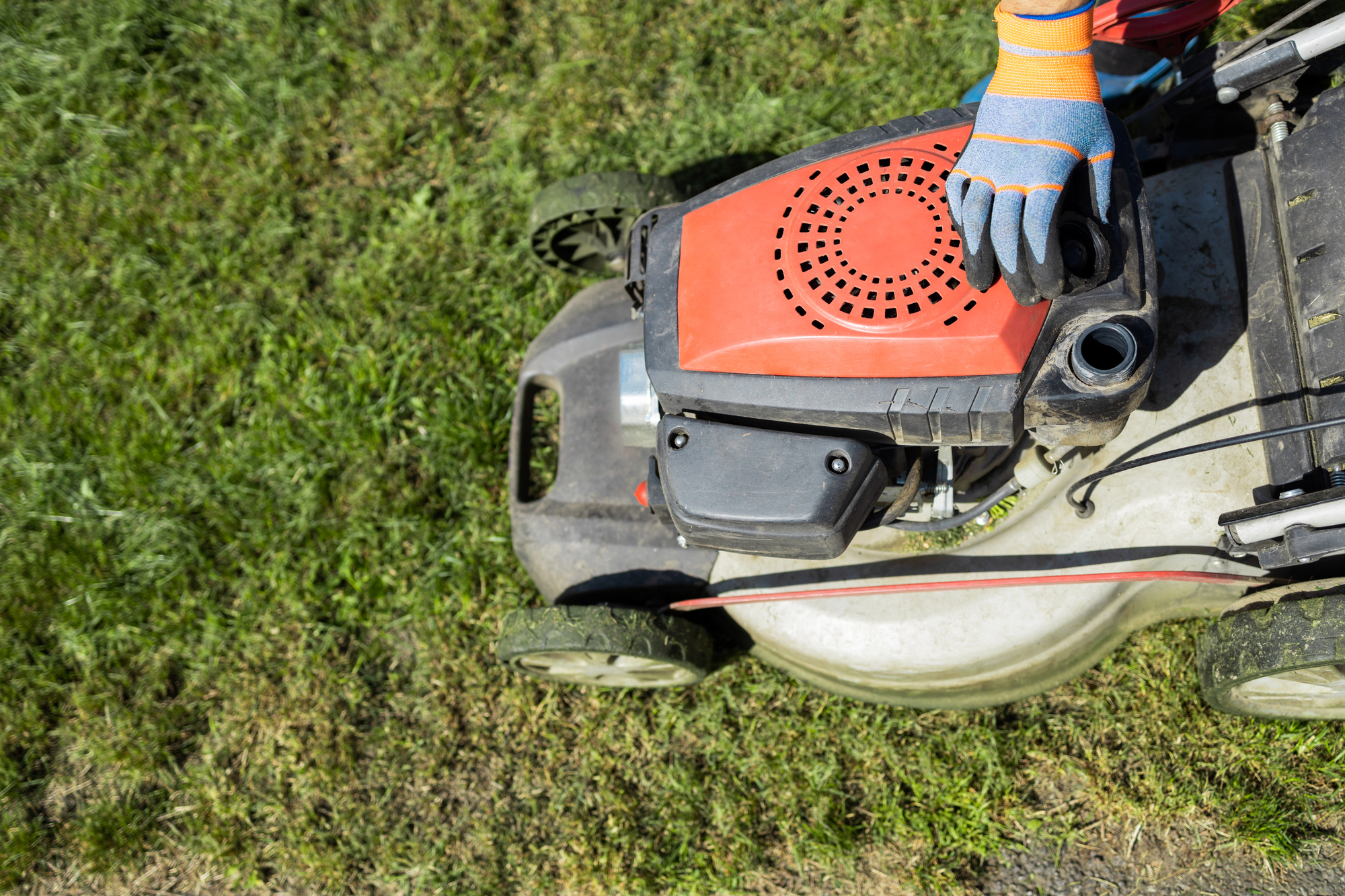
When two petrol mowers sit side by side at similar prices, the name stamped on the deck tells you far less than the name cast into the engine. The engine decides how easily the mower starts on a cold morning, how it copes with thick wet grass, how loud it is, how long it lasts and how much a repair will cost in five years. Three names turn up again and again on walk-behind mowers, Briggs and Stratton, Honda and Kohler, and knowing what each is built for makes the difference between a mower you replace in three seasons and one that runs for fifteen.
The Three Names You See Most and What Each Is Known For
Briggs and Stratton is the engine you find on the largest number of budget and mid-range mowers. Its current residential range, badged with series names such as 550, 675 and 725 EXi, is designed for light domestic use: a modest lawn cut once a week through the growing season. These engines start easily, need little maintenance, and keep the price of the whole mower down, which is why so many entry-level and mid-priced machines use them. The trade-off is that they are not built for heavy hours or punishing conditions.
Honda sits at the premium end. The GCV160 and GCV170 engines fitted to mowers such as the Honda HRN and HRX have a long reputation for smooth running, quiet operation and reliability that field users rate well above the budget brands. Owners and groundskeepers frequently report Honda engines outlasting cheaper rivals by a wide margin in the same conditions. You pay more at the till for that, and for a small flat lawn the extra may be more than you need, but on a mower you intend to keep for a decade it tends to pay back. Kohler is the third name, less common on small push mowers and more often found on larger self-propelled and ride-on machines. Kohler built its name on commercial-grade engines with cast-iron cylinder liners and high torque for heavy work, though its single-cylinder Courage series from years past earned a poor reputation and was eventually dropped, so it is worth checking which family a given Kohler engine belongs to. You will also see Kawasaki on higher-end and professional mowers, prized like Honda for longevity, and a growing number of unbranded or Loncin-built clones on the cheapest machines, which can be perfectly serviceable for very light use but rarely match the established names on parts support.
How to Read the Numbers on the Engine
The figure most people look for is no longer horsepower. Briggs and Stratton stopped quoting horsepower on its residential mower engines and instead prints gross torque in foot-pounds, which is why a 675 EXi engine is rated around 6.75 ft-lb rather than a horsepower figure. Torque is the turning force that keeps the blade spinning through dense grass without bogging down, so for a mower it is arguably the more useful number. The series name often encodes it: a 725 series sits a little above a 675, and so on up the range.
The other number worth reading is engine capacity in cubic centimetres. A Honda GCV170 displaces 166cc, a GCV160 displaces 160cc, and a typical 675 EXi Briggs runs around 163cc. Bigger capacity generally means more power available for long or overgrown grass and for driving a self-propelled transmission, while a smaller engine of 125 to 140cc is fine for a small, regularly cut lawn. Capacity is not the whole story, because engine design counts too, but comparing cc and torque between two engines of similar type gives you a fair sense of which will cope better when the grass is thick and damp. Where you can, choose an engine with an overhead-valve (OHV) design rather than an older side-valve layout, because OHV engines run cooler, burn fuel more efficiently and tend to last longer.
What Each Engine Costs You Over Ten Years
Price at the till is only the first number. A push mower with a Briggs and Stratton 675-series engine often starts around £200/$260, while a Honda mower built on the GCV170, such as the HRN, starts higher, with Honda listing its 21-inch walk-behind range from around $599 in push form and more for self-propelled versions, which translates to roughly £350 and up. That gap of a hundred pounds or more is the question every buyer weighs.
The case for spending it comes down to wear and repair. Field reports and long-running owner forums consistently put Honda engine life well ahead of the budget brands in the same use, with some users estimating three to four times the working life before major wear. Briggs single-cylinder engines have a known weakness for head-gasket trouble as they age, and the discontinued Kohler Courage gained its bad name for similar durability issues, whereas Honda and Kawasaki engines and the better Kohler families tend to keep running with only routine servicing. Against that, Briggs has the widest parts availability and the cheapest spares, so a budget engine that does fail is usually cheap and easy to fix. If you cut a small lawn a few dozen times a year, a Briggs may comfortably outlive your interest in the mower. If you cut a large or rough lawn often, the premium engine spreads its cost over far more hours.
Which Engine to Pick for Your Garden
For a small, flat, regularly mown lawn, almost any current engine will do, and a mid-range Briggs and Stratton keeps the price sensible without leaving you short of power. The grass is rarely long, the hours are low, and the engine spends its life well within its comfort zone. There is little reason to pay a premium you will not use.
For a large lawn, long grass, slopes, or a mower you expect to run hard and keep for many years, a Honda GCV-series engine or a Kawasaki is the safer choice, because the extra durability and smoother running earn their keep over the hours. If you are looking at a self-propelled or ride-on machine, a larger Kohler or Kawasaki built for heavier work suits the load. Whatever the badge on the deck, turn the mower around and read the engine first, check whether it is overhead-valve, note the cc and the torque, and ask how easy the spares are to get locally. The deck and wheels wear slowly and are cheap to fix. The engine is the part you are really buying, and it is the part that decides how long the whole mower lasts.
Starting systems are the other place the names diverge, and they affect daily use more than any spec sheet. Briggs and Stratton fits many of its engines with a ReadyStart primer-free, choke-free system that lets the engine start cold on the first or second pull without fiddling, and Honda uses an automatic mechanical decompression and a smooth carburettor setup that gives its engines a reputation for catching almost instantly. Older or cheaper engines still rely on a manual primer bulb you press three times, or a choke lever you set and then reset once the engine warms, and forgetting either is the most common reason a healthy engine refuses to start. If easy starting is a priority, look for an auto-choke or primer-free engine and you remove a whole category of morning frustration.
Maintenance habits also split along these lines. Every one of these engines, premium or budget, lasts far longer with an annual oil change using the grade in the manual, usually SAE 30 or 10W-30, a clean or new air filter each season, and a fresh spark plug every year or two. A Honda or Kawasaki rewards that care with a very long life, but it will still seize if run dry of oil, and a cheaper Briggs treated well will comfortably outlast a premium engine that is neglected. In other words, the badge sets the ceiling on how long an engine can last, but servicing decides how close you get to it, which is why a careful owner can make a modest engine go the distance and a careless one can ruin the best.