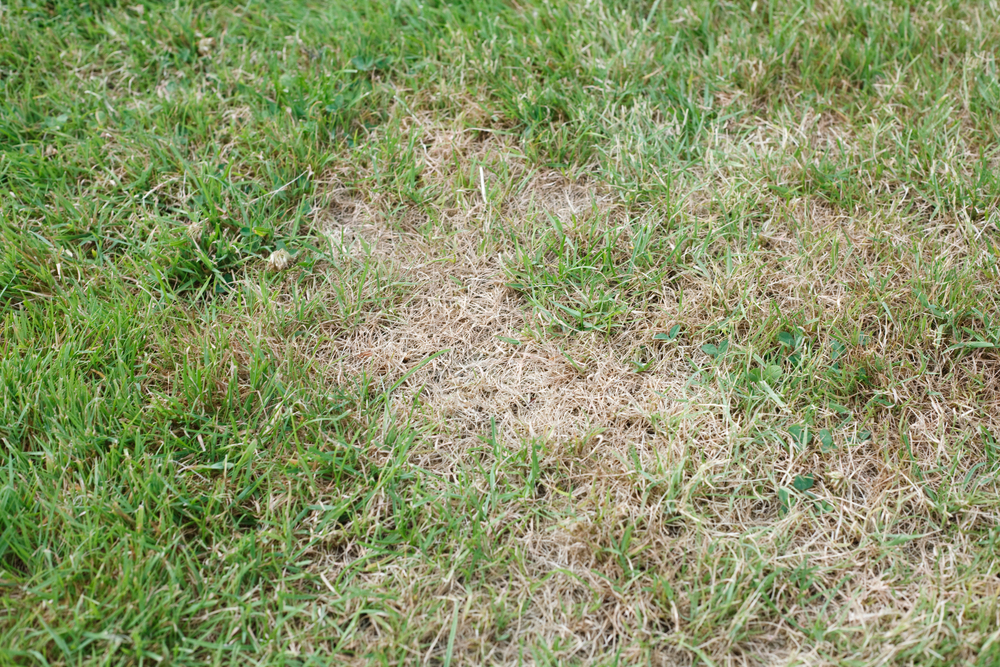
Brown patch can turn a healthy lawn into rings of dead grass in the time it takes for one warm, humid night to pass. If you are seeing roughly circular brown areas, sometimes with a darker grey ring around the edge in the early morning, the cause is the fungus Rhizoctonia solani. The practical response is to stop watering in the evening, ease off high-nitrogen feed, and get more air moving across the grass, because this disease lives and dies on how long the leaf blades stay wet.
The fungus is present in most soils all the time, surviving harmlessly as threads and resting bodies. It only turns aggressive when the weather suits it: warm days, night temperatures staying above about 20 degrees C (68 degrees F), and humidity high enough that the grass never fully dries. Penn State Extension notes that severe damage occurs when leaf surfaces stay wet or humidity climbs above 95 percent through a warm night. Under those conditions the fungal threads grow rapidly across the canopy, bridging from one wet blade to the next, which is how a small spot becomes a patch a metre across by morning.
That overnight spread is the single feature that defines brown patch and separates it from drought scorch or pet urine damage. Drought browns the high, dry spots first and comes on gradually. Brown patch appears as defined circles, often with healthy-looking green grass in the centre giving a doughnut shape, and it can enlarge dramatically after a single muggy night. In the dew of early morning you may spot a faint greyish web of mycelium at the advancing edge, sometimes called a smoke ring. That ring disappears as the sun dries the lawn, so the best time to confirm the diagnosis is at dawn.
Why Evening Watering and Heavy Feeding Make It Spread
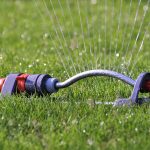
Every cultural cause of brown patch comes back to leaf wetness and soft growth. Watering in the evening leaves the grass damp through the whole warm night, giving the fungus the unbroken window of moisture it needs to grow. The fix is to water deeply but early, ideally between dawn and mid-morning, so the blades dry within a few hours. Watering little and often is worse than a single deep soak, because frequent light sprinkling keeps the surface permanently humid without ever wetting the root zone properly.
Nitrogen is the other lever. A heavy feed pushes out a flush of soft, sappy leaf tissue that the fungus penetrates easily, and dense top growth also traps humidity at the base of the sward. University extension guidance is to apply only moderate nitrogen during the warm months on any lawn with a history of the disease, and to favour slow-release formulations that feed gently rather than producing a sudden surge. If you have been reaching for a strong summer feed to green up a struggling lawn, that may be the very thing fuelling the outbreak. A balanced slow-release product applied at the recommended rate, typically around 20 to 35g per square metre, is far safer than a quick-acting high-nitrogen feed in July heat.
How to Stop an Active Outbreak
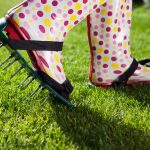
Start by changing the conditions the fungus depends on. Shift all watering to the morning. Improve airflow by trimming back overhanging shrubs and tall border plants that shade the lawn and hold still, humid air against it, because good air movement dries the canopy and lowers fungal growth. If the lawn is compacted, aerate it by pushing a garden fork 10 to 15cm (4 to 6 inches) into the turf every 10cm or so, or use a hollow-tine aerator, which improves drainage and gets oxygen to the roots so the grass can defend itself.
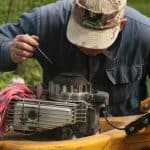
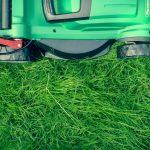
Mowing needs care during an outbreak. Keep the blades sharp, because a clean cut heals faster than the ragged, torn wound a blunt blade leaves, and torn tissue is an open door for infection. Collect the clippings rather than mulching them back while the disease is active, so you are not spreading fungal fragments across the lawn, and rinse or clean the mower deck afterwards. Raise the cutting height slightly: longer grass is under less stress and shades its own roots, though you should still never remove more than a third of the leaf in one cut.
For most home lawns these cultural changes are enough, and the grass grows out of the damage once the weather breaks, because brown patch usually kills only the leaf and crown rather than the whole plant. Where the disease is severe or recurring on a prized lawn, a fungicide can be used, with extension services recommending a rotation of the active ingredients azoxystrobin and propiconazole to avoid the fungus building resistance to a single chemistry. Always apply early in the day and follow the label rate exactly. Treat fungicide as a backstop rather than a first move, since a lawn managed with morning watering, moderate feeding and good airflow rarely needs it.
Recovery and Stopping It Coming Back
After the warm, humid spell passes, affected areas usually recover as new leaf pushes up from surviving crowns. Help that along with light, even watering in the morning and hold off on heavy feeding until temperatures drop in autumn, when a balanced autumn feed will thicken the sward without the disease risk. Patches that stay bare can be raked and overseeded once nights cool, choosing a disease-tolerant ryegrass or fescue mix.
The lawns that suffer brown patch year after year are almost always the ones watered at night, fed hard in summer, and hemmed in by still air. Get those three things right and the fungus, while never fully gone from the soil, simply never finds the conditions it needs to take hold. The consequence of ignoring it is not just unsightly circles for one season but a thinning lawn that opens up to weeds and moss, since every patch the fungus kills is a gap that something less welcome will fill.
Confirming the diagnosis saves you treating the wrong problem. Brown patch is sometimes mistaken for dollar spot, which produces much smaller, silver-dollar-sized bleached spots rather than large circles, and for ordinary drought scorch, which follows the dry high points of a lawn rather than forming neat rings. Lawns with a high proportion of perennial ryegrass and tall fescue are among the more susceptible to brown patch, and freshly fed, fast-growing turf is more vulnerable than a lawn growing steadily, which is another reason to hold back the nitrogen in muggy weather.
The consequences of getting the watering wrong are easy to underestimate. A single habit of switching the sprinkler on after work, leaving the grass wet all night, can be enough to keep an outbreak rolling for weeks even after you have corrected everything else. Set any automatic system to run before dawn so the lawn is wet for the shortest possible time once the sun is up, and during a humid spell consider skipping irrigation altogether on days when rain or heavy dew has already wet the grass. The fungus needs continuous leaf moisture, so every hour you shorten the wet period directly slows its spread.
It is worth stressing that brown patch is rarely fatal to a whole lawn, and that fact should shape your response. The fungus attacks leaf and crown tissue but usually leaves the roots and growing points alive, so once the warm, humid weather breaks the grass regrows from those survivors without any reseeding. That is why patience and good cultural practice beat panic and chemicals for the home gardener. Reaching straight for a strong fungicide and a tonic feed at the first brown ring often does more harm than the disease, because the extra nitrogen feeds the very soft growth the fungus prefers. Change the watering, ease the feeding, open up the air, and let the lawn recover on its own through to autumn renovation.