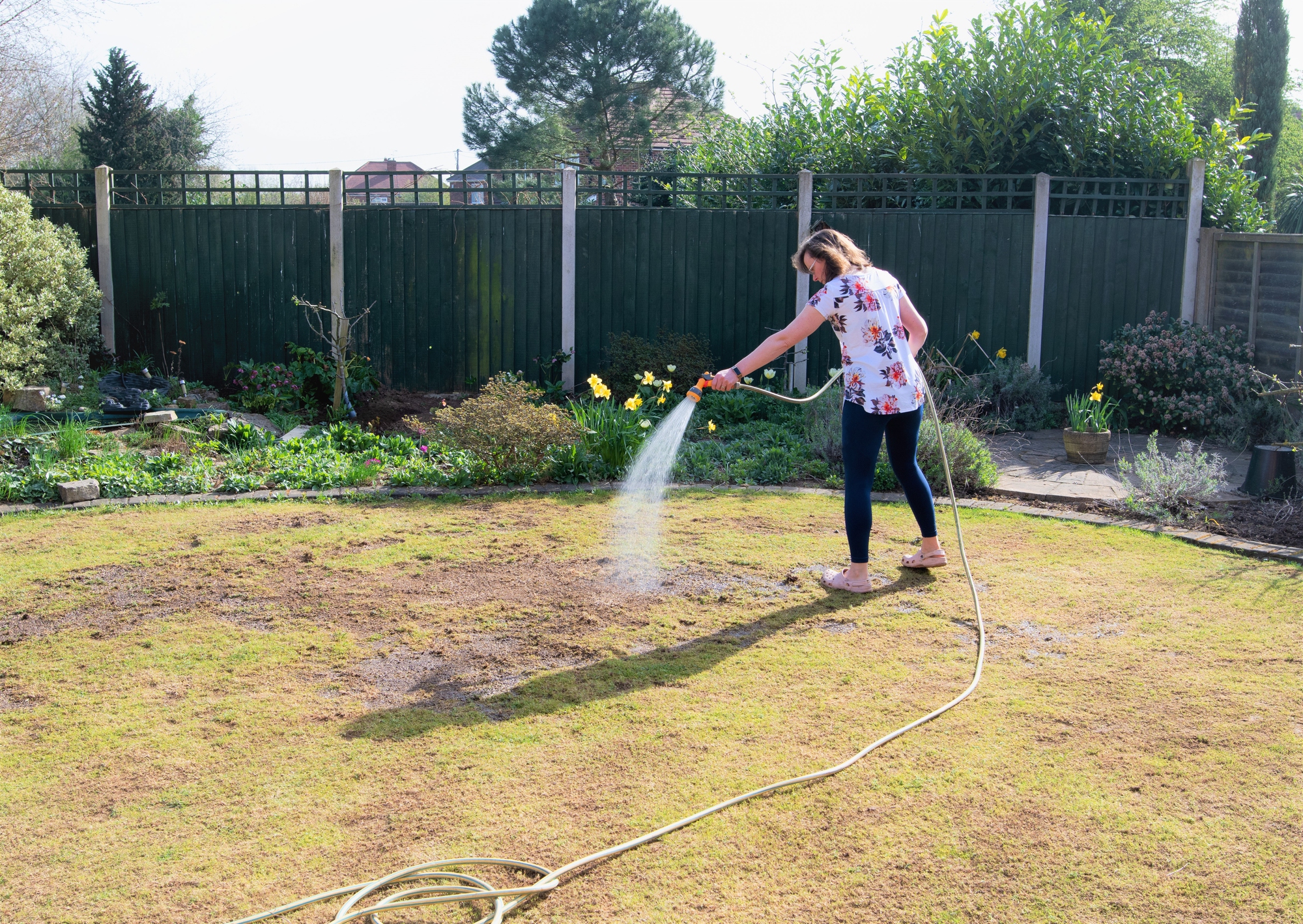
When patches of lawn turn yellow and then straw-brown in the sunniest, driest parts of the garden in the middle of summer, almost everyone reaches for the hose. If the patches keep spreading no matter how much you water, the cause is probably not drought at all. It is chinch bugs, tiny sap-feeding insects that drain the grass from the base of the blades and leave damage that looks identical to dry weather. The essential difference is that watering a drought-stressed lawn revives it, while watering a chinch-infested lawn changes nothing, because the grass has lost the ability to move that water at all.
What Chinch Bugs Are and the Damage They Do
An adult chinch bug is about 3mm long, roughly an eighth of an inch, with a black body and white wings that fold flat across its back in a small X shape. The young, called nymphs, hatch a bright reddish-orange with a pale band across the middle and darken as they grow. They live down where you rarely look, right at the soil line among the thatch at the base of the grass plants. They feed by piercing the stem and crown with a needle-like mouthpart and sucking out the sap, and this is where the real harm comes from. As they feed they inject a toxin in their saliva that blocks the plant’s water-conducting tissue, the tiny internal pipes that carry moisture up from the roots. Once those vessels are blocked, the grass cannot move water to its leaves even when the soil beneath it is damp. That is the reason a chinch-damaged lawn does not green up after watering the way a thirsty lawn does, and it is the single most useful clue you have.
The damage shows first as irregular yellow patches that fade to a bleached straw-brown, and those patches steadily expand outward week by week. It is always worst in the hottest, sunniest, driest parts of the lawn, the strip along a path or driveway, the open middle of a front lawn, the bank that catches full afternoon sun. Hot, dry weather is exactly what chinch bugs love, and a long warm spell lets them breed through several overlapping generations in a single summer, so a small population in June can become a lawn-wrecking one by August if nothing is done.
How to Tell Chinch Bugs From Simple Drought
Before you spend money on treatment, prove it is chinch bugs and not weather. Drought stress is fairly uniform, follows whole sun-baked areas in a predictable way, and recovers within a day or two of a deep soak. Chinch damage keeps expanding even after you water, and the insects concentrate in a band at the advancing edge, where the dying yellow grass meets the still-green grass they are moving into. The middle of an old patch is often empty because the bugs have already drained it and moved on.
Two simple field tests confirm it. The first is to kneel at the edge of a yellowing patch on a warm afternoon, part the grass right down to the soil with your fingers, and watch the thatch for a few seconds. Chinch bugs are fast and will scurry once disturbed, and you will see the small dark adults and reddish nymphs moving among the stems. The second is the float test, and it is the most reliable. Cut both ends out of an empty tin can, push one end 4 to 5cm (a couple of inches) into the ground at the margin of a damaged patch, and fill it with water. Keep it topped up for five to ten minutes, and any chinch bugs in that core of turf will float up to the surface where you can count them. As a rough guide, more than 20 to 25 bugs in a test like that signals a population heavy enough to be causing the damage and worth treating.
How to Treat an Infestation
The first line of defence is cultural, and it works because it attacks the conditions chinch bugs need. Water the lawn deeply and regularly. These insects prefer hot, dry turf, so keeping the lawn properly watered both discourages them and helps the grass outgrow light feeding damage. Consistent moisture also favours a naturally occurring fungus, Beauveria, that infects and kills chinch bugs, which is one reason well-watered lawns rarely suffer badly. Tackle thatch too, because a thick spongy layer of dead material at the soil surface is where chinch bugs shelter and breed, and it shields them from any treatment you apply. Scarifying or aerating to keep thatch thin removes their hiding place. Mowing at the higher end of the range for your grass keeps the crowns shaded and the soil surface cooler, which the bugs dislike.
If the float test shows a damaging population that is still spreading, an insecticide is justified. A bifenthrin-based product gives a fast knockdown and comes as granules you spread with an ordinary fertiliser spreader, or as a liquid you apply through a hose-end sprayer. For longer preventive cover, an imidacloprid-based treatment lasts well into the season. Whichever you use, treat the damaged area plus a generous buffer of green grass all around it, because that green margin is exactly where the bugs are advancing. Water granular products in lightly so they reach the soil line where the bugs live, apply in the late afternoon, and follow the label on repeat applications, since the overlapping generations mean a single treatment rarely catches them all. Avoid blanket-spraying the whole lawn if you can, because chinch bugs have useful natural predators, including big-eyed bugs and ladybirds, and wiping those out can leave you worse off next year.
Recovery, Prevention and the Mistakes to Avoid
Once you have knocked the population back, the dead patches will not regrow on their own, so rake them out and overseed, keeping the new seed watered through establishment. This is also the moment to build in long-term protection. Some ryegrass and fescue seed is sold as endophyte-enhanced, meaning the grass carries natural fungal endophytes in its tissue that are toxic to chinch bugs and several other surface-feeding insects. Choosing an endophyte-enhanced blend when you overseed is one of the most effective things you can do to stop the problem returning, and it costs no more than ordinary seed.
The mistakes that let chinch bugs win are easy to make. The biggest is assuming the brown patches are drought and simply watering harder, which wastes water and gives the population weeks to build while you wait for a recovery that never comes. Letting thatch grow thick gives them a permanent nursery. Mowing too short stresses the grass and warms the soil in their favour. And reaching straight for a whole-lawn spray kills the predators that would otherwise help you. Untreated, the separate yellow patches join up into large dead areas by late summer that need full renovation to fix. Caught at the first expanding patch, with a float test to confirm and a spot treatment to match, it stays a small job. The lawn that goes into autumn thick and well-watered is the one chinch bugs leave alone.
When to Start Watching Each Year
Chinch bugs are predictable once you know their season, and that predictability is your advantage. They overwinter as adults tucked into thatch, leaf litter and the base of hedges, then become active as the weather warms and lay their eggs as temperatures climb into early summer. The first generation of nymphs hatches into the warm, dry weather they thrive in, and it is this first wave that you want to catch. A lawn that came through last summer with mysterious spreading brown patches is very likely to see them again, so make a habit of doing the float test on the same vulnerable areas, the sun-baked strips beside paths and driveways, as soon as the first hot, dry spell of the season arrives.
Knocking back that first generation before it breeds is worth far more than fighting three overlapping generations in August. A single well-timed check in early summer, a five-minute float test, and a spot treatment if the numbers are high will usually keep the whole lawn clear for the rest of the year. Keep the lawn well watered and the thatch thin through the warm months, overseed any weak areas with an endophyte-enhanced blend, and you turn a recurring summer headache into a problem you simply monitor and forget. The gardens that suffer worst are always the ones where the early patches were written off as drought, season after season, until the damage became impossible to ignore.