
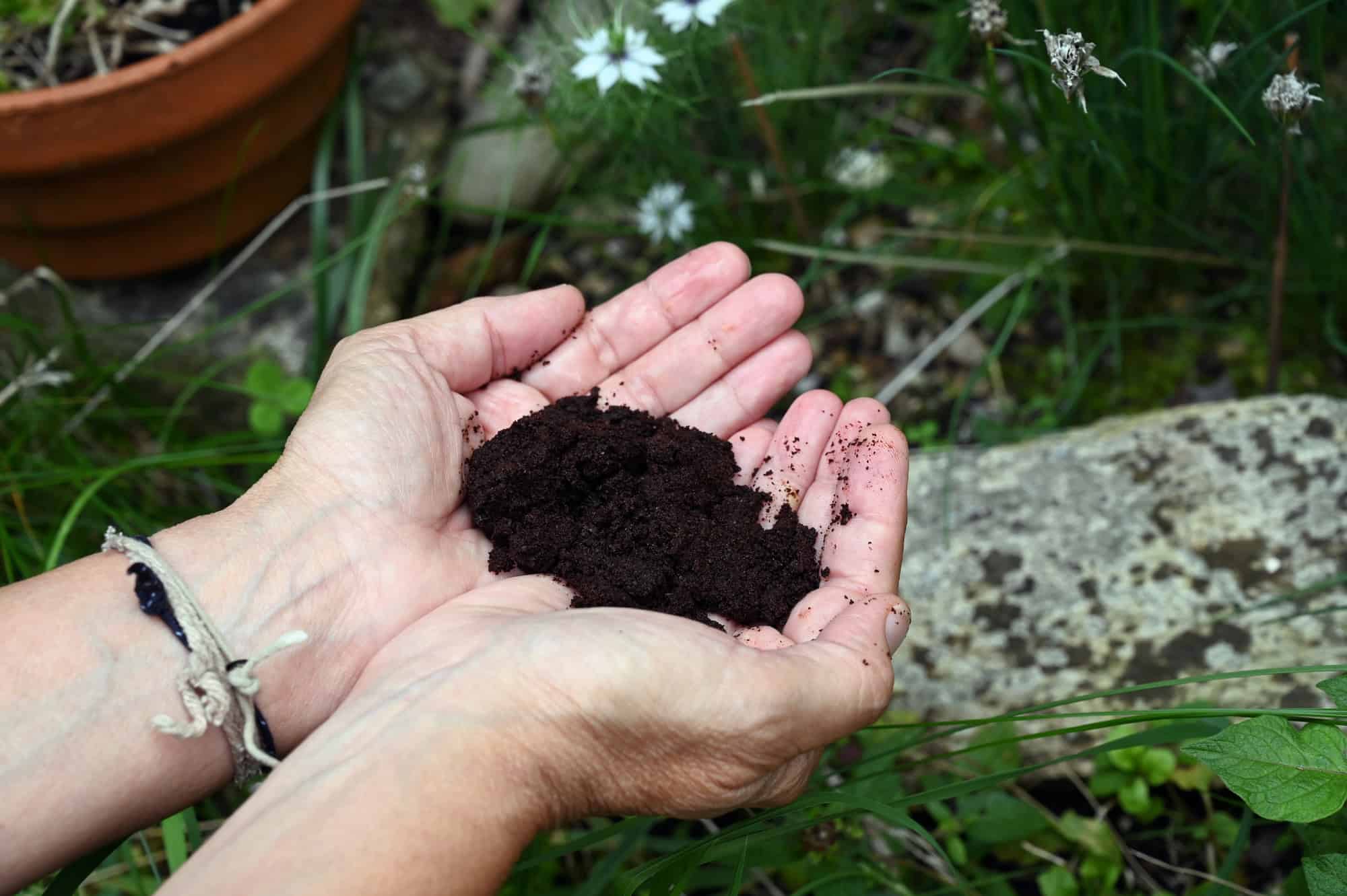
Every spring, the same advice appears across gardening forums, social media, and news sites: sprinkle coffee grounds on your lawn and watch the grass turn thick and green. The claim is that coffee grounds are a free, natural fertiliser packed with nitrogen, that they suppress weeds, repel slugs, and improve the soil all at once. It sounds too good to be true, and in some respects it is. Coffee grounds on your lawn can be beneficial, but the reality is more complicated than the headlines suggest, and getting it wrong can do more harm than good.
This article separates the facts from the myths, looks at what the research actually says about coffee grounds on lawns, and explains when they help, when they hinder, and how to use them properly if you decide they are worth the effort.
What Is in Coffee Grounds?
Used coffee grounds contain roughly 2 percent nitrogen by weight, along with smaller amounts of phosphorus (around 0.3 percent) and potassium (around 0.3 percent). They also contain trace amounts of calcium, magnesium, and other micronutrients. On paper, that nitrogen content looks promising. Nitrogen is the nutrient most responsible for leaf growth and green colour in grass, and 2 percent is comparable to some low-strength organic fertilisers.
However, the nitrogen in coffee grounds is not immediately available to the grass. It is locked up in organic compounds that need to be broken down by soil microorganisms before the grass roots can absorb it. This process takes weeks to months depending on soil temperature, moisture, and microbial activity. In a warm, moist soil in summer, breakdown is relatively quick. In a cold spring soil, it can be very slow indeed. This is why people who apply coffee grounds in March and expect a green lawn by April are usually disappointed.
The pH of used coffee grounds is close to neutral, typically between 6.5 and 6.8. This is a common source of confusion. Fresh, unbrewed coffee is acidic, but the brewing process extracts most of the acid into the liquid you drink. The spent grounds left behind are only very mildly acidic to neutral. This means the widespread belief that coffee grounds will acidify your soil is largely incorrect for used grounds. The effect on soil pH is negligible in the quantities most people apply.
Do Coffee Grounds Actually Fertilise a Lawn?
Yes, but slowly and modestly. A study by Oregon State University found that coffee grounds applied as a soil amendment did release nitrogen over time, but at a rate too slow to serve as a primary fertiliser for actively growing plants. The grounds need to decompose first, and until they do, the nitrogen is unavailable.
There is also a temporary side effect that catches people off guard. Fresh coffee grounds applied in a thick layer can actually cause a short-term nitrogen deficit in the soil. This happens because the microorganisms breaking down the grounds consume nitrogen from the surrounding soil as fuel for their work. For a few weeks after application, the grass can yellow slightly as the microbes and the grass compete for the same limited nitrogen supply. Once the grounds have decomposed and the microbial population stabilises, the nitrogen is released back into the soil, but that initial dip can be alarming if you were expecting instant greening.
The practical takeaway is that coffee grounds are a slow-release soil amendment, not a fast-acting fertiliser. They will contribute a small amount of nitrogen to the soil over time, but they cannot replace a proper lawn feed. If your lawn is already well fed with a balanced fertiliser two or three times per year, coffee grounds will add very little on top. If your lawn has not been fed at all, coffee grounds alone will not provide enough nutrition to make a visible difference. Our guide on fertilising fundamentals covers the full feeding programme a lawn needs.
Do Coffee Grounds Kill Weeds?
This claim is partly true, but not in the way most people think. Research has shown that coffee grounds contain allelopathic compounds, natural chemicals that inhibit the germination of some seeds. A study published by the International Journal of Innovation and Scientific Research found that high concentrations of coffee grounds suppressed the germination of certain weed species in laboratory conditions.
The important words are “high concentrations” and “laboratory conditions.” In a real lawn, the layer of coffee grounds you apply is thin and breaks down quickly. The allelopathic effect is too weak and too short-lived to provide meaningful weed suppression in outdoor conditions. You would need to apply such a thick layer to achieve a real effect that you would smother the grass along with the weeds.
The other problem is that the same germination-inhibiting compounds do not discriminate between weed seeds and grass seeds. If you are planning to overseed your lawn, applying coffee grounds at the same time could reduce the germination rate of the grass seed you have just sown. Keep coffee grounds and grass seed well separated in your calendar, leaving at least four to six weeks between them.
For genuine weed control, proper cultural methods and targeted treatments are far more effective. Our spring weed control guide covers the approaches that actually work.
Do Coffee Grounds Repel Slugs and Snails?
This is one of the most persistent claims about coffee grounds, and the evidence is mixed. A handful of small studies have suggested that caffeine is toxic to slugs and snails at certain concentrations, and that a ring of coffee grounds around a plant can deter them from crossing. The theory is that the caffeine irritates the mucous membrane on the slug’s underside and the rough, gritty texture of the grounds provides a physical barrier.
In practice, most gardeners who have tried this report mixed results at best. The caffeine content of used grounds is much lower than fresh grounds, because most of the caffeine has already been extracted into the coffee you drank. Rain and irrigation dilute the caffeine further, and within a day or two of application the deterrent effect has largely disappeared. Gardeners dealing with a serious slug problem will find more reliable solutions through other pest control methods.
Do Coffee Grounds Improve Soil Structure?
This is where coffee grounds provide their most genuine benefit, and it is the one that gets the least attention in most articles. Coffee grounds are organic matter. When added to soil and allowed to decompose, they contribute to the humus content of the soil, which improves its structure, water-holding capacity, and drainage. They also encourage earthworm activity. Earthworms are attracted to decomposing organic matter and will move into areas where coffee grounds have been incorporated into the soil surface.
More earthworms means better natural aeration, improved nutrient cycling, and healthier soil biology overall. This is a genuine, well-documented benefit, though it takes months of regular application to produce a noticeable change. It is not as exciting as “instant green lawn” but it is more meaningful in the long run.
The benefit is greatest on poor soils that lack organic matter, particularly sandy soils that drain too fast and heavy clay soils that compact easily. On these soil types, adding coffee grounds as part of a broader soil health programme can make a real difference over a growing season. On soils that already have good organic content, the improvement will be marginal.
What Coffee Grounds Cannot Do
It is worth being clear about the things coffee grounds will not achieve, because the internet is full of exaggerated claims.
Coffee grounds will not turn a yellow, neglected lawn green in a week. The nitrogen release is too slow and too modest for that. A proper nitrogen-based lawn fertiliser will achieve visible greening in 7 to 14 days. Coffee grounds will take months to have any visible effect on colour, and only then as a supplement to normal feeding.
Coffee grounds will not replace a lawn fertiliser programme. The NPK content is too low and too imbalanced. A lawn needs around 150 to 200 grams of actual nitrogen per 100 square metres per year. To supply that from coffee grounds alone at 2 percent nitrogen content, you would need to apply 7.5 to 10 kilograms of coffee grounds per 100 square metres per year. Most households produce nowhere near that volume, even with a heavy coffee habit.
Coffee grounds will not fix a lawn that has deeper problems such as compaction, poor drainage, thatch build-up, or shade. These issues need to be addressed through aeration, dethatching, drainage improvements, or species selection rather than surface amendments.
Coffee grounds will not prevent moss. Moss grows in shaded, damp, compacted, or underfed lawns, and none of those conditions are remedied by adding coffee grounds. Our guide on how to get rid of moss in lawn naturally covers the real solutions.
How to Apply Coffee Grounds to Your Lawn Properly
If you want to use coffee grounds on your lawn, the method of application is important. Done correctly, they are a useful free soil amendment. Done incorrectly, they can cause problems.
First, dry the grounds before applying. Wet, clumpy coffee grounds will form a dense mat on the lawn surface that blocks air and moisture from reaching the soil. Spread used grounds on a baking tray or newspaper and leave them in a warm, dry place for a day or two until they are loose and crumbly.
Second, apply thinly and evenly. Scatter the dried grounds across the lawn by hand or with a seed spreader, aiming for a layer no thicker than about 5 millimetres. You should still be able to see the grass blades through the grounds after application. If the grounds are thick enough to hide the grass, you have applied too much.
Third, rake or brush the grounds into the soil surface lightly. This helps the grounds make contact with the soil where the microorganisms can begin breaking them down, and it prevents the grounds from sitting on the leaf surface where they can block light.
Fourth, water the lawn after application if conditions are dry. A light watering helps settle the grounds into the soil and begins the decomposition process. Do not soak the lawn, just enough to moisten the surface.
Apply no more than once per month through the growing season, from April to September in the UK. More frequent applications risk building up a layer of undecomposed organic matter on the surface, which can encourage fungal problems and contribute to thatch. For a more detailed walkthrough, our dedicated guide on how to apply coffee grounds to lawn covers the process step by step.
Composting Coffee Grounds First: The Better Approach
Most soil scientists and professional lawn care specialists agree that the best way to use coffee grounds is to compost them first rather than applying them directly to the lawn. Adding coffee grounds to a compost bin or heap allows the decomposition process to happen before the material reaches your lawn, which eliminates the temporary nitrogen-lock problem and produces a stable, nutrient-rich compost that the grass can use immediately.
Coffee grounds are classed as a “green” composting ingredient, meaning they are high in nitrogen relative to carbon. For a balanced compost, mix them with “brown” ingredients such as cardboard, dried leaves, straw, or wood chips at a rough ratio of one part coffee grounds to three or four parts brown material. The resulting compost can be top-dressed onto the lawn at any time of the growing season as part of a broader compost top-dressing programme.
If composting is not practical for you, the direct application method described above will still work. Just be aware that the benefits take longer to show and the risk of temporary yellowing is higher with direct application.
Coffee Grounds and Lawn Worms
One genuinely positive effect of coffee grounds that is well supported by research is their attraction to earthworms. A study by the Soil Ecology Laboratory at Cornell University found that earthworms are drawn to soils amended with coffee grounds and that worm populations increased in test plots where grounds were applied regularly.
This is good news for lawn health because earthworms are among the most beneficial organisms in a lawn ecosystem. They tunnel through the soil, creating channels that improve aeration and drainage. They pull organic matter from the surface down into the root zone, improving soil structure. Their castings are rich in nutrients and beneficial microbes. A lawn with a healthy worm population is almost always a healthier lawn overall. More detail on the role of worms in lawn care is in our article on lawn worms.
When Not to Use Coffee Grounds on Your Lawn
There are a few situations where coffee grounds should be avoided entirely.
Do not apply coffee grounds to a newly seeded lawn or immediately before overseeding. The allelopathic compounds can inhibit grass seed germination and reduce establishment rates. Wait at least four to six weeks after seeding before applying grounds, and at least the same period after a grounds application before sowing seed.
Do not apply coffee grounds in thick layers. Anything more than 5 to 10 millimetres deep risks creating an impermeable mat that encourages surface fungal growth, blocks gas exchange, and contributes to thatch build-up. If you produce a lot of coffee grounds, add the excess to the compost bin rather than piling them onto the lawn.
Do not apply coffee grounds in winter or late autumn when the soil is cold and microbial activity is low. The grounds will sit on the surface without decomposing and can become a slippery, mouldy layer that damages the grass underneath. Restrict applications to the active growing season between April and September.
Do not rely on coffee grounds as your only soil improvement strategy. They are one small part of a healthy soil management approach that should also include proper feeding, aeration, and soil testing to identify what your lawn actually needs.
The Bottom Line on Coffee Grounds and Lawns
Coffee grounds are a free, readily available organic material that can provide a small, slow-release dose of nitrogen to your lawn, improve soil structure over time, and encourage earthworm activity. These are real benefits and they are worth having, particularly if you are already pursuing an eco-friendly lawn care approach and want to make use of kitchen waste.
What coffee grounds are not is a miracle product. They will not replace a proper fertiliser programme, they will not kill weeds, they will not reliably deter slugs, and they will not turn a struggling lawn green overnight. The articles and social media posts that promise these results are overstating the evidence, often by a wide margin.
Use coffee grounds as a supplement, not a substitute. Dry them, apply them thinly, rake them in, and repeat once a month through the growing season. Compost them first if you can. And keep feeding, mowing, and aerating your lawn properly alongside. That combination will give you the thick, green lawn that coffee grounds alone never will.
Coffee Grounds Frequently Asked Questions
Are coffee grounds good for grass?
Coffee grounds provide a small amount of slow-release nitrogen and improve soil structure over time. They are a useful supplement but not a replacement for proper lawn fertiliser. Applied correctly in thin layers, they will benefit the lawn gradually rather than producing instant results.
Will coffee grounds make my lawn green?
Not quickly. The nitrogen in coffee grounds is released slowly over weeks to months as the grounds decompose. For fast greening, a nitrogen-based lawn fertiliser is far more effective. Coffee grounds are better thought of as a long-term soil improver than a quick-fix greening treatment.
Do coffee grounds make soil acidic?
Used coffee grounds have a near-neutral pH of around 6.5 to 6.8 and will not meaningfully change your soil’s acidity. The acids present in raw coffee are extracted into the liquid you drink, leaving the spent grounds with very little acidifying effect.
Can I put too many coffee grounds on my lawn?
Yes. Thick layers of coffee grounds can smother grass, block moisture and air from reaching the soil, and encourage fungal growth. Apply no more than 5 millimetres at a time and rake the grounds into the soil surface. If you produce more grounds than the lawn can take, add the surplus to a compost bin.
How often should I apply coffee grounds to my lawn?
No more than once per month through the growing season, April to September in the UK. More frequent applications risk building up undecomposed organic matter on the surface, which can contribute to thatch and fungal problems.
Do coffee grounds keep slugs off the lawn?
The evidence is mixed. Used grounds contain much less caffeine than fresh grounds, and the deterrent effect fades within a day or two as rain dilutes the residue. Most gardeners report that coffee grounds alone are not a reliable slug control method.
Should I compost coffee grounds before putting them on the lawn?
Composting first is the better approach. It allows the grounds to decompose before they reach the lawn, which eliminates the risk of temporary nitrogen lock-up and produces a more balanced soil amendment. If composting is not practical, direct application in thin layers will still work but the benefits take longer to show.
Can coffee grounds replace lawn fertiliser?
No. Coffee grounds contain roughly 2 percent nitrogen and very small amounts of phosphorus and potassium. The NPK content is too low to meet a lawn’s nutritional needs. A proper fertiliser programme two to three times per year is still needed for a healthy, green lawn.
Sources
- Oregon State University Extension Service. “Coffee Grounds and Composting.” Gardening Research Publications. https://extension.oregonstate.edu/
- Royal Horticultural Society. “Coffee Grounds in the Garden.” RHS Gardening Advice. https://www.rhs.org.uk/
- Hardgrove, S.J. and Livesley, S.J. “Applying Spent Coffee Grounds Directly to Urban Agriculture Soils Greatly Reduces Plant Growth.” Urban Forestry and Urban Greening, 2016.
- Cornell University Soil Ecology Laboratory. “Earthworm Response to Organic Amendments.” Soil Biology Research. https://www.cornell.edu/
- The Lawn Association. “Organic Amendments for Lawn Care.” Technical Guidance Notes.