If pale, star-shaped clumps of coarse grass are flattening out across your lawn this month, you are almost certainly looking at crabgrass. The single most useful thing to know is that timing decides everything: a young plant with one or two stems is easy to pull or spray, while the same plant three weeks later, fat with seed heads, will shrug off most treatments and seed the soil for years to come. Deal with it while it is small, mow your real grass taller, and you starve next year’s crop before it ever sprouts.
How to Spot Crabgrass Before It Takes Over
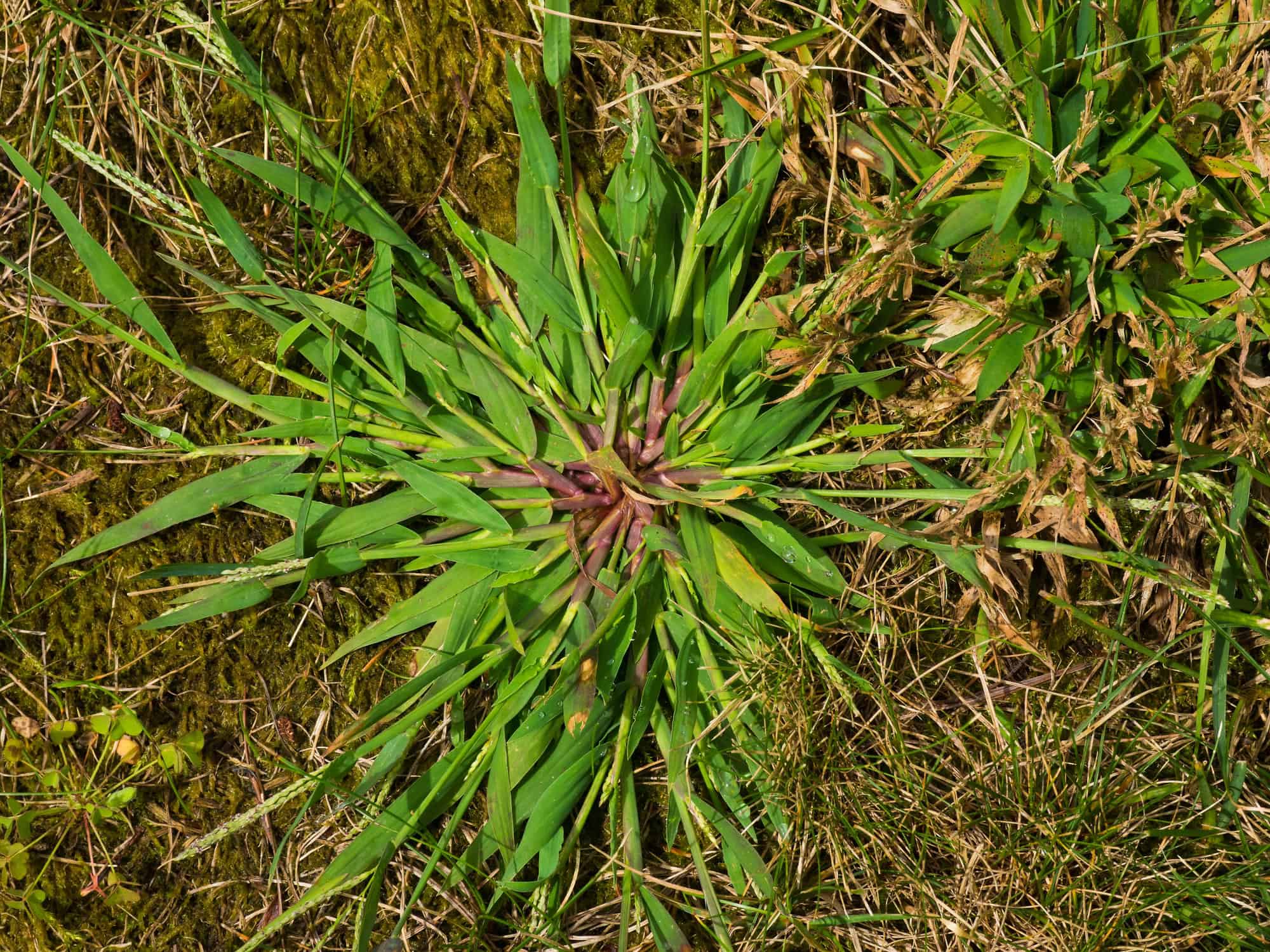
Crabgrass (Digitaria species) does not look like your fine lawn grasses, and learning the difference is the first defence. It germinates as a single light-green seedling, then sprawls outward from a central point with stems that radiate flat along the ground like the legs of a crab, which is where the name comes from. The blades are noticeably wider and coarser than fescue or ryegrass, often a paler, slightly yellow-green, and the whole plant sits lower and looser than the upright turf around it. By midsummer it throws up finger-like seed heads, two to six spikes spreading from a single point, often with a purplish tint at the base.
The reason it appears so suddenly is that crabgrass is a summer annual. It completes its entire life in one season, dying with the first autumn frost, so every plant you see grew this year from seed. That is both bad news and good news. Bad, because a single plant is a seed factory: research from university turf programmes shows one crabgrass plant can produce 150 to 700 tillers (side shoots) and up to 150,000 seeds in a season. Good, because if you stop those seeds forming, you break the cycle. The plant has no roots or runners that survive winter to ambush you next year. Everything depends on the seed bank in your soil.
Check the low, hot, dry parts of your lawn first: along driveways and paths, around the thin scorched edges, and anywhere the mower scalps a bump. These are the spots where your desirable grass thins out and bare soil warms quickly, which is exactly the seedbed crabgrass wants.
Why Crabgrass Wins in Summer
To beat a weed you have to understand what it is exploiting. Crabgrass germination is driven by soil temperature, not air temperature. Seeds begin to wake when the soil surface holds around 13 degrees C (55 degrees F) for four or five consecutive days, but the big flush comes when soil at a 2.5cm (1 inch) depth climbs to roughly 23 degrees C (73 degrees F) and above. Around 80 percent of germination happens once the top 5cm (2 inches) of soil sits steadily between 15 and 21 degrees C (60 to 70 degrees F). That is high summer in most temperate gardens, the same period when cool-season lawn grasses slow down and go semi-dormant under heat stress.
So the timing is no accident. Crabgrass is a warm-season opportunist that surges precisely when your fescues and ryegrasses are weakest. It also has a competitive trick: it photosynthesises through a more heat-efficient pathway than cool-season turf, so it keeps growing fast in drought and heat that leave the rest of the lawn struggling. The thinner and more stressed your real grass, the more bare warm soil it leaves exposed, and the more crabgrass seed germinates. This is why crabgrass is so often a symptom of a deeper problem: shallow watering, mowing too short, or compacted soil that thins the turf and opens the door.
Understanding the seed bank also explains why one bad year leads to several. Those 150,000 seeds per plant do not all sprout the following spring. Many stay viable in the soil for three years or more, germinating in waves. Let a patch go to seed once and you are dealing with the consequences for several seasons, which is the single biggest reason to act before the seed heads ripen.
Pulling, Spraying and the Timing That Decides Success
For small infestations, hand pulling is highly effective if you do it early. A young crabgrass plant with one to four stems has a shallow, fibrous root and lifts cleanly, especially from moist soil, so water the area first or weed the morning after rain. Get the whole crown out, drop it in a bag rather than leaving it on the lawn, and reseed the bare spot only in autumn, because grass seed sown into hot summer soil rarely establishes and the gap will simply grow more crabgrass if left open. In the meantime, a sprinkle of dry topsoil over the scar keeps the surface from baking.
For larger patches, a selective post-emergent herbicide is the realistic option, and here the science of timing is unforgiving. The two active ingredients that work on crabgrass already growing in turf are quinclorac (sold in products such as Drive XLR8 and many consumer crabgrass killers) and mesotrione (the active ingredient in Tenacity). Penn State turf guidance is blunt about the window: control is best on plants with fewer than four tillers, the small plants you typically see before early July. Once a plant has five or more tillers and is heading toward seed, a single spray will not finish it, and you will need repeat applications on a two to three week interval. Quinclorac tends to handle larger, more mature plants better than mesotrione, while mesotrione has the advantage of being safe to use around new grass seed.
Cost is modest. A concentrate like Tenacity runs around £40 to £55 ($50 to $70) for an 8oz bottle that treats a large area many times over, and quinclorac products work out to roughly $1.70 per application, so a single bottle covers a typical garden for years. Two practical points the label often buries: water the lawn well in the days before you spray so the crabgrass is actively growing and takes up the chemical, and never spray in the heat of a drought-stressed afternoon, when both the weed and your grass are shut down and the turf is most likely to scorch. Spray on a calm, mild morning, and add a non-ionic surfactant if the product calls for one, because crabgrass leaves are waxy and shed droplets.
The Long Game: Thick Grass Is the Best Weedkiller
No spray fixes the underlying cause, which is thin turf over warm soil. The most powerful crabgrass control is a dense, well-rooted lawn that never lets sunlight reach the soil surface, because crabgrass seed needs light and warmth to germinate and a shaded seedbed simply will not sprout. The cheapest tool you own for this is your mower. Raising the cutting height to around 7.5cm (3 inches) through summer shades the soil, keeps it cooler, and encourages deeper roots on your real grass. Studies on home lawns repeatedly show taller mowing dramatically reduces crabgrass invasion compared with close cutting, with no extra product at all.
Watering style helps too. Deep, infrequent soaking that wets the soil to 15cm (6 inches) once or twice a week drives turf roots down and leaves the surface drier between waterings, which favours your grass over shallow-rooted crabgrass seedlings. Frequent light sprinkling does the opposite, keeping the top centimetre damp and warm, the perfect crabgrass nursery. Feed your lawn on a sensible autumn-led schedule so it goes into summer thick rather than soft and overfed.
The decisive move for next year is a pre-emergent herbicide applied in early spring, before the soil warms to that 13 degrees C (55 degrees F) trigger. Products based on pendimethalin or prodiamine lay down a barrier in the top layer of soil that stops germinating seeds from establishing. The classic timing cue gardeners use is to apply when local forsythia finishes flowering, or simply to watch soil temperature and treat a week or two ahead of the threshold. Get that pre-emergent down on time and you prevent the bulk of the crop without touching a single mature weed, which is far easier than chasing tillers across a hot lawn in July. Combine spring prevention, taller summer mowing, and quick removal of any escapees before they seed, and within two or three seasons the seed bank runs down and crabgrass stops being an annual battle.