If patches of your lawn are yellowing and thinning for no clear reason in early summer, and birds keep tearing at the same spots, the culprit may be living just under the surface. Leatherjackets, the larvae of crane flies, feed on grass roots and stem bases and can hollow out a lawn from below. The damage often becomes visible now, in late spring and early summer, even though the grubs have been feeding since the previous autumn. Spotting the signs early lets you confirm the problem and plan the one treatment window that actually works.
What Leatherjackets Are and Why Damage Shows in Early Summer
Leatherjackets are the larval stage of the crane fly, the long legged insect often called a daddy long legs. Adult crane flies emerge mainly from late summer into autumn and lay their eggs in damp turf. Within about two weeks the eggs hatch into greyish brown, legless grubs up to 30mm (just over an inch) long, with tough, leathery skin that gives them their name. These grubs live in the top few centimetres of soil and feed on grass roots and the base of the stems through autumn, winter and into spring.
The timing explains why so many people first notice trouble now rather than when the feeding began. Through autumn and winter the grass is barely growing, so root loss goes unseen. As the weather warms and the lawn tries to put on strong spring and early summer growth, the grass suddenly needs roots it no longer has, and the damaged areas yellow, thin and fail to green up like the rest of the lawn. By June the surviving larvae are large and feeding hard before they pupate, so the damage peaks just as you want the lawn at its best. Shortly after, adult crane flies begin to emerge, leaving empty pupal cases behind and starting the cycle again.
The Five Signs to Look For
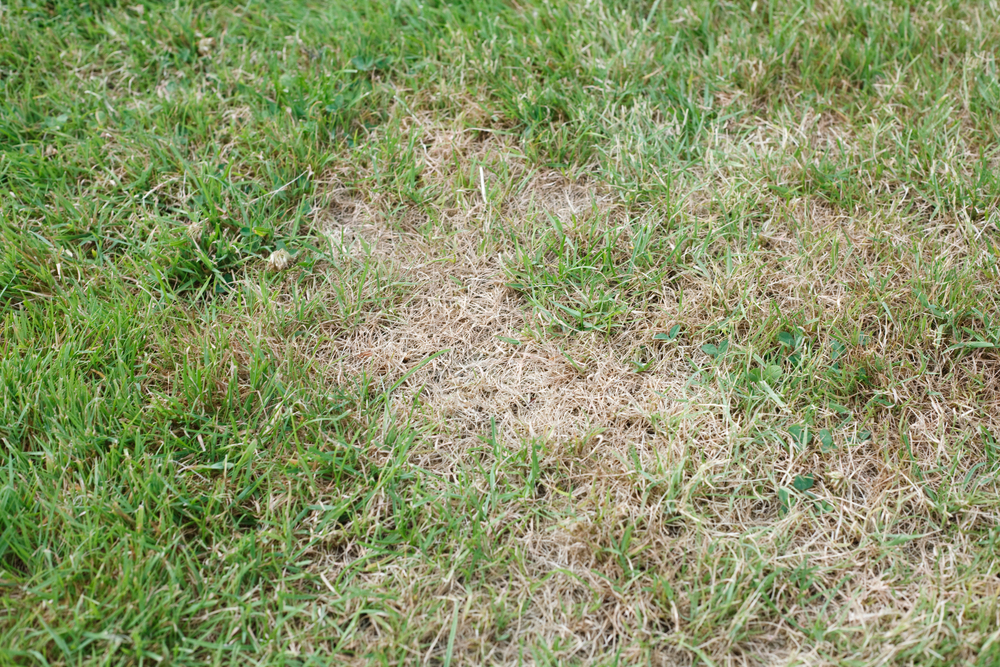
The first sign is irregular yellow to brown patches that appear from spring onward and do not recover with watering or feeding. Unlike drought stress, which spreads evenly across exposed areas, leatherjacket damage tends to be patchy and worst where the turf was already a little weak. The second sign is turf that feels spongy underfoot and lifts easily. Because the grubs sever the roots, damaged grass loses its anchorage, and you can sometimes peel back a section of lawn like a loose rug with almost no root holding it down.
The third and most telling sign is bird activity. Starlings, crows, magpies, rooks and jackdaws hunt leatherjackets and will probe the lawn repeatedly with their beaks, leaving small round holes and tossing up little plugs of turf. If the same patch is worked over by birds day after day, they are finding something to eat. The fourth sign appears later in summer: empty brown pupal cases, around 3cm long, poking up out of the lawn surface as the adults emerge. The fifth sign is the grubs themselves. If you part the grass in a damaged patch and scrape into the top 2 to 3cm of soil, you may see the fat, grey, legless larvae lying just below the surface.
It is worth ruling out the look alikes before you commit to treatment, because several problems produce yellow patches and each needs a different response. Chafer grubs, the larvae of chafer beetles, also sever roots and attract birds, but they are creamy white, curl into a distinctive C shape and have three pairs of visible legs, quite unlike the grey, legless, cylindrical leatherjacket. Drought stress browns the most exposed, free draining parts of a lawn evenly and greens up again after a deep soak, whereas leatherjacket patches stay thin no matter how much you water. Fungal diseases such as dollar spot or red thread leave coloured threads or bleached spots on the leaf itself rather than loose, rootless turf. The combination that points firmly at leatherjackets is spongy turf that lifts away with little root, persistent bird probing in the same spot, and grey grubs in the top few centimetres when you scrape back the soil. Match those three together before spending on nematodes.
How to Confirm and Treat an Infestation
Before treating anything, confirm the grubs are present and count them. The classic method is the soaked sack test. Water a suspect patch thoroughly in the evening, lay an old sack, a piece of black plastic or a thick towel over it, and leave it overnight. The moisture and darkness draw the larvae to the surface, and in the morning you lift the cover and count what you find. A handful of leatherjackets per square metre is normal and not worth worrying about. Densities above roughly 30 to 40 per square metre are where visible lawn damage usually begins and treatment becomes worthwhile.
The most effective treatment is biological, using microscopic pathogenic nematodes. These are watered into the lawn, enter the bodies of the leatherjackets and infect them with a fatal bacterial disease. Products such as Nemasys Leatherjacket Killer (around £18/$23 for a pack treating 100 square metres) contain the nematode Steinernema feltiae, available at garden centres and online. The important detail, and the reason so many people waste their money, is timing. The nematodes only work in moist, well drained soil that has reached a minimum of 12 degrees C (54 degrees F), and they are most effective when the larvae are young and near the surface. That points to autumn, roughly September into early October, as the best treatment window, with a second chance in spring as the larvae feed again before pupating. Applying nematodes in the heat of high summer, against large larvae that are about to pupate, gives poor results, so if you confirm an infestation now, the plan is to mark the patches and treat in early autumn rather than reaching for a quick fix today.
To apply nematodes, mix the sachet with water in a watering can fitted with a coarse rose, or use a hose end applicator, and water the whole affected area. Keep the lawn damp for the following two weeks so the nematodes can move through the soil and reach their hosts. There is no effective domestic chemical pesticide for leatherjackets, so nematodes and encouraging natural predators are the realistic options. Get the wrong season and even the right product will disappoint.
Reducing the Risk Next Year
Crane flies prefer to lay their eggs in moist, soft turf in late summer and autumn, so anything that reduces surface dampness through that egg laying period lowers the number of grubs you start with. Improving drainage on a lawn that stays wet, spiking or aerating compacted areas, and avoiding heavy evening watering in late summer all make the turf less inviting. A dense, healthy lawn also tolerates a modest grub population far better than a thin one, because it has spare root capacity, which is another reason to keep the grass at a sensible height and feed it properly through the growing season.
Resist the urge to rip up damaged areas in summer. Once you have treated the grubs in autumn, the best repair is to lightly rake out the dead material, scatter fresh grass seed over the bare patches and keep them watered while the new grass establishes in the cooler, moister conditions. Birds, while a nuisance when they tear at the lawn, are doing you a favour by removing grubs, so a garden that welcomes starlings and other ground feeding birds has a built in control on the population. Watch for the patches now, confirm with the sack test, and put a note in your calendar for an autumn nematode treatment. That sequence, rather than panic in June, is what brings a leatherjacket damaged lawn back. Keep records of which patches were worst this year, because crane flies often favour the same damp, sheltered corners of a garden season after season, and knowing where the trouble starts lets you target both your monitoring and your autumn treatment far more precisely.