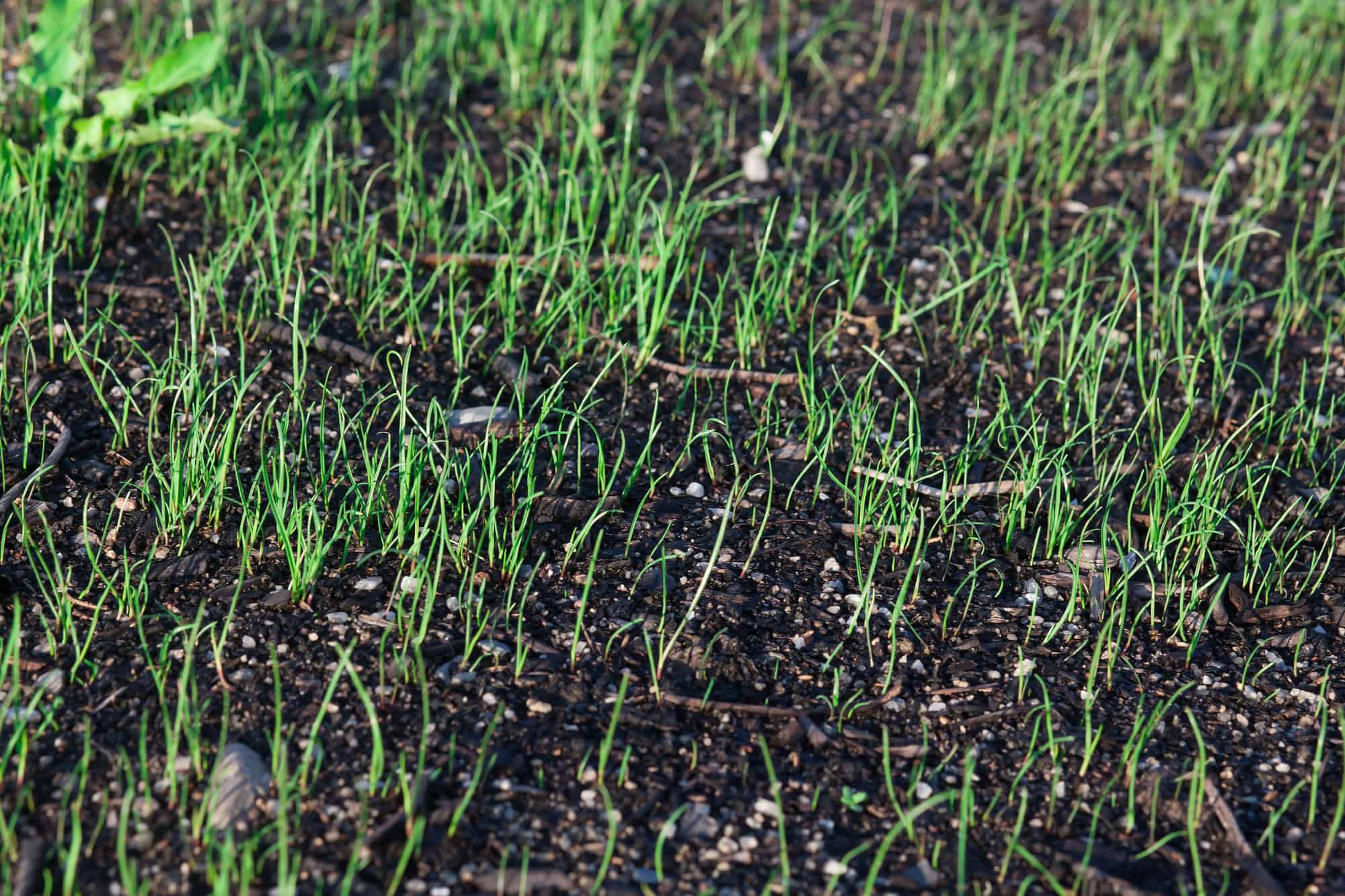
If your ryegrass lawn has thinned into ragged brown patches during a hot, sticky July and the tips of the blades look twisted, grey leaf spot is worth ruling in before you blame the drought. This fungal disease attacks perennial and annual ryegrass and tall fescue, and it moves fastest in exactly the muggy heat that midsummer brings. The damage mimics drought stress, so watering more only makes it worse by keeping the leaves wet. The quickest field clue is the leaf tips: grey leaf spot bends and shrivels them into a fish hook shape that drought never does.
Grey leaf spot is caused by the fungus Pyricularia oryzae, the same species that causes rice blast, and it has a reputation among turf professionals for hitting hard and fast. Newly sown ryegrass and young lawns are the most vulnerable of all, which is one reason late spring and summer sowings so often thin out for no obvious reason. Knowing the symptoms, the conditions that trigger it, and the cultural steps that stop it turns a mystery brown lawn into a problem with a clear plan.
How to Recognise Grey Leaf Spot on the Blade
The disease starts small. Look closely at individual blades and you will see tiny water soaked spots, which enlarge into oval lesions coloured grey to grey brown in the centre with a darker brown or reddish brown border. As the lesions spread and join, they blight the tip of the leaf, and the dying tip twists and curls. Turf specialists call this flagging, and a lawn full of curled, hooked leaf tips is the single most reliable sign that you are dealing with grey leaf spot rather than heat scorch. In humid conditions you may also see a faint grey fuzz on the lesions in the early morning, which is the fungus producing spores.
At a distance the lawn thins and yellows in irregular patches that enlarge day by day, and from a few paces this looks exactly like a lawn drying out in the heat. The difference is what happens when you water. A drought patch greens up after a deep soak. A grey leaf spot patch keeps thinning, because the leaves are being killed by a fungus that thrives on the extra moisture. Pull a few affected blades and inspect them one at a time. Uniform browning from the tip down, with the telltale grey bordered lesions and curled tips, points to disease. Even browning across a whole clump that pulls out with hollow stems points instead to insects, and a lawn that is simply dormant stays anchored and greens after rain.
The disease spreads through spores, called conidia, that the fungus produces in enormous numbers on infected leaves. Splashing water from rain or irrigation, wind, and the wheels and blades of a mower all carry those spores across the lawn, which is why an outbreak can jump from a small patch to a large thinning area within a week of favourable weather.
The Heat and Humidity That Wake It Up
Grey leaf spot needs warmth and moisture together, and the thresholds are well documented. The fungus infects and grows across a range of about 21 to 35 degrees Celsius (70 to 95 degrees Fahrenheit), and it moves fastest in the hot band of roughly 29 to 35 degrees Celsius (85 to 95 degrees Fahrenheit). Add high humidity and long periods of leaf wetness, from a humid night, heavy dew, warm summer rain or evening watering, and the fungus produces spores freely and infects new leaves. A stretch of hot days paired with warm, close nights is the danger signal.
Understanding why those conditions matter shapes the response. The spores can only germinate and infect while the leaf surface stays wet, so anything that keeps the grass damp through the warm night hands the fungus the wetness it needs. That is why watering in the evening during a humid heatwave is close to the worst thing you can do for a lawn prone to this disease, and why a boggy, airless corner shaded from morning sun breaks out first. Soft, sappy growth pushed by a heavy summer feed is more easily infected too, because the fungus attacks tender young leaf tissue most readily.
Drought stress makes the plant more susceptible as well, which sets a trap for the unwary. A lawn that is baked dry between waterings, then soaked heavily in the evening, swings between the two conditions that favour the disease. The grass is stressed and weak, then wet and warm all night. Steady, even moisture applied in the morning avoids both extremes.
How to Stop It Before You Reach for a Fungicide
Almost every cultural step comes back to keeping the grass drier and less stressed through the hot weeks. Water deeply and infrequently, to a depth of around 10 to 15cm (4 to 6 inches), and do it early in the morning so the lawn wets and then dries through the day rather than staying damp all night. A single thorough soak once or twice a week beats a light daily sprinkle that keeps the surface permanently moist. If your lawn sits in a still, humid pocket, thinning an overgrown hedge or cutting back overhanging shrubs lets morning air move across the grass and dry it sooner.
Hold back on nitrogen during hot, humid spells. Quick release, water soluble feeds push the soft growth the fungus loves, so a well meant summer feed applied in a heatwave can trigger the very outbreak you are trying to avoid. If the lawn needs feeding, wait for cooler, settled weather, and lean towards a gentle, slow release product rather than a fast green up. Raise the mowing height a little in the heat, since slightly longer grass is under less stress, but never mow when the grass is wet during a risk period, because the mower carries spores across the lawn in the damp clippings. If you have to cut, wait until the lawn has dried and clean the underside of the deck afterwards.
Timing new lawns counts too. Sowing ryegrass into the hottest, most humid weeks invites the disease to wipe out tender seedlings, so schedule seeding for the cooler, settled conditions of early autumn or spring where you can. If you must overseed a worn lawn in summer, water the seedbed in the morning and keep an eye out for the first hooked leaf tips.
If the disease takes hold badly and the lawn is thinning fast, fungicides can help, but they demand care. Products active against grey leaf spot include strobilurins such as azoxystrobin, along with chlorothalonil, propiconazole and thiophanate methyl, and turf professionals usually tank mix a protectant with a systemic and rotate between different chemical groups. That rotation is essential because grey leaf spot is notorious for developing resistance quickly when one product is leaned on too hard, so repeating the same fungicide can breed a strain it no longer controls. Home availability of these products differs by region and by what is sold for garden use, so read the label, confirm it lists grey leaf spot, and follow the rate and safety directions exactly. For most gardens, the watering and feeding changes prevent far more damage than any spray.
Recovering the Lawn Afterwards
Once the weather cools and dries, the disease stops advancing and the surviving grass begins to recover. Wait for settled, cooler conditions before you feed and overseed, because pushing soft growth while any warmth and humidity linger simply invites a second round. Lightly rake out the dead, matted grass to let light and air into the crowns, then overseed the thin areas in early autumn when the risk has passed. Where ryegrass has repeatedly suffered, oversowing with a blend that includes more disease resistant grasses gradually builds a lawn that shrugs the disease off.
The lesson grey leaf spot teaches is to read the weather and the leaf tip rather than react to the brown patch. When a hot, humid spell has your ryegrass thinning and the blade tips curling into hooks, treat it as disease, not drought. Move watering to the morning, skip the feed, keep off the wet grass, and let the lawn dry. Do that and the fungus rarely gets the warm, wet nights it needs to run.