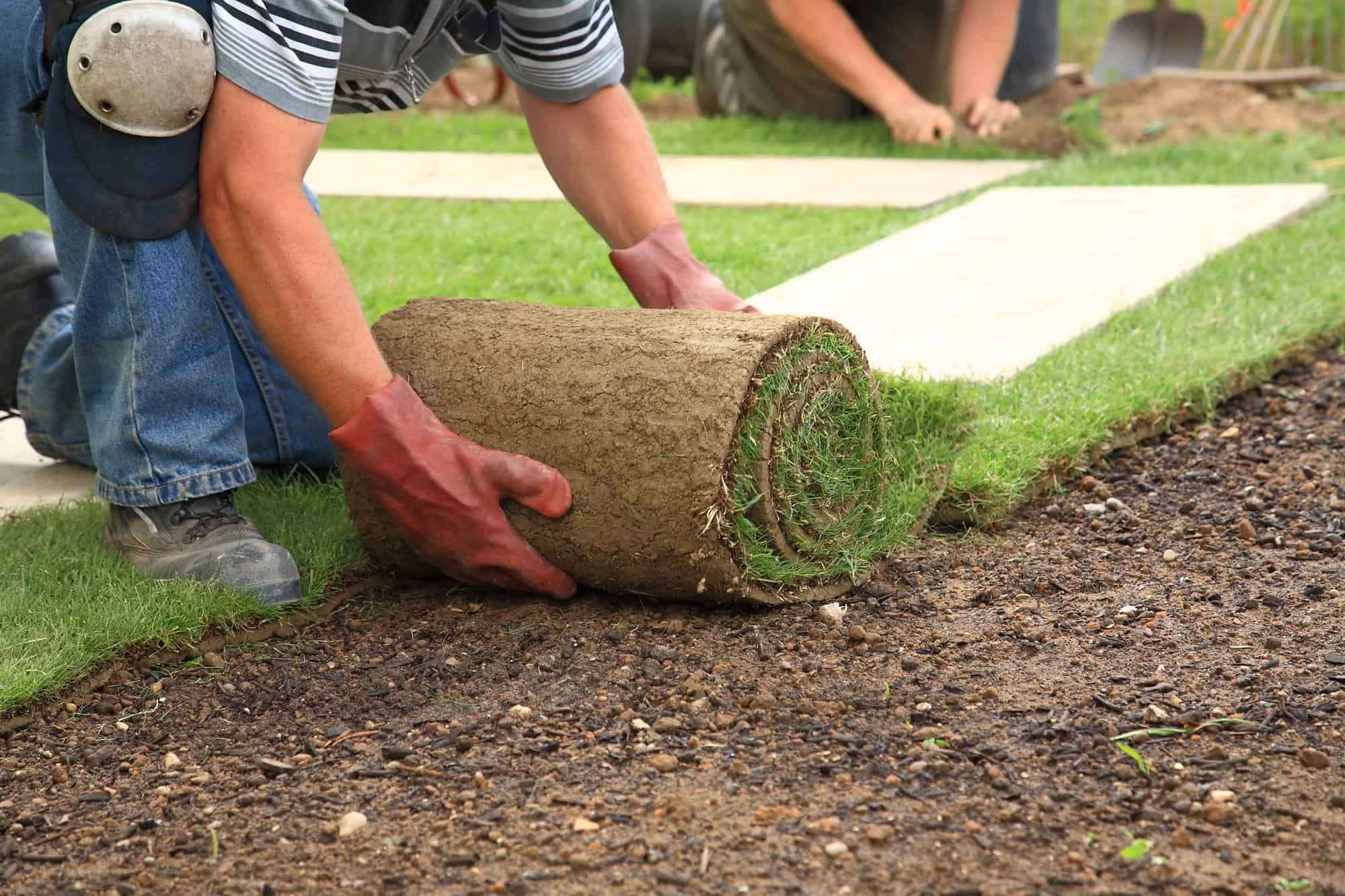
How long does turf take to root? In most cases, newly laid turf will begin rooting into the soil beneath within 7 to 14 days and be firmly anchored within 3 to 4 weeks. Full root establishment, where the roots have grown deep enough to sustain the lawn through drought and heavy use, takes 6 to 8 weeks in good conditions. These timescales assume the turf was laid on properly prepared soil, watered correctly, and left undisturbed. Get any of those wrong and the timeline stretches out, sometimes to the point where the turf fails entirely.
This article covers everything that affects how long turf takes to root, how to tell whether rooting is on track, what to do if it is not, and how to care for new turf through the rooting period so it establishes as fast as possible.
What Happens When Turf Roots
When a roll of turf is laid on prepared soil, the grass is alive but severed from the root system it grew in at the nursery. The cut roots at the base of the turf strip have been sheared off, and the grass is surviving on the moisture and nutrients stored in the existing root mass and leaf tissue. It is, in effect, a patient on life support waiting to reconnect.
Within the first few days, the grass plant responds to the stress by redirecting energy from top growth into root production. New root tips emerge from the cut ends and from the nodes on the stems (tillers) at the base of the plant. These roots grow downwards into the soil beneath, seeking moisture, nutrients, and anchorage. The rate at which they grow depends on soil temperature, moisture, oxygen availability, and how well the turf makes contact with the soil surface.
By the end of the first week, fine white roots are usually visible on the underside of the turf if you lift a corner carefully. By the end of the second week, those roots should have penetrated the top 10 to 20 millimetres of the soil. By weeks three and four, the roots are deeper and more numerous, and the turf begins to resist when you tug it gently. This tug test is the most reliable way to check rooting progress and the one used by professional turf installers.
Factors That Affect How Long Turf Takes to Root
Soil Temperature
Root growth in cool-season grasses, which make up virtually all UK lawn turf, is most active when soil temperatures are between 10 and 18 degrees Celsius. Below 10 degrees, root growth slows dramatically. Below 5 degrees, it effectively stops. Above 25 degrees, root growth also slows as the plant diverts energy into surviving the heat rather than establishing itself.
This is why autumn and spring are the best times to lay turf in the UK. In autumn, the soil is still warm from summer but the air is cooling, which is the perfect combination for fast root growth with minimal water stress. In spring, soil temperatures are rising through the ideal range and the grass is entering its natural growth phase. Summer laying is possible but rooting is slower because hot, dry conditions stress the plant. Winter laying works on mild days but the cold soil means rooting can take two to three times longer than in autumn.
Soil Preparation
The quality of the soil preparation underneath the turf has a direct effect on rooting speed. Roots grow fastest through loose, crumbly, well-aerated soil. They struggle in compacted soil, waterlogged soil, and soil with a hard pan or layer of debris just below the surface.
For fast rooting, the soil should be dug or rotavated to a depth of at least 100 to 150 millimetres, raked to a fine tilth, cleared of stones larger than 20 millimetres, lightly firmed without compacting, and levelled so the turf sits flat without air gaps underneath. Air gaps are a particular problem because they break the contact between the turf roots and the moist soil, creating dry pockets where roots cannot grow. Rolling the turf lightly after laying helps eliminate these gaps. Our article on what a lawn roller does explains the technique.
Watering
Moisture is the single biggest factor under your control once the turf is down. Roots will not grow into dry soil. If the soil beneath the turf dries out at any point in the first two weeks, rooting stops and the turf begins to shrink, curl, and brown from the edges. Consistent daily watering for the first 14 days is non-negotiable, and twice-daily on hot or windy days.
Equally, waterlogging is harmful. Saturated soil contains no air, and roots need oxygen to grow. If the soil is constantly squishy and puddles are sitting on the surface, the turf will root very slowly or develop root rot. The goal is soil that feels moist to the touch but not sodden. Our detailed guide on how to water your lawn covers the full watering schedule for new turf from day one through to establishment.
Turf Quality
Not all turf is equal. Fresh turf cut and delivered on the same day will root faster than turf that has been sitting on a pallet for two or three days. The longer turf is stacked, the more it heats up internally from the metabolic activity of the grass, and the more the roots dry out and the leaves yellow. Turf that arrives warm to the touch and yellowing on the inner rolls has already been stressed and will take longer to root, if it roots at all.
Buy from a reputable supplier, specify a delivery date as close to your laying date as possible, and plan to lay all the turf on the day it arrives. If you cannot lay it all in one day, unroll the remaining rolls in a shaded area and water them to keep the roots moist overnight.
Time of Year
The season you choose to lay turf has a major effect on rooting speed. Here is what to expect in each season for UK conditions.
Autumn (September to November) is the best time. Soil temperatures are warm, rainfall is increasing, and the grass is naturally slowing its top growth and directing more energy into root development. Turf laid in early October on well-prepared soil will typically root firmly within two to three weeks and be fully established before winter.
Spring (March to May) is the second-best window. Rising soil temperatures and longer days stimulate both root and shoot growth. Turf laid in April will usually root within two to three weeks, though watering is more likely to be needed as spring weather can be dry.
Summer (June to August) is the hardest season. High temperatures and low rainfall put new turf under immediate stress, and you will need to water heavily and frequently to keep it alive while it roots. Expect rooting to take three to four weeks, sometimes longer in a heatwave. If you have the choice, avoid laying in July and August.
Winter (December to February) is possible but slow. The grass is dormant or semi-dormant and root growth is minimal. Turf laid in December or January will sit on the surface largely unchanged until soil temperatures rise in March, at which point rooting will begin. Avoid laying on frozen or waterlogged ground.
How to Tell If Your Turf Has Rooted
The tug test is the standard method. Kneel at the edge of the lawn, grip a corner of a turf roll between your thumb and fingers, and pull gently upwards. If the turf lifts freely with no resistance, it has not yet rooted. If there is a distinct tug and the turf resists lifting, roots have formed. If the turf feels completely fixed and you cannot lift it without tearing the grass, it is well established.
Check in several spots around the lawn, as rooting can be uneven. Shaded areas, sloping sections, and spots near hard surfaces such as paths and driveways tend to root slower than open, level, well-watered areas. If one area is lagging behind, it usually points to a localised problem with soil contact, drainage, or watering coverage that can be addressed.
Other indicators that rooting is progressing well include new growth appearing on the grass tips (a sign the plant has reconnected with a nutrient supply), the colour deepening from the slightly pale look of stressed turf to a richer green, and the joints between rolls becoming less visible as the grass grows across them.
What to Do If Your Turf Is Not Rooting
If turf has been down for three weeks or more and still lifts freely with no resistance, something is preventing root growth. The most common causes and fixes are as follows.
Dry soil beneath the turf is the most frequent problem. Lift a corner and feel the soil. If it is dry and pale, you are not watering enough or the water is not reaching that area. Increase the watering duration or reposition the sprinkler to cover the dry zone. Soak the area thoroughly and check again in a week.
Air gaps between the turf and the soil surface prevent root contact. You can often spot these by walking on the turf and feeling a spongy or hollow area that gives more than the rest of the lawn. Lightly rolling the lawn with a water-filled roller or even walking slowly over the area on a plank will press the turf down and close the gap. Water immediately afterwards.
Compacted or poorly prepared soil is harder to fix after the turf is down. If the soil was not loosened before laying, the roots hit a hard layer they cannot penetrate. In severe cases, the only solution is to lift the turf, rework the soil underneath, and relay it. This is labour-intensive but it is better than watching the turf slowly fail.
Waterlogged soil is the opposite problem. If the ground is constantly saturated, the roots are suffocating. Reduce watering, check whether there is a drainage issue such as a blocked outlet or a low spot where water collects, and address it. Spiking the surface with a garden fork to a depth of 75 to 100 millimetres can help water drain through in the short term. For a longer-term fix, see our guide on drainage and soil health.
Caring for New Turf While It Roots
Watering
Water daily for the first two weeks, ideally in the early morning. From week three, reduce to every other day but increase the depth of each watering to encourage roots to grow downwards. By week five or six, transition to a normal established-lawn schedule. In a typical British spring or autumn, natural rainfall will do most of the work from this point. Full details on timing and volumes are in our article on how much water a lawn needs.
Mowing
Do not mow until the turf has rooted, which is typically three to four weeks after laying. The tug test should show firm resistance before you bring the mower onto the lawn. For the first cut, set the mower to its highest setting and remove no more than a third of the grass blade length. Cutting too short on the first mow stresses the plant and can set back root development. Lower the height gradually over subsequent cuts. Our guide on when to start mowing covers the transition from new turf to a regular mowing schedule.
Foot Traffic
Keep all foot traffic off the turf for the first two weeks. Every step compresses the soil and can break newly forming root connections. If you need to walk on it to water, use a plank to spread your weight. After two weeks, light foot traffic is fine. Heavy use, children playing, and garden furniture should wait until week six at the earliest, when the roots are deep enough to anchor the turf against the shearing forces of surface activity.
Feeding
Do not feed new turf for the first four to six weeks. The turf arrives with residual nutrition from the nursery, and adding fertiliser too early risks burning the shallow new roots. After six weeks, a light application of a balanced lawn fertiliser at half the normal rate gives the establishing grass a boost without overwhelming it. Build up to a full feeding programme over the following months.
Weed Control
Do not apply any herbicide to new turf for at least eight weeks after laying. Young grass is vulnerable to selective herbicides, and the stress of chemical treatment on top of the stress of establishing can weaken or kill it. If weeds appear in the new turf, remove them by hand until the lawn is mature enough to tolerate a herbicide application. Our guide on when to apply weed killer explains the safe timing for established lawns.
Rooting Timeline at a Glance
For turf laid on well-prepared soil in spring or autumn with proper watering, the typical rooting timeline is as follows. Days one to seven: new white roots emerge from the base of the turf and begin growing into the top layer of soil. The turf still lifts freely. Days 7 to 14: roots penetrate 10 to 20 millimetres into the soil. The turf begins to resist gentle tugging. Days 14 to 21: roots reach 20 to 40 millimetres deep and the turf feels firmly attached. Joints between rolls start to close. Days 21 to 28: the turf is rooted enough for a first mow and light foot traffic. Root depth is typically 30 to 50 millimetres. Weeks 4 to 8: roots continue deepening to 75 millimetres or more. The lawn is fully established and can handle normal use, feeding, and a regular mowing schedule.
In summer, add one to two weeks to each stage. In winter, the timeline can double or triple, with most root growth occurring in a burst once temperatures rise in early spring.
Turf Frequently Asked Questions
How long does turf take to root in spring?
Turf laid in spring typically begins rooting within 7 to 10 days and is firmly established by week three or four. Rising soil temperatures and increasing daylight create good conditions for root growth. Regular watering is usually needed as spring rainfall can be unreliable.
How long does turf take to root in summer?
Summer-laid turf takes three to four weeks to root, sometimes longer in a heatwave. The heat stresses the grass and slows root growth. Twice-daily watering is often needed to keep the turf alive through the rooting period.
How long does turf take to root in autumn?
Autumn is the fastest season for rooting. Warm soil and cool, moist air create ideal conditions. Turf laid in early October on well-prepared soil will often root firmly within two to three weeks with minimal supplementary watering.
Can I walk on new turf?
Avoid walking on new turf for the first two weeks to allow roots to form undisturbed. If you need to cross it for watering, use a plank to spread your weight. Light foot traffic is fine after two weeks. Full use including children and furniture should wait until week six.
When can I mow new turf?
Wait until the turf passes the tug test, typically three to four weeks after laying. Set the mower to its highest setting for the first cut and remove no more than a third of the blade length. Lower the height gradually over subsequent mows.
How do I know if my turf has rooted?
Use the tug test. Grip a corner of the turf and pull gently upwards. If it resists and does not lift, roots have formed. Other signs include new growth on the grass tips, a deepening green colour, and the joints between rolls becoming less visible.
What if my turf has not rooted after three weeks?
Check for the most common causes: dry soil underneath the turf, air gaps between the turf and soil, compacted ground, or waterlogging. Address the specific problem and give the turf another week or two. In most cases, correcting the issue will allow rooting to resume.
Does the type of turf affect rooting time?
Slightly. Turf grown on sandy soil tends to root faster than turf grown on clay or peat, because the roots are already adapted to well-drained conditions. The grass species also plays a role. Perennial ryegrass, which is the dominant species in most UK lawn turf, roots quickly and aggressively, while finer fescue blends root more slowly but produce a denser, more refined lawn.
Sources
- Royal Horticultural Society. “Laying Turf.” RHS Gardening Advice. https://www.rhs.org.uk/lawns/turf-laying
- Sports Turf Research Institute (STRI). “Turf Establishment and Root Development.” Applied Turf Research. https://strigroup.com/
- The Lawn Association. “New Turf Aftercare.” Technical Guidance Notes.
- Rolawn. “How Long Does Turf Take to Root?” Aftercare Guides. https://www.rolawn.co.uk/
- Inturf. “Turf Laying and Establishment Advice.” Professional Grower Guidance. https://www.inturf.com/