If you are still mowing your lawn once a week in May, you are already falling behind the grass. In late spring the combination of warming soil, regular rainfall and longer daylight hours pushes most cool-season grasses into their fastest growth of the entire year. A lawn that gained 3cm (about 1.2 inches) of height in a week during April can put on 5cm or more in seven days during mid-May. Mow once a week at that rate and you remove far too much in a single pass, the grass turns yellow at the cut, and you end up with the patchy, stressed lawn you were trying to avoid.
The honest answer for most gardens in May is twice a week, sometimes every five days during a warm wet spell, dropping back to once a week only if the weather turns cold and dry for several days. That sounds like a lot, but each cut is shorter and quicker than the desperate weekly chop most people end up doing, and the lawn rewards you with thicker growth, fewer weeds and a darker green colour by the end of the month.
The one-third rule and why May is when it actually starts to bite
The rule that underpins almost every piece of professional turf advice is that you should never remove more than one third of the leaf blade in a single mow. The Royal Horticultural Society and university extension services in the United States both repeat this advice for the same reason. Cutting more than a third in one go strips the plant of the photosynthetic surface it needs to feed itself, exposes the crown to sunlight and weakens the root system. The lawn responds with stress yellowing and a sudden flush of weeds, because the grass no longer dominates the canopy.
For a lawn cut at 4cm (about 1.5 inches), which is the recommended spring and autumn height for ornamental cool-season turf, the one-third rule means you should be cutting whenever the grass reaches around 6cm (2.4 inches). In April that might be once every seven to nine days. In May, with daytime temperatures often above 18°C (64°F) and soil consistently above 10°C, ryegrass and fescues can hit that 6cm trigger in three to four days. Twice-weekly mowing is not an indulgence at that point, it is the only way to obey the one-third rule.
You can test this in your own garden with a ruler and a notebook. Mark a small patch with a couple of canes, mow it to 4cm on a Sunday evening, then measure every other day. By Wednesday or Thursday in a typical mid-May week, most lawns will be above 6cm. That is your cue. If you wait until Saturday or Sunday, the grass will be at 8cm or higher and you have already broken the rule.
Setting the right height for May rather than summer
One of the most common errors in May is dropping the cutting height too early. Some gardeners are eager to get to the shorter “summer cut” of around 2.5cm (1 inch), thinking this will toughen the lawn up for the hot weeks ahead. In practice the opposite happens. Grass cut short in May has shallower roots, dries out faster in the first June dry spell and is more vulnerable to invading weeds like clover and self-heal that thrive in thinned turf.
For most family lawns, 3.5cm to 4cm (1.4 to 1.6 inches) is the right setting through May. Ornamental lawns made up of fine fescues can go slightly lower at around 2.5cm, but only if you mow very frequently and feed well. Utility lawns that have to put up with children, pets and football should stay at 4cm or even 5cm. Higher grass shades the soil, slows weed germination, and keeps the surface cool enough that the roots stay deeper.
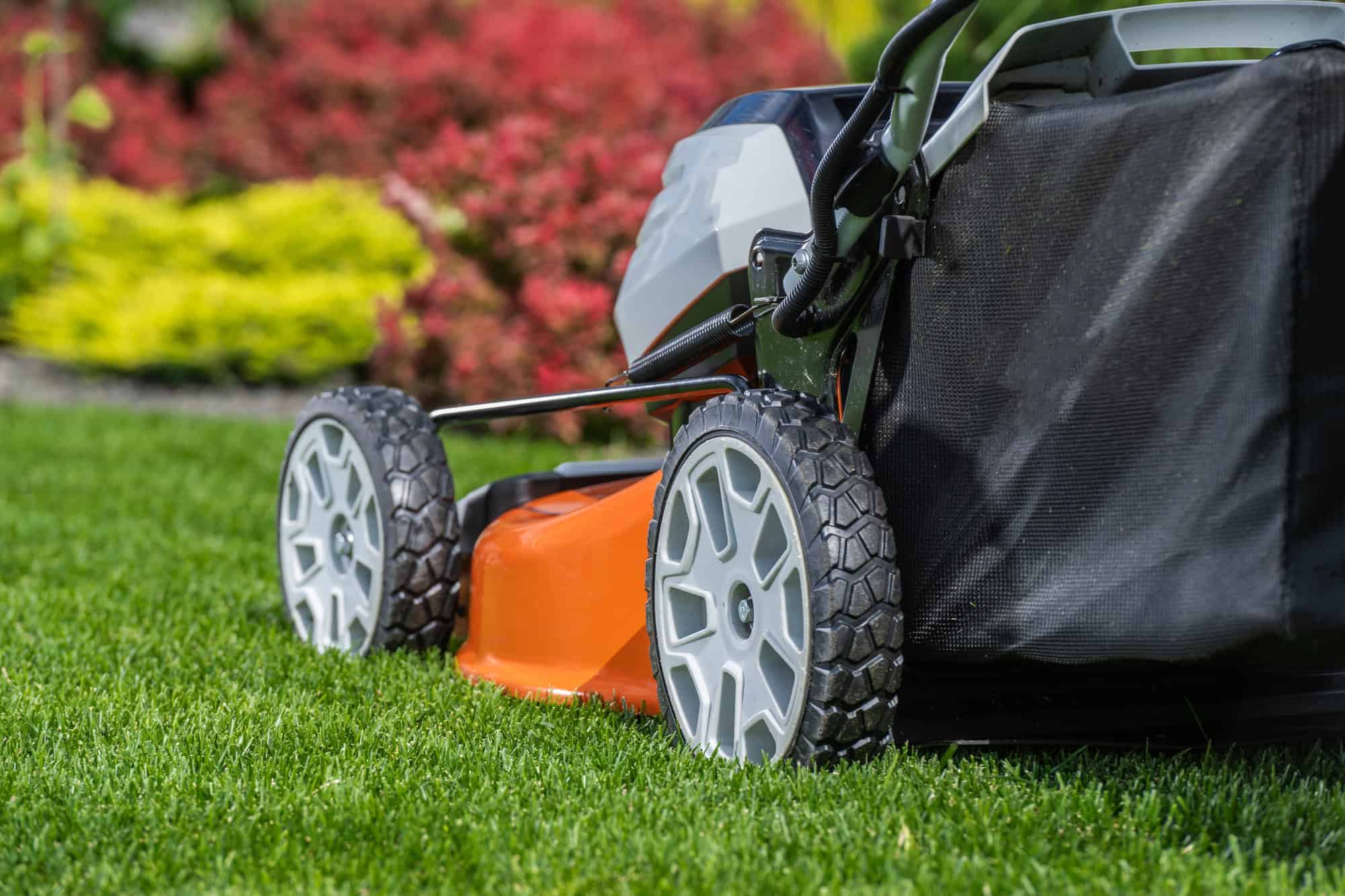
If you are running a Honda IZY HRG416 (around £540/$680), a Hayter Harrier 41 (around £700/$880), an Ego LM2135E (around £450/$570) or a Bosch Rotak 43 (around £200/$250), check the height lever now. The number stamped on the lever is rarely in millimetres or inches directly, it usually refers to a setting. On most 41cm to 46cm domestic rotaries, setting 4 of 7 will sit at roughly 35mm and setting 5 at roughly 45mm. Run a quick measurement with a tape from blade tip to deck wheel to confirm where your mower actually sits.
How weather changes the schedule from week to week
Twice a week is the baseline, but the calendar is not the boss. The grass is. After two warm rainy days in early May you may need to mow again only 72 hours after your last cut, simply because growth has accelerated. Equally, if a cold front pushes overnight temperatures down to 5°C (41°F) and the lawn dries out under wind, you can comfortably go five or six days. Watching the lawn rather than the diary is the single biggest difference between a tidy lawn and a chaotic one.
A practical rhythm that works for most gardens is to plan for a Tuesday evening and a Friday evening or Saturday morning cut through May, with the right to skip one if growth has obviously slowed. Evening mowing has the added advantage that cut grass is less stressed by midday heat, which becomes more relevant later in the month as temperatures climb. Avoid mowing when the lawn is wet from a recent shower. Wet grass clumps in the deck, blocks airflow around the blade and tears rather than cuts cleanly, which leaves a brown tint to the tips for several days.
What twice-weekly mowing does for the long game
If you commit to two cuts a week through May, three things happen by the start of June. The first is that the leaf blade thickens and the canopy becomes denser. Each grass plant tillers, putting out side shoots, which gradually crowd out moss and weeds that depend on bare soil. The second is that you can dispense with the grass box on most cuts. With each clipping no more than 1.5cm long, the trimmings drop between the blades, decompose within a few days and return roughly a third of the nitrogen your lawn needs. This is the principle behind mulching mowers like the Mountfield SP46 (around £270/$340) and the Flymo Mighti-Mo 300 Li (around £160/$200), and it works on any rotary if you take only small amounts at a time.
The third change is colour. Lawns that are cut frequently in May come out of the month looking darker green even without extra feed, because each new leaf is younger and tighter. Lawns that are cut once a week tend to look pale and uneven, with banded yellow stripes where the grass below the cutting line has been shaded by the overgrowth for too long.
The exceptions worth knowing
Two situations break the twice-a-week rule. The first is a newly seeded lawn from late April or early May. New grass is fragile for the first six to eight weeks, and the first cut should only happen once the seedlings reach 7cm to 8cm. Take only the top third off with a very sharp blade and then mow weekly for the rest of May before stepping up frequency in June. The second is a lawn that is being deliberately left longer for wildflowers or for biodiversity reasons. “No Mow May” gardens skip the schedule entirely, but the trade-off is that the eventual cut in late May or early June removes far more than a third, and the lawn usually needs a recovery period of several weeks afterwards.
For everyone else, the next time you find yourself looking at a shaggy lawn on a Sunday afternoon and wondering whether to bother, the answer is yes, get the mower out. May is the month when small, regular cuts build the foundation for the rest of the growing year, and skipping a mow now costs you more time and more lawn damage than the 25 minutes the second cut takes.