A ride-on mower is one of the most satisfying garden investments you will ever make, and one of the easiest to get wrong. The market spans from around £1,500/$1,890 for a small lawn tractor to over £10,000/$12,600 for a zero-turn commercial machine, and the difference between a smart purchase and an expensive mistake comes down to honest answers about the size of your lawn, the slope of your land, the obstacles you mow around, and how often the machine will actually be used. Spending £4,000/$5,040 on a ride-on for a 1,500 square metre flat lawn is overkill. Buying a £1,800/$2,270 budget ride-on for a hilly two-acre paddock is asking for it to fail by year three. The goal is matching the machine to the job.
Ride-on mowers split into three broad categories. Lawn tractors are the traditional ride-on shape, with the engine at the front, the cutting deck under the middle, and steering wheel control. They mow well, tow rollers and trailers, and handle modest slopes. Garden tractors are heavier, more powerful versions of the same layout, designed for larger plots and able to pull aerators, leaf vacuums, and spreaders behind them. Zero-turn mowers use independently driven rear wheels controlled by twin lap bars, allowing them to spin on the spot and cut around obstacles with surgical precision. Each has a clear use case, and choosing the wrong category is the single most common buying mistake.
How to Size the Machine to Your Lawn
The cutting width determines how quickly you finish the job, and the engine power determines whether the deck can sustain that width without bogging down in long or wet grass. The rough guide is one millimetre of cutting width per square metre of lawn. A 700-square-metre garden needs at least a 70cm deck. A 2,000-square-metre lawn wants 90cm or more. A two-acre property, roughly 8,000 square metres, needs at least 107cm and ideally 122cm to finish in a reasonable session.
The Stiga Estate 384 is the entry point in the credible ride-on market, retailing around £2,499/$3,150 from Just Lawnmowers. It has an 84cm cutting deck, a four-stroke ST450 engine, and the brand rates it for lawns up to one acre, which is around 4,000 square metres. Realistically that is the upper limit, and the machine performs best on lawns between 1,500 and 3,000 square metres where the deck width is well matched to the engine size. The hydrostatic transmission means you control speed with a foot pedal rather than gear changes, which makes mowing around flower beds and along borders far easier than the older gear-driven models still occasionally sold at the budget end.
The Mountfield 1538H-SD sits a tier above at around £2,899/$3,655. It uses a 98cm twin-blade deck, a 452cc twin-cylinder engine, and a 240-litre rear grass collector that you can empty from the seat with a lever-operated dump system. For gardens between 2,000 and 4,000 square metres, this is the sweet-spot machine in the current UK market. The empty-from-seat collector saves the back-breaking task of climbing off every twenty minutes to drag a heavy bag to the compost heap, which is the single biggest fatigue factor on any rear-collecting ride-on.
The Premium Bracket: Husqvarna and John Deere
Husqvarna’s R 214TC is around £4,399/$5,545 and sits in the mid-premium bracket. The 94cm cutting deck combines with a twin-cylinder 432cc Briggs and Stratton Intek engine and a hydrostatic transmission with cruise control. The standout feature is the AWD system on the higher R 316TX variant, which keeps all four wheels driving in slippery or sloped conditions where a rear-wheel-drive model would spin out. For undulating gardens or lawns with steep banks, the AWD makes the difference between mowing safely and not mowing at all.
John Deere’s X350R is the most popular premium machine in the suburban market, retailing around £6,495/$8,180 from authorised dealers. It uses a 270-litre rear-collecting hopper, a V-twin OHV engine, a 107cm cutting width, and the legendary John Deere build quality that means these machines often clock 1,500 hours of use before needing significant work. The cost per hour over fifteen years works out lower than a £2,000 budget ride-on that fails in five. The catch is that the X350R is overkill for a 2,000-square-metre garden. You are paying for a machine designed to mow at speed across acres, and you will not extract that value on a small suburban plot.
For very large properties of 1.5 hectares (around 4 acres) or more, the John Deere X590 or Husqvarna TS 354XD step up to garden tractor territory, around £8,000 to £10,000 (about $10,080 to $12,600). These machines have heavier frames, larger fuel tanks, and the ability to take attachments like front blades and tow-behind aerators. If you have outbuildings, gravel drives, leaves to clear in autumn, and snow to push in winter, a garden tractor is a multi-season investment rather than just a mower.
Zero-Turn Mowers and Where They Win
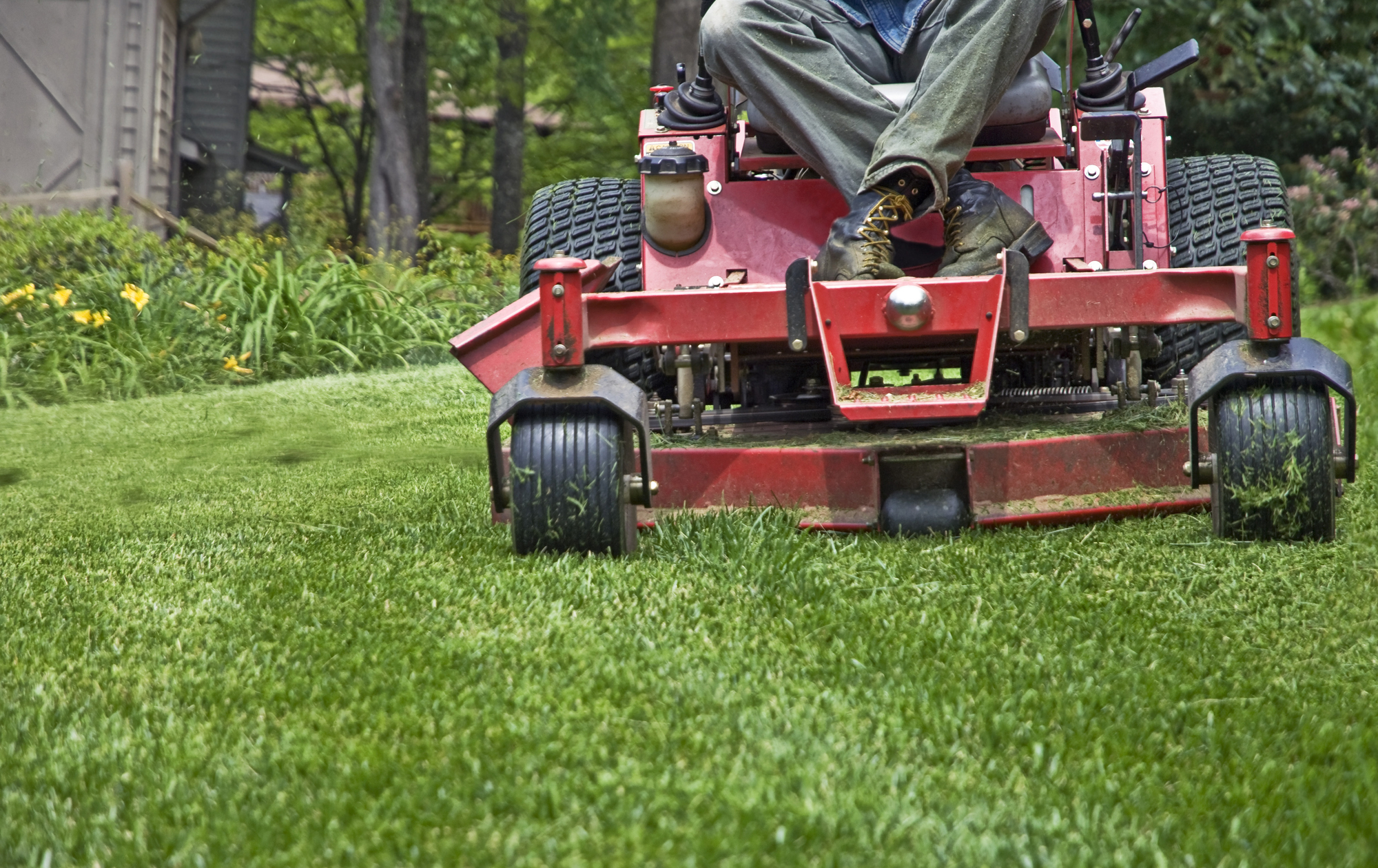
Zero-turn mowers look like commercial kit because they originated as commercial kit. The Cobra MZ4480HSP retails around £4,995/$6,290 with a 112cm deck, and Cub Cadet’s RZT-S 46 sits closer to £5,500/$6,930. The advantage is manoeuvrability around trees, beds, and ornamental features. A zero-turn cuts cleanly right up to the edge of an obstacle and spins on the spot to reverse direction, eliminating the three-point turns that lawn tractors need at the end of every pass. On open lawn with lots of obstacles, a zero-turn finishes a job in roughly two-thirds the time of a lawn tractor of equivalent deck width.
The disadvantage is the steering. Zero-turn mowers are controlled by twin lap bars rather than a steering wheel, and the learning curve is steeper than most buyers expect. The first hour of ownership usually involves some unintentional doughnuts and one or two near-misses with rose bushes. On wet grass or slopes above 15 degrees, the zero-turn can also slide unpredictably because the rear wheels carry all the steering load. For flat suburban gardens with many obstacles, they are the fastest tool available. For hilly country gardens or open paddocks, a lawn tractor or garden tractor is the safer choice.
The Mistakes That Cost the Most Money
Buying too small is the most common error, and the most expensive in the long run. A ride-on that is undersized for the lawn gets pushed beyond its design limits every week. The engine overheats, the deck spindle bearings wear out faster, the transmission overheats on long sessions, and the machine that should have lasted fifteen years lasts six. The principle is the same as buying a car. Underpowered cars on motorways wear out faster than overpowered cars driven gently. Aim for the middle of the manufacturer’s stated lawn size range, not the top.
Buying without a dealer relationship is the second mistake. Ride-on mowers need annual servicing, occasional blade changes, deck belt replacement every few years, and the occasional fault diagnosis on the hydrostatic transmission. A local authorised dealer who can collect the machine, work on it, and return it within a week is worth a premium of several hundred pounds on the purchase price. Buying online from a remote retailer saves you that money on day one and costs you it ten times over when something goes wrong in year three.
The third mistake is ignoring slope ratings. Most lawn tractors are rated for slopes up to 15 degrees. Many country gardens have banks closer to 20 or 25 degrees. Running a machine outside its slope rating risks fuel and oil flow problems, tyre slippage, and tip-over accidents. If your lawn has banks above 15 degrees, you need either an AWD ride-on, a tracked machine, or a self-propelled walk-behind for those sections. For more on which machine fits where, see our guides to how to choose a self-propelled mower that saves your back and why a cylinder mower cuts better than a rotary.