A self-propelled mower is the upgrade that most gardeners realise they should have made years earlier. For anyone cutting more than 200 square metres of lawn, or anything that includes a slope, the difference between pushing a manual mower and walking behind a self-propelled one is the difference between a chore and a walk in the garden. The machine pulls itself through the grass, you steer and squeeze a clutch bar, and what used to take an hour and a sweat-soaked T-shirt takes thirty minutes at a relaxed pace. The question is not whether to buy one, but which type, and that depends on lawn size, terrain, and how much maintenance you want to do.
Self-propelled mowers fall into three meaningful categories: petrol, battery, and corded electric. Each has trade-offs that are worth understanding before you spend £400/$500 or more on a machine that you will keep for at least five years. The cheapest self-propelled mower is not always the cheapest one to own, and the most expensive one is not always the best fit. Picking the right type comes down to garden size, storage space, and what you want to do on weekends.
The Drive System Is What You Are Actually Buying
All self-propelled mowers transmit power from the engine or motor to one set of wheels through a drive belt, gearbox, or hydrostatic system. The detail of how that drive engages is what determines how the machine feels in use.
Single-speed front-wheel drive is the entry point. The mower goes forward at one pre-set pace and you keep up. The Mountfield SP46 is a typical example, with a Stiga ST140 OHV engine, 46cm cutting width, and around £350/$430 at most garden centres. Front-wheel drive is best on flat lawns because lifting the front wheels to turn at the end of each strip disengages the drive briefly, which is helpful. On slopes, front-wheel drive loses traction because the weight of the mower shifts back as you push uphill and the driven wheels lift off the surface.
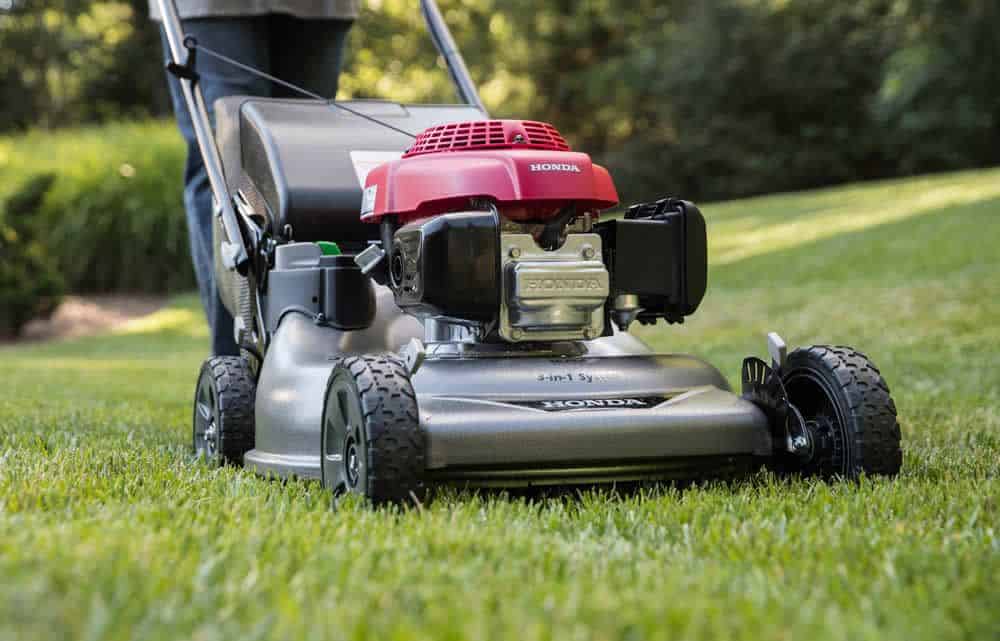
Variable-speed rear-wheel drive is the more useful system for most gardens. The Toro Personal Pace 60V Super Recycler (around £680/$849 at Toro dealers and Home Depot) uses a system where you push the handlebar slightly forward to go faster and pull back to slow down, so the mower matches your walking speed automatically. Rear-wheel drive holds traction on slopes and on tall grass because the weight stays over the driven wheels. The Honda HRX217VKA petrol mower (around £900/$1,049) uses the same principle with a hydrostatic transmission and a Honda GCV200 engine that is widely regarded as one of the most reliable engines on a domestic mower.
All-wheel drive is the third option, and it makes a real difference on uneven or sloped ground. The Toro Recycler All-Wheel-Drive (around £600/$649) drives front and rear wheels together and holds grip on slopes of up to 20 degrees, which is where front-wheel-drive machines lose traction completely. For a lawn with banks, mounds, or terraces, this is the type that pays for itself.
Petrol vs Battery vs Corded
Petrol self-propelled mowers still dominate the larger end of the market for two reasons: run time and power. A typical 4kW (5.5 horsepower) petrol engine pushes through long, wet, or thick grass without slowing down, and the only limit on run time is the size of the fuel tank. A Honda HRX217 with a one-litre tank cuts around 800 square metres per refill. A Mountfield SP46 covers around 600 square metres per tank. Petrol is the right answer for lawns over 600 square metres, anything with regular thick growth, or anyone who hates winter battery storage.
Battery self-propelled mowers have closed most of the gap in the past three years. The Ego Power+ LM2135E-SP (around £550/$649 with a 7.5Ah battery and charger) delivers about 70 minutes of run time, covers roughly 700 square metres in good conditions, and is virtually silent next to a petrol equivalent. The Stihl RMA 460 V (around £600/$725 with an AP 300 battery) is similar. Battery mowers have eliminated almost all the maintenance work of a petrol machine: no oil, no spark plug, no fuel that goes stale over winter, no carburettor to gum up. The trade-off is initial cost and the limit on cutting area per charge.
Battery mowers also pull harder on the motor in long, wet grass, which drains the battery faster. A 7.5Ah battery that gives 70 minutes in dry, regular-cut grass may give only 35 minutes in damp May growth. For lawns up to 500 square metres that are cut weekly, a single battery is fine. For larger lawns or fortnightly cutting schedules, a second battery is sensible (around £200/$240 extra).
Corded self-propelled mowers are now a niche option. The Bosch Rotak 43-220 cordless replaced most of the corded line, but corded models from Flymo and Webb still exist for around £200/$250 and give unlimited run time at the price of dragging a cable across the lawn. They are best for small, regular-shaped gardens under 200 square metres where the cable will not tangle around shrubs or beds.
Cutting Width Is Not the Same as Capacity
A wider deck cuts more grass per stripe and gets the job done faster, but it also weighs more and is harder to turn around tight corners. For most home lawns, the sweet spot is between 41 and 51cm (16 to 20 inches). Below 41cm, the mower is light and easy to manoeuvre but takes too long on anything over 200 square metres. Above 51cm, the deck is too wide to fit through standard garden gates and becomes awkward in small or shaped gardens.
A 46cm cut suits gardens between 200 and 600 square metres. A 51cm cut is faster for anything above 500 square metres but harder to store. A 53cm cut starts to feel commercial and is overkill for most domestic use. The Mountfield SP46 (46cm), Toro Recycler 21 (53cm), and Honda HRX217 (53cm) bracket the typical home market well.
The cutting height range matters as much as width. A good self-propelled mower should adjust from around 25mm (1 inch) up to at least 75mm (3 inches) so you can cut short for ornamental finishes and high for drought protection. Single-lever height adjustment, where one control moves all four wheels at once, is one of those features that seems minor until you need to change height twice on the same job and realise that mowers with four individual wheel adjusters are a nuisance.
Maintenance, Storage, and Total Cost of Ownership
A petrol self-propelled mower needs an annual service: oil change, spark plug replacement, air filter clean, blade sharpen, and a check of the drive belt or transmission. A Honda or Mountfield dealer service costs around £75/$95 a year, or you can do most of it yourself for around £25/$32 in parts. Over a ten-year life, a petrol mower racks up around £600/$760 in servicing and consumables on top of the purchase price.
A battery mower is far cheaper to run. There is no oil, no plug, and no fuel. The only routine maintenance is sharpening the blade once a year (around £15/$19 if done at a dealer, or free if you do it yourself with a flat file) and replacing the battery after roughly five to seven years (around £150/$180 for a new 7.5Ah Ego or Stihl pack). Over ten years, total servicing costs are around £200/$255 against the petrol equivalent of £600/$760.
Storage matters too. A petrol mower needs a dry shed with ventilation because of the fuel and oil. A battery mower can be stored in a garage or even indoors with the battery removed for winter. Battery models also fold more compactly, which makes a real difference if your shed is full of garden tools.
Which One Should You Actually Buy
For lawns under 300 square metres on flat ground, a corded electric self-propelled mower like the Flymo EasiMow 380V is enough and saves £300/$380 over a battery equivalent. The cable is annoying but the simplicity is hard to beat.
For lawns between 300 and 600 square metres on flat or gently sloped ground, a battery self-propelled mower like the Ego LM2135E-SP or Stihl RMA 460 V is the easiest machine to own. Low maintenance, low noise, plenty of cutting capacity, and modern batteries hold their charge through a normal summer in temperate gardens.
For lawns over 600 square metres, on steep slopes, or for gardeners who want the absolute lowest hassle when growth is at peak, a petrol self-propelled mower like the Honda HRX217VKA or Toro Super Recycler still wins. The engine starts every time, the run time is unlimited, and the machine pushes through anything you throw at it.
For uneven ground or banks steeper than 15 degrees, choose all-wheel drive. The Toro Recycler All-Wheel-Drive 60V handles slopes that single-axis drives simply cannot grip.
The self-propelled feature itself adds around £100/$120 to the price of an equivalent push mower, which works out at less than 10p/$0.12 per cut over a decade. For anyone who finds mowing a chore, that is the best £100 a garden shed will ever spend.