The single most neglected job in lawn care is cleaning the underside of the mower, and it quietly ruins both the machine and the cut. Grass clippings pack against the deck, dry into a hard crust, and choke the airflow the blade needs to lift the grass before it slices it. The result is a ragged, uneven finish, clumps dropped across the lawn, and a steel deck slowly rusting from the trapped moisture. Cleaning it takes ten minutes with a plastic scraper, and doing it after most cuts keeps the mower working as it should. Always disconnect the spark plug or remove the battery first, because a blade that turns while your hand is under the deck is the most dangerous mistake you can make.
Why Caked Grass Wrecks the Cut and the Deck
A rotary mower does not just chop grass, it lifts it. The spinning blade is shaped to create suction under the deck, pulling each blade of grass upright so it is cut cleanly at the right height before the airflow carries the clipping into the collection box or out of the side chute. That airflow depends on a clear, smooth space under the deck. When clippings cake onto the underside, they shrink the gap the air moves through and break up the smooth flow, so the suction weakens. Grass is no longer lifted properly, the cut becomes uneven and torn, and the clippings are no longer carried cleanly into the box, so they fall out in clumps that smother the lawn.
A torn cut does more than look bad. Ragged wounds lose moisture faster than clean ones and give fungal diseases an easy entry, so a blunt, clogged mower can leave a lawn browner and more disease prone than a sharp, clean one. The deck itself suffers as well. Packed grass holds moisture against the metal, and on a steel deck that means rust, which eats into the deck and shortens the life of the whole machine. Replacing a mower because the deck corroded through is an expensive consequence of skipping a ten minute job. Clean grass off a deck regularly and the same machine cuts better and lasts years longer.
How to Clean the Deck Safely, Step by Step
Make the machine safe first. On a petrol mower, pull the spark plug cap off the plug so the engine cannot fire. On an electric or battery mower, unplug it or take the battery out. This is the step nobody should skip, because the blade can turn as you move it and take a finger. Once the power is disconnected, tip the mower on its side. On a petrol machine, tip it with the air filter and carburettor facing upward, so oil and fuel do not run into them and cause smoking or hard starting next time. A simple way to remember is to keep the spark plug side up.
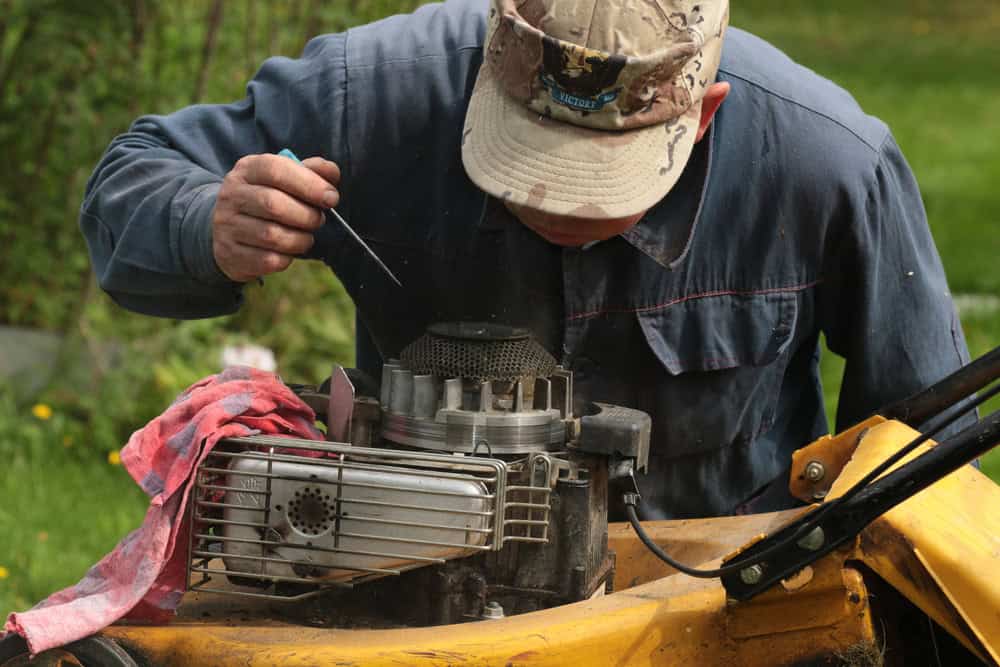
With the deck exposed, scrape off the caked grass with a plastic scraper, a wooden block or a stiff brush. Avoid a metal scraper or screwdriver, because scratches in the deck coating expose bare metal that then rusts and gives future clippings something to grip. Work the scraper into the corners and around the blade boss where the build up is thickest. A putty knife in plastic works well, and a wire brush can finish stubborn patches on a tougher deck. For the last residue, rinse with a hose and wipe or air dry the deck completely, because leaving it wet is the very thing you are trying to avoid.
Many riding mowers and some larger walk behind machines have a deck wash port, a fitting on top of the deck where a garden hose connects. To use it, stand the mower on level ground, attach the hose, start the engine and engage the blade at low throttle, then turn the water on at low to medium flow. The spinning blade throws water around the inside of the deck and flushes out the packed clippings. Run it for 60 to 90 seconds, then disengage the blade, turn off the water and let the deck dry. Keep the flow modest, because a high flow tends to spray back at you.
Stopping the Build Up Before It Starts
The biggest single cause of caked decks is mowing wet grass. Damp clippings are sticky and clump together, so they pack onto the deck instead of flowing through, and they clog far faster than dry grass. Wherever possible, wait until the lawn has dried after rain or morning dew before you cut, and you will halve the cleaning you need to do. Cutting little and often rather than letting the grass get long also helps, because short clippings move through the deck cleanly while long, heavy ones overwhelm the airflow and settle.
Once the deck is clean and bone dry, give it a protective coating so the next load of clippings slides off rather than sticking. A spray of silicone lubricant adds a slick, water resistant layer that also guards against rust, and many people use a thin film of vegetable oil or non stick cooking spray as a cheap alternative that does the same job. Reapply every few cuts. Specialist deck coatings and dry lubricant sprays cost around £8 to £15 ($10 to $19) at Screwfix, B&Q, Home Depot or Amazon, but the kitchen options work nearly as well for an ordinary garden mower.
The clogging problem changes a little with how your mower handles clippings. A mulching mower, which chops clippings finely and drops them back into the lawn, packs the deck faster than a collecting mower because the grass is held under the deck longer to be cut again and again. If you mulch, expect to clean more often, and never mulch wet grass, which clumps into a paste that blocks the deck almost immediately. A side discharge mower clogs least because the clippings leave quickly, but it still builds up around the blade boss over time. Whichever type you run, the warning signs are the same: clumps left on the lawn, an uneven finish, and grass that looks chewed rather than cut.
Pay attention to the wheels and the grass chute while you are under there as well, because clogging is rarely limited to the deck. Packed grass around the rear roller or the wheels throws off the cutting height, so one side of the lawn ends up shorter than the other, and a blocked chute or full grass box stops the airflow at its exit, which backs the clippings up under the deck and undoes all your cleaning. Clear the chute and empty the box before it is completely full, and the whole system keeps moving grass the way it was designed to.
Storage is the other moment caked grass does its damage. A deck left crusted with damp clippings over winter, or even over a rainy week, sits wet against the metal for days at a time, which is when rust takes hold fastest. Cleaning and drying the deck before the mower goes away, then leaving a film of lubricant on it, means you pull out a clean machine next time rather than one already pitted with corrosion. The few minutes spent before storage save the far longer job of treating rust later, and they keep the resale value of a good mower intact.
Build the habit into your routine. A quick scrape after each cut takes a couple of minutes and never lets the crust form, while a thorough clean with a hose and a fresh coat of lubricant once a week through the growing season keeps everything in good order. While the mower is on its side, glance at the blade too: a clean deck is the perfect moment to check whether the blade is blunt or nicked, since a sharp blade and a clear deck together are what give a clean, healthy cut. Ten minutes of attention turns a mower that clogs and tears into one that glides through the grass and lasts for many seasons.