The Environment Agency has put South East England and East Anglia on the highest summer drought risk classification for 2026, and most of the country is sitting on lower than average reservoir levels going into mid-May. A hosepipe ban somewhere in England between July and September is the most likely single weather story of this summer. The lawns that will survive intact are the ones that get prepared in the next two weeks, not the ones whose owners panic in mid-July when the sprinkler is suddenly illegal.
Drought-proofing a UK lawn is not about installing irrigation or laying down expensive new grass. It is about three things you can do this weekend that change how the existing lawn responds to a dry spell. Deep watering now, a switch in mowing height, and one feed of the right kind. Together they shift the entire lawn from drought-vulnerable to drought-tolerant in roughly two weeks.
The Reason Most UK Lawns Brown Out in July
The typical UK back garden lawn has roots that go down 50 to 80mm. That is roughly the depth of a finger. When the surface dries, the roots dry with it because there is nothing below to draw on. The grass goes brown not because it has died but because it has shut down photosynthesis to conserve water in the crown.
A drought-prepared lawn has roots that reach 150 to 250mm into the soil. That is roughly the depth of your forearm. Those deeper roots reach moisture and cooler soil temperatures that exist all summer below the bone-dry top layer. The same heatwave that flattens the neighbour’s lawn does not touch yours, because your grass is still drinking from the basement while theirs is trying to drink from the empty bowl on the doorstep.
You cannot grow deeper roots in a week. You can grow them in 3 to 5 weeks if you start now, and the calendar between now and mid-June is exactly the window when UK grass roots can be trained downwards before the dry weather sets in.
Step One: One Deep Watering, Not Daily Top-Ups
The biggest mistake most UK gardeners make in May is daily light watering with the can or hose. Light watering keeps the top 20mm of soil moist, which means the grass roots have no incentive to grow deeper. You are actively training the lawn to be a shallow-rooted, drought-vulnerable lawn while you think you are looking after it.
Replace the daily sprinkle with one deep watering per week. The target is 25 to 30mm of water across the whole lawn in a single session, which is about 25 to 30 litres per square metre. For a 50m² back garden that is 1,250 to 1,500 litres delivered in one sitting.
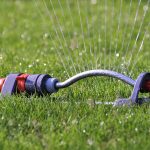
The fastest way to measure this without weighing water is the tuna tin test. Place three empty tuna tins or yoghurt pots at different points across the lawn. Run the sprinkler until each tin has 25mm of water in the bottom. That is your weekly soak. Most domestic sprinklers take 90 minutes to 2 hours to fill a tuna tin in one position. A pulsating impact sprinkler covering 8m² takes around 75 minutes per position. An oscillating sprinkler covering 50m² takes around 2 hours total.
Do the watering between 4am and 7am if you can set a timer. The Hozelock 2715 mechanical water timer is £14.99 at Wickes, the Karcher WT 4 digital timer is £39.99 at B&Q, and the Gardena Aquazoom is around £45 if you want a sprinkler with its own programmable controller. Early morning watering loses around 5 per cent to evaporation. Watering at 3pm loses 25 to 40 per cent and runs the risk of leaf-burn on a hot day.
Step Two: Raise the Mower Now and Leave It
Drop your mower height by one notch in May and you have just signed up to lose your lawn in July. Raise it instead. The summer height for a drought-resilient UK lawn is 35 to 50mm, which is at the high end of what RHS lawn guidance describes as the standard summer cut.
Longer grass shades the soil. A 40mm sward blocks around 70 per cent of the light hitting the soil surface compared to a 20mm sward. That shading keeps the soil 4 to 6°C cooler in direct sun, which slows evaporation dramatically. A garden centre soil thermometer (Greenbrokers Soil Thermometer, £6.99 at Amazon UK) pushed in to 5cm will read 22°C under short grass and 16 to 17°C under long grass on the same hot day.
Longer grass also produces longer roots. The biology is simple: grass plants put roots roughly twice as deep as the height of the visible blade. Cut to 25mm and your roots are at 50mm. Cut to 50mm and your roots reach 100mm. Over three to four weeks of mowing at the higher setting, the lawn rebuilds its root system into something that can ride out a dry spell.
The downside is honest: a lawn at 40mm looks shaggier than a lawn at 20mm. The trade-off is whether you want it to look slightly less crisp through May and June, or completely brown for the whole of July and August. Most homeowners switch back to the lower cut once they have lived through one summer at the taller setting.
Step Three: One Pre-Drought Feed
The single feed application that does most for drought tolerance is a high-potassium summer feed applied in the second half of May. Potassium thickens cell walls and makes grass blades more rigid, which directly improves the lawn’s ability to hold water in dry conditions.
Two products on the UK market worth using:
Westland Aftercut Ultra Green Plus, £15.99 for a 100m² box at B&Q. Higher iron content turns the lawn dark green within 5 to 7 days and gives reasonable drought tolerance through the summer. Apply at 50g per square metre.
EverGreen Premium Lawn Food with Iron, £18.99 for 80m² at Wickes. Slightly slower release than Aftercut Ultra Green Plus but feeds the lawn for up to 12 weeks. Apply at 35g per square metre.
Apply the feed to a damp lawn 24 to 48 hours before your deep watering session. The water dissolves the granules and pushes the nutrients into the root zone. Apply to a dry lawn and you risk scorching the blades, particularly the high-iron Aftercut Ultra Green Plus.
What to Do Before the Hosepipe Ban Starts
A hosepipe ban in England typically allows watering with a watering can from the mains, but not a hosepipe or sprinkler. The exception in most regional bans is greywater (recycled water from baths, washing-up bowls, hand-basins) which you can collect and apply freely.
Three things worth doing now in case the ban comes through in June or July:
Buy a water butt before the rush. A 200L Strata Water Butt is £39.99 at Wickes, a 250L slimline Ward butt is £64.99 at B&Q. Connect it to a downpipe with a diverter (Strata Rainsaver, £15.99) and you collect 150 to 250 litres in a single moderate rain shower. A 50m² lawn needs 1,500L per week, so you cannot supply the whole lawn from a butt, but you can spot-water the worst patches for free.
Source two watering cans of 10L each. The Haws Practican is £24.99 at Crocus, the cheaper Tildenet 10L is £8.49 at Argos. Two cans means a balanced load when you walk to the lawn from the kitchen tap, and 20L delivered to a 5m² patch is a deep watering by hand. That is realistic during a ban for the most-loved part of the lawn.
Mulch any clippings from now on. Stop using the collection box unless the cuts are very long. Mulched clippings return 25 per cent of the lawn’s nitrogen needs and act as a moisture-retaining surface mulch that slows evaporation through the worst weeks.
Three Mistakes to Avoid Between Now and August
Do not scarify or aerate the lawn now. Both procedures stress the grass and open up the surface to even faster drying. Save them for September.
Do not apply weed killer during hot weather. The selective herbicides (Resolva, Weedol) need temperatures below 24°C to work safely. If a heatwave hits during May, leave the weeds and treat them when the weather cools.
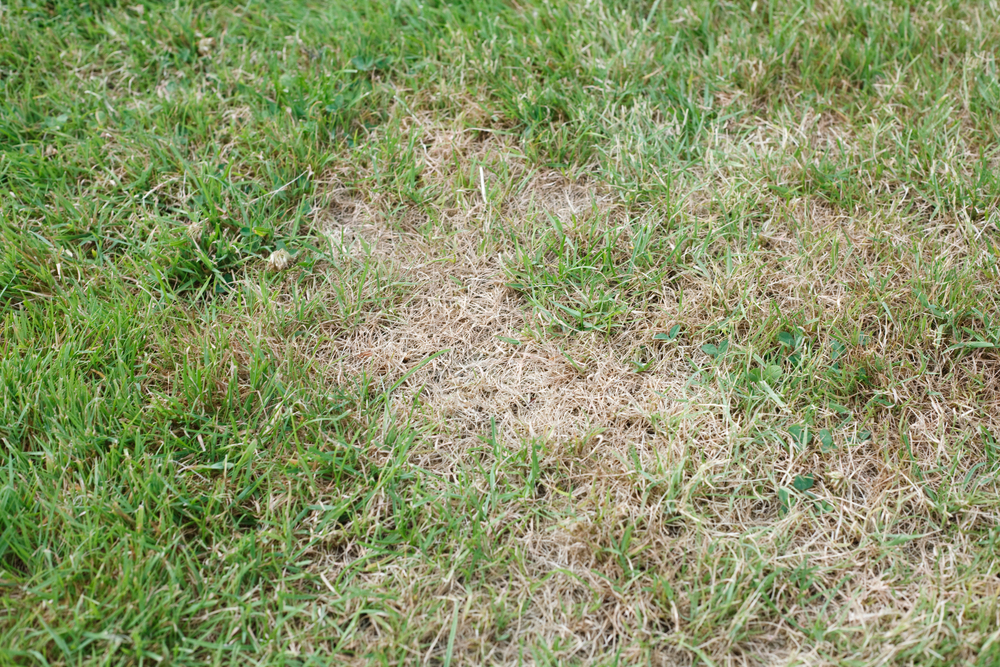
Do not panic-water once the grass goes brown. A dormant lawn that has gone brown in July is alive at the crown. It will recover within 10 to 14 days of decent rain. Watering a dormant lawn with rationed mains water during a ban can break dormancy and cause a half-revived lawn that struggles for the rest of the summer.
The Two-Week Drought-Proofing Checklist
This weekend: raise mower to 35 to 40mm. Cut lawn at new height. Buy water butt and timer if you do not already have them.
Next weekend: apply high-potassium summer feed. Water in with a deep soaking session of 25mm.
The weekend after: deep watering session 25mm. Continue twice-weekly mowing at the higher setting.
Mid-June: another deep watering only if rainfall has been below 20mm for the previous fortnight.
From the first hosepipe ban announcement: switch to watering-can soaks of the worst patches only. Let the rest go dormant. Resume normal watering 48 hours after the ban lifts.
A lawn prepared this way will stay green three to four weeks longer than the lawn next door in a dry summer, will recover faster after dormancy and will not need full reseeding in September. The total cost is around £80 for the feed, timer and watering kit. The cost of doing nothing is a brown lawn in July that takes until next May to fully recover.