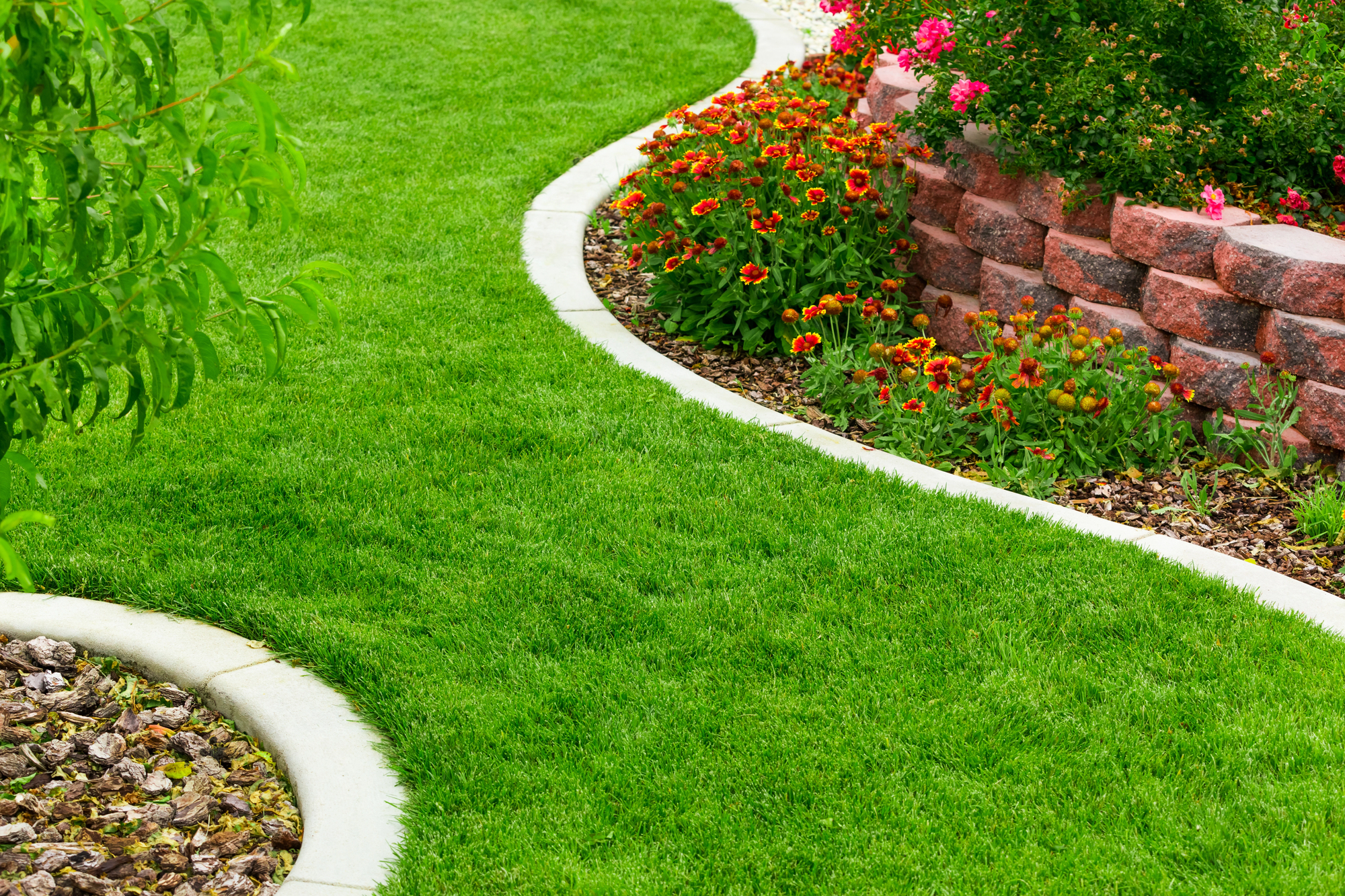
A crisp, cut edge does more for the look of a lawn than almost anything else, and you do not need expensive kit to get it. A clean vertical line where the grass meets a border or path frames the whole lawn and makes even an ordinary patch of grass look cared for. The good news is that the job needs nothing more than a half moon edging iron, or in a pinch an ordinary spade you already own, plus a little technique. Spend twenty minutes getting the edges right and the lawn reads as tidy even when the grass itself is overdue a cut.
Why a Cut Edge Changes How the Whole Lawn Looks
The eye reads edges first. A defined line between lawn and border gives a sense of order that the central grass simply does not provide, which is why a freshly edged lawn looks groomed even before you mow it. There is a practical reason to cut edges too. Grass spreads sideways by sending out horizontal stems, called stolons above ground and rhizomes below, and at the margins of the lawn these creep steadily into beds, gravel and paths. Left alone, the lawn slowly enlarges itself and the border shrinks, the line blurs, and weeds colonise the messy transition. Cutting a clean edge severs those runners and resets the boundary.
It is worth separating two jobs that people often confuse. Cutting a new edge, or recutting one that has crept, is done with a half moon iron or spade and creates the vertical face in the soil. Trimming the edge is the lighter, more frequent task of snipping the grass blades that overhang that face after each mow, done with shears or a trimmer. You cut the edge occasionally, perhaps two or three times a year, and trim it regularly through the growing season. Knowing which job you are doing tells you which tool to reach for and how often.
The Tools You Need and the Cheap Alternatives
The classic tool for cutting an edge is the half moon edging iron, a flat semicircular blade on a handle. A model such as the Spear and Jackson half moon lawn edging iron (around £25/$32) has a straight top edge you can press with your foot and a sharp curved blade that slices cleanly through turf. Professionals favour it because the wide, flat blade gives a straighter, more controlled cut than a pointed spade. That said, if you do not want to buy one, a sharp, flat bladed garden spade does the same job. The only real compromise is that a spade’s curved blade can leave a slightly scalloped line, so you work more carefully to keep it straight.
For the trimming that follows, long handled edging shears such as the Spear and Jackson Razorsharp range (around £22/$28) let you snip overhanging blades from a standing position without bending, which saves your back along a long border. A powered string trimmer turned on its side does the same job faster on a big lawn, though it takes a steadier hand to keep the line even. To guide the cut you need only a couple of free items: a plank or scaffold board for straight lines, and a length of hosepipe or rope laid on the ground to mark out curves. The hose bends into smooth arcs that look far better than a wobbly freehand attempt.
How to Cut a Fresh Edge Step by Step
Start by marking your line. For a straight edge, lay the plank along the boundary and stand on it to hold it steady. For a curve, lay out the hosepipe and adjust it until the shape looks right from a distance. Next, drive the edging iron straight down into the turf along the line. Place the blade on the line, put your foot on the flat top and press down with your body weight until the blade sinks to the right depth, then rock it gently side to side to free it and lift it out. The target depth is around 50 to 75mm (2 to 3 inches), which is deep enough to sever the horizontal runners just below the surface but not so deep that you are needlessly digging out soil.
Work along the line in small, overlapping steps. Move the blade sideways by a little less than its width each time so that each cut just overlaps the last, which gives one continuous line rather than a series of separate notches with ragged bits between them. Keep the blade vertical, not angled, so the finished face is a clean wall of soil. Once the line is cut, go back and remove the thin strip of turf on the border side. Slide the edging iron or a spade flat underneath at a shallow angle to lift it, then pull the loose strip away by hand. Finally, brush or rake the loose clippings and crumbs of soil off the lawn and out of the border with a stiff brush, sweeping away from the grass. That last tidy up is what turns a cut edge into a sharp, finished one.
The traditional advice is to recut edges in spring or autumn, when the grass is not growing so vigorously that fresh growth quickly masks the new line. You can cut an edge at any time the soil is workable, but avoid doing it in the middle of a hot, dry spell, because the exposed soil face dries out and the grass along it can brown. Damp but not waterlogged soil cuts most cleanly and holds its shape best.
It is worth deciding which style of edge you actually want, because there are two common finishes and they suit different gardens. A simple cut edge is just the clean vertical face where lawn meets border, with the grass growing right up to the line. It looks neat and takes the least effort, but grass roots can still reach across the gap into a bed. A trench or gutter edge takes things a step further: after cutting the vertical face, you remove a narrow channel of soil on the border side, leaving a small gap of about 5 to 8cm between the grass and the planting. That gully acts as a physical barrier that grass runners struggle to cross, keeps mulch and bark from spilling onto the lawn, and casts a shadow line that makes the edge look even sharper. It needs occasional reshaping as the sides slump, but for a border that the lawn keeps invading, the extra few minutes pay off. Around trees and tight curves, work in shorter cuts and turn the blade gradually rather than forcing a long slice, which keeps the curve smooth instead of faceted.
Keeping the Edge Sharp Through the Season
A freshly cut edge does not stay perfect on its own. After every mow, run long handled shears or a trimmer along the line to take off the blades that have flopped over the gap, which keeps the line reading as crisp between recuts. If you have a lot of edging, a simple metal or composite edging strip set into the cut line holds the boundary mechanically and slows the grass from creeping back, though many people prefer the look of a clean soil edge with nothing visible.
The main mistake to avoid is letting the edge creep for a year and then trying to recover a hugely overgrown boundary in one go, which is hard work and tends to leave an uneven line. Cutting a modest amount each spring is far easier than reclaiming a foot of lost border later. The second mistake is angling the blade and undercutting the lawn, which leaves an overhanging lip of turf that crumbles and collapses within weeks. Keep the iron vertical and the face stays sound. Do those two things, keep the blades trimmed after mowing, and a sharp edge becomes the small detail that makes the whole garden look deliberately kept rather than merely mown. It is the cheapest upgrade a lawn can have, and it costs little more than the time it takes.