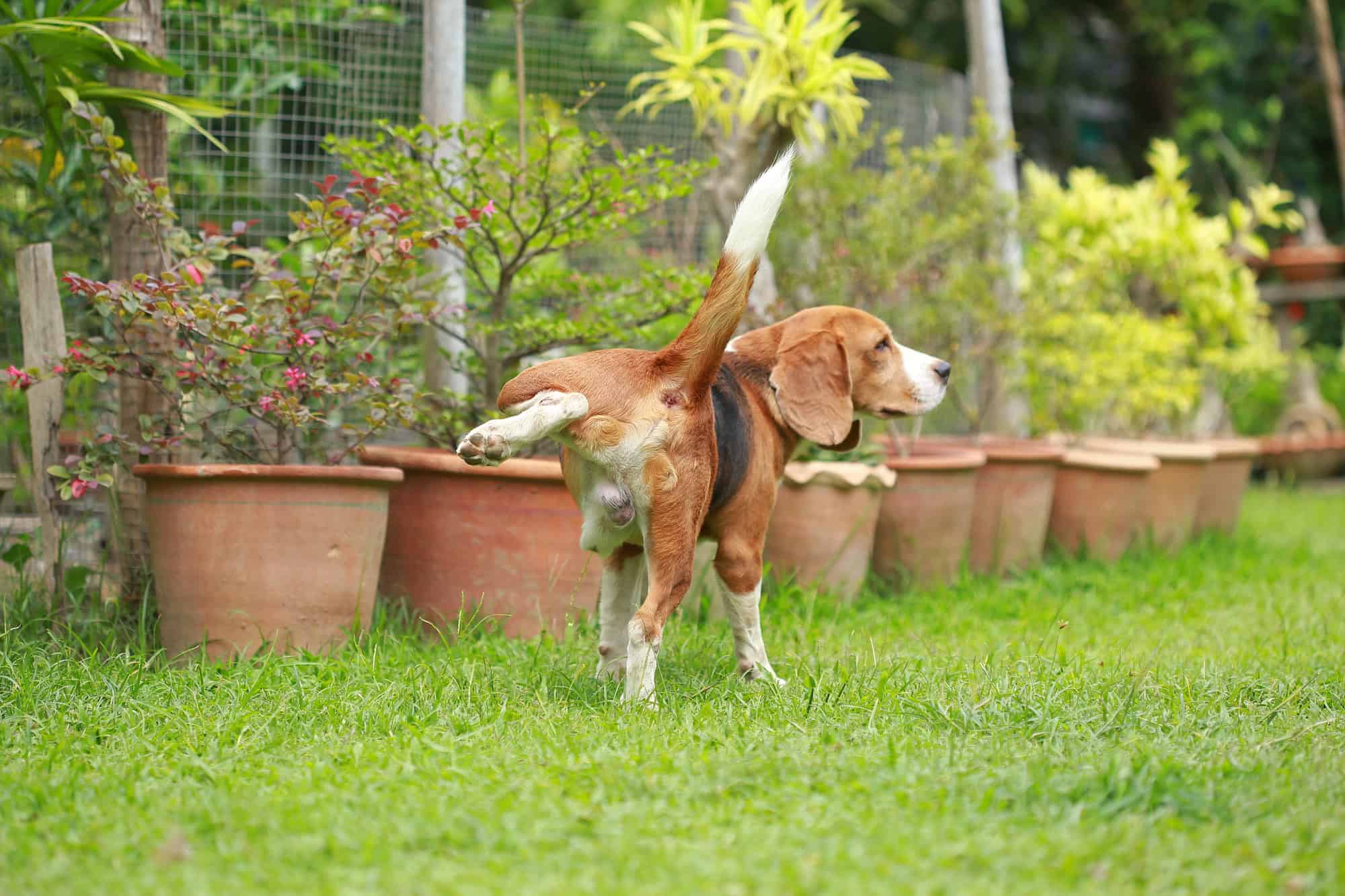
- The scorched circle is a nitrogen and salt burn, not an acid stain, and the bright green ring around it is the same nitrogen acting as a weak feed at the diluted edge.
- A full watering can of plain water poured over a fresh spot within a few hours flushes the salts down through the soil before they kill the roots, and it costs nothing.
- Once a patch has died back to bare soil, rake it out, flush the ground, and reseed now while the soil still holds enough warmth for grass to root before the cold sets in.
The Brown Circle Is a Fertiliser Burn, Not an Acid Stain
You walk the lawn and there they are: round patches of straw-coloured dead grass, each one often ringed with a collar of unusually dark, thick growth. The dog did this. The good news is that the fix for a fresh spot takes about thirty seconds and a can of water, and even the dead patches can be brought back without paying anyone or digging up half the lawn.
The first thing to know is what actually killed the grass, as it changes what you do about it. Dog urine carries a very high concentration of nitrogen. In small, spread-out doses nitrogen is the main ingredient in lawn feed and drives strong green growth. Dumped in one concentrated spot, the same nitrogen plus the dissolved salts that come with it pull water out of the grass roots faster than the plant can replace it. The blades brown off and die in a matter of days. Gardeners often blame acidity, but the scorch is a salt and nitrogen overload, the very same effect you get from tipping too much granular fertiliser on one spot. The RHS lists dog urine alongside an overdose of fertiliser as a cause of dead patches for exactly that reason.
That green ring is the proof. At the outer edge of the puddle the urine is diluted by the soil, so the nitrogen there lands at feeding strength rather than killing strength. The grass in the ring gets a free meal and grows darker and faster, while the drenched centre dies. If you understand that, the whole problem becomes a question of dose: flush the concentration down and away, and the grass survives.
The Thirty-Second Fix for a Fresh Spot
If you catch the dog in the act, or find a wet patch soon after, the single most effective thing you can do is drench the area with plain water straight away. A full watering can, roughly 9 litres or 2 gallons, tipped over the spot dilutes the urine and carries the nitrogen and salts down through the root zone and out of reach of the grass blades. The sooner you do it the better; within a few hours the salts have not yet drawn enough water out of the roots to kill them, so a good soaking rescues the patch. Left overnight, the same spot browns off.
Both the RHS and Gardeners’ World suggest going a step further and adding a little horticultural lime or powdered gypsum to the water, on the grounds that the alkalinity helps balance the pH of the treated soil. Gypsum, which is calcium sulphate, is the gentler of the two and will not swing the soil pH about, so it is the safer choice on a lawn you feed. A 10kg (22lb) tub costs around £10 to £15 ($13 to $20) from B&Q, Wickes or a garden centre and lasts a long time. The plain water does the heavy lifting though. If you have nothing to hand but a tap and a can, that is enough.
One thing to avoid: do not reach for a lawn feed to green the patch back up. The grass there has already taken a nitrogen hit, and piling more on top adds to the scorch rather than curing it. Water first, feed the whole lawn later in its own time.
How to Bring Back a Patch That Has Already Died
For the circles that are already brown and crisp, the roots are gone and no amount of watering will regreen them. These need reseeding, and the timing right now works in your favour. Autumn is one of the best windows of the year to sow grass seed: the soil still holds summer warmth so seed germinates fast, the air is cooler and damper so it does not dry out, and there is time for the young grass to root before growth stops for winter.
Work through it in order. First, rake the dead patch hard with a spring-tine rake to pull out all the brown, matted grass and open up the bare soil underneath. A spring-tine rake runs about £10 to £18 ($13 to $23) from Screwfix or Wickes. Second, drench the cleared soil with water to flush out any nitrogen and salt still sitting in the ground, then leave it a day. Skipping this step is the usual reason a reseeded patch fails: the fresh seed drops into salty soil and dies the same way the old grass did. Third, loosen the top 2cm to 3cm (about 1 inch) of soil with a hand fork so the seed has something to root into, and scatter a thin layer of fresh topsoil or seed compost if the ground is very poor.
Now sow. Use a hard-wearing lawn seed mix built around perennial ryegrass, which copes better with dogs and foot traffic than a fine ornamental blend. A box covering a good patch of lawn costs around £10 to £20 ($13 to $25) from most garden centres or Amazon. Sow at the rate on the box, usually about 35g per square metre (roughly 1oz per square yard) for repairs, rake it in lightly so it sits just under the surface, firm it down with the back of the rake, and keep it damp until it is up and growing. Water gently every day if there is no rain. The new grass should knit in within a few weeks and blend with the lawn around it by spring.
How to Stop the Patches Coming Back
Repairing patches is only worth doing if you also break the cycle, or you will be reseeding the same circles next month. A few habits keep the lawn ahead of the dog.
The biggest single win is training the dog to go in one designated spot, ideally a gravel, bark or hard-standing area rather than the main lawn. Both the RHS and Gardeners’ World put this at the top of the list. It takes patience and treats, but a dog that reliably uses one corner does no damage to the grass at all. Female dogs cause most of the scorch, as they tend to squat and empty everything in one place, while male dogs cock a leg and mark many spots with small amounts, so the concentration in any one spot stays low. If your dog empties in a single go, a designated area pays off quickly.
If training is a work in progress, keep a watering can filled and standing by the back door through the season and flush the fresh spots as they happen. Get into the routine of following the dog out first thing in the morning, when the biggest overnight empty tends to land, and tip a can over the spot. It is a small habit that saves the whole repair job later.
A thick, well-fed lawn also shrugs off the odd hit far better than thin, stressed grass, so keep the turf strong with sensible mowing and a hard-wearing seed mix in the worn areas. Raising the cut a little in the areas the dog uses helps too, as longer grass carries more reserves and bounces back faster.
One word of caution on the products sold to fix this from the inside. Supplements, tablets and treated water gadgets that claim to change your dog’s urine so it stops burning the grass are widely sold, but the RHS advice is clear: talk to your vet before giving your dog anything of the sort. Altering a dog’s urine chemistry to protect a lawn is not worth risking the animal’s health over, and a watering can does the same job from the outside for nothing.
When to Leave It Alone
Not every brown patch on a dog-owner’s lawn is urine. If patches are spreading fast, sit in damp weather and come with birds tearing at the turf, you are more likely looking at grubs feeding on the roots rather than urine scorch, and that needs a different approach. True urine burn is round, sits where the dog goes, and very often carries that tell-tale ring of dark green around a dead centre. If your patches match that description, water is your first move and reseeding is your second, and you can skip the guesswork about diseases and chemicals entirely.