
- Clover takes hold in thin, underfed grass, so the real fix is a thicker lawn rather than a bottle of spray.
- Fork out established patches, rake and mow the creeping stems, and reseed any bare soil this early autumn while the ground is still warm.
- Selective lawn weedkillers barely touch clover, and in a flowering lawn it feeds bees and stays green through drought, so it earns a place unless you want fine turf.
Why Clover Moves Into a Hungry Lawn and Not a Thick One
You tend to spot the round, three-part leaves and the creamy-white flowers in the same places every time: the patches where the grass looks thin, pale and short of life. White clover, the one most people find creeping through a lawn, is a low perennial that roots as it travels, dropping new anchors along its stems wherever they touch soil. In open ground it can reach 45cm (18in) tall, though under a mower it stays flat and wide. Its flowers run from late spring through to October, which is why late summer and early autumn is the point at which most people look down and realise a small clump has become a spreading mat.
It is worth being sure of what you are looking at, though the answer rarely changes the plan. True white clover carries three rounded leaflets, each often marked with a pale crescent, and creamy flowers that turn brown as they age. You might instead have lesser trefoil or black medick, both low mat-forming relatives with smaller yellow flowerheads, or the taller red clover that prefers long grass and meadows to a mown lawn. They look different in flower but behave much the same in turf, spread the same way, and respond to the same treatment, so you can group them all together and work through the steps below without reaching for a plant guide first.
The good news is that you can knock it back today without spraying anything. Grab a handful of the sprawling stems and pull them up, or slide a hand fork under the rooted sections and lever out the whole plant, roots and all. On a small patch this clears the worst of it in an afternoon. A hand fork costs about £5 to £10 ($6 to $13), and a border fork for larger or more compacted ground runs £15 to £30 ($20 to $40). Wherever you lift a plant you will leave a small window of bare soil, and that bare soil is the next battle, so keep a box of grass seed to hand and sow into the gap straight away.
Getting rid of the plant you can see is the easy half. Stopping it returning means understanding why it chose your lawn in the first place, and that comes down to one clever trick clover has that grass does not.
The Nitrogen Trick That Lets Clover Beat Your Grass
Clover is a member of the pea family, and like most of its relatives it makes its own nitrogen. Bacteria live in small nodules on its roots, pulling nitrogen gas straight out of the air and turning it into a form the plant can feed on, in exchange for sugars the clover sends down. That one ability explains almost everything about where clover turns up. Grass has no such partnership. It has to draw nitrogen from whatever sits in the soil, so in a lawn that is thin, underfed and low on nutrients the grass runs short and slows down while the clover, feeding itself, spreads happily into every gap.
Read your lawn that way and the clover becomes a diagnosis rather than just a weed. A patch of it is telling you two things: the soil there is short of nitrogen, and the grass has thinned enough to let daylight reach the ground. Both of those are fixable, and both are the reason a spray on its own never works for long. Scorch the clover off and leave it there, and the hungry, open turf that invited it would still be waiting, ready for the next seed to land.
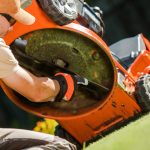
Clover reaches new ground by two routes, and you need to close off both. Seed drops onto bare soil and germinates, and the creeping stems root down wherever they lie flat against the surface, so a single plant knits itself into a dense mat over a season. That second habit gives you a useful trick at mowing time. Rake the area first with a spring-tine rake to lift the flat stems up off the turf, then mow. The blades take off far more of the plant that way, which drains its strength and cuts off the flowers before they set seed. A spring-tine rake costs £10 to £18 ($13 to $23). Collect and bin every clipping afterwards rather than leaving them on the lawn, or the cut stems will simply re-root and the seed heads will scatter exactly what you were trying to remove.
How to Stop It Coming Back for Good
The lasting answer is a lawn so thick that a clover seed never finds bare soil or spare light. Early autumn is one of the best windows of the year for that work, with warm soil and reliable moisture helping new grass root before winter. Overseed the thin areas now: rake to expose some soil, scatter a hard-wearing ryegrass lawn seed at the rate on the box, and keep it damp until it comes through. Grass seed germinates fastest when soil sits around 8 to 13C (46 to 55F), which is the band you get through most of the early autumn. A box of lawn seed costs £8 to £18 ($10 to $23) and covers a typical bare patch several times over.
Feeding is the other half, and the timing changes the choice. Through spring and summer, a nitrogen feed thickens the grass and takes away the one advantage clover holds, as dense, well-fed turf shades out low seedlings before they establish. At this end of the year, though, hold off the high-nitrogen feeds, which push soft growth that disease loves as the weather cools. An autumn feed built around potassium hardens the grass off for winter and strengthens the roots, so the lawn comes back thicker in spring and gives clover less room from the outset. Relieve compaction too, by pushing a garden fork in every 10 to 15cm (4 to 6in) across the worst-trodden strips, as hard, airless soil holds grass back long before it slows clover.
One thing not to waste money on is weedkiller. Clover shrugs off many of the selective lawn weedkillers sold to tackle broadleaf weeds, so you can spend on a bottle and watch the plant carry on regardless. The physical and cultural approach, forking out, raking, mowing, overseeding and feeding, is what actually shifts it, though it takes a season of steady effort on a large lawn rather than a single afternoon.
When to Leave the Clover Exactly Where It Is
Before you declare war, it is worth asking whether the clover is really a problem at all. In a lawn you want dense and uniform, it is out of place. In almost any other lawn it is quietly doing you favours. As it feeds itself nitrogen, it needs no fertiliser and stays green through a dry summer long after the grass around it has turned straw-brown, so a lawn with clover in it often looks better in a drought, not worse. Its flowers are a steady source of nectar for bees and other pollinators from late spring right through to autumn, and it copes with being walked on, which is more than can be said for fine turf on poor, dry soils.
Some gardeners have gone the other way entirely and reseeded whole lawns with a dwarf white clover, treating it as a low, hard-wearing surface that never needs feeding and rarely needs watering. If that idea appeals more than a weekly battle, you can lean into it rather than fight it. The choice is yours to make, and it turns on one question: do you want a showpiece of fine grass, or a living, low-effort lawn that looks after itself? Neither answer is wrong. The clover, for its part, will happily grow whichever way you decide.