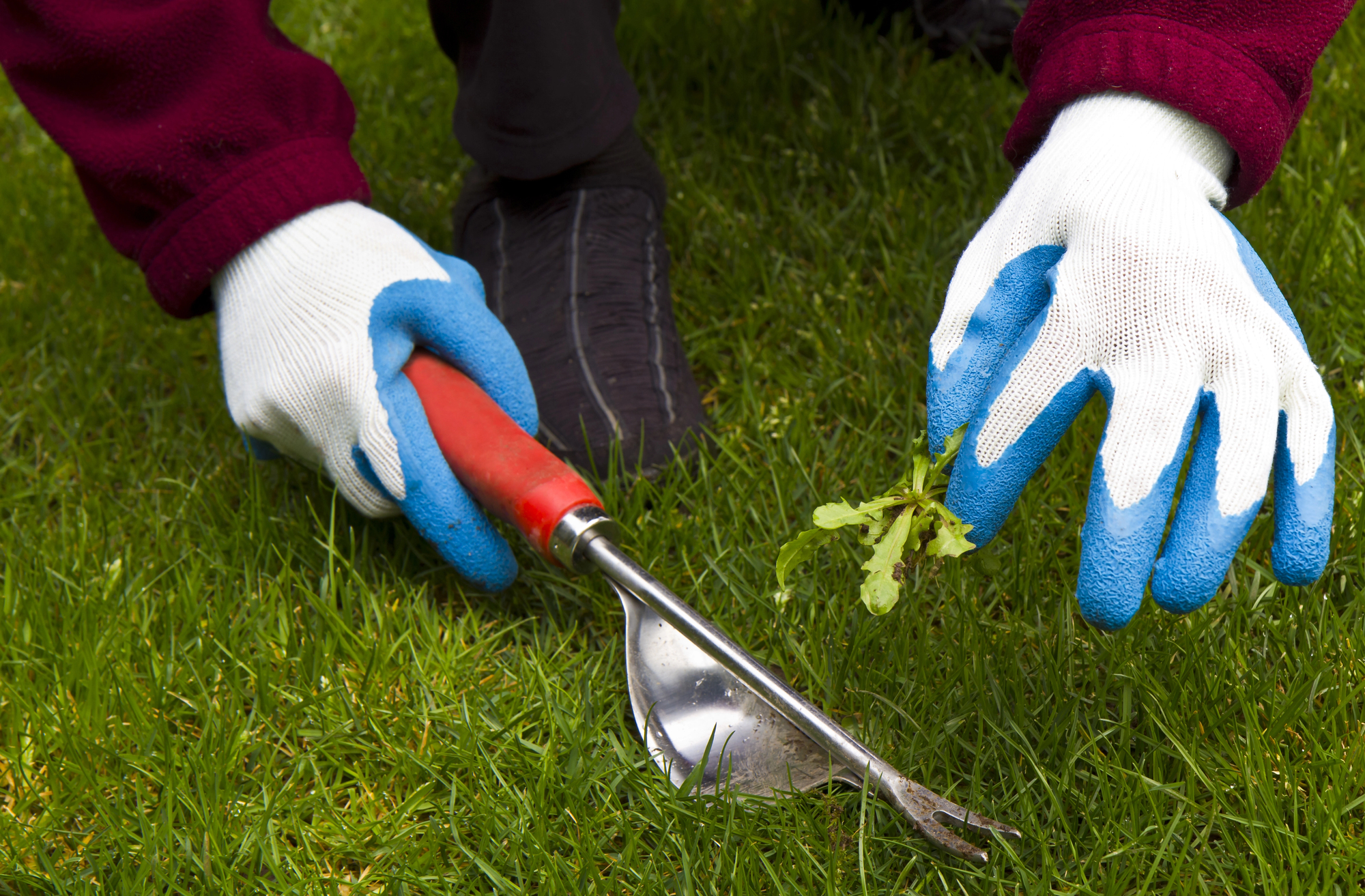
- Creeping buttercup spreads by runners that root as they go, so it forms a spreading mat rather than separate plants.
- It thrives in damp, compacted lawns, which is why it takes off in autumn, so fixing the drainage is half the cure.
- A fork, a rake and no chemicals will clear it, and a thick, well-drained lawn keeps it from creeping back.
This weed creeps, and that changes how you beat it
Creeping buttercup earns its name. From each plant it throws out low runners that root down at every point they touch the soil, so one plant turns into a spreading carpet of glossy, three-lobed leaves and bright yellow flowers. Pull the top off and those rooted runners stay behind and grow straight on. To clear it, you lift the whole plant and its rooted runners with a fork, and you take away the wet, compacted conditions it loves. Do both, and the grass closes back over the space.
It gets going where a lawn is damp and trodden hard. Buttercup shrugs off waterlogged ground that grass cannot stand, so a wet, compacted lawn hands it the upper hand, and that is why it spreads as autumn turns the ground soggy. The single most useful move is to drain and aerate, which tips the balance back to the grass.
How to tell creeping buttercup from everything else
The plant is Ranunculus repens, a native perennial. Its leaves split into three deeply lobed, toothed leaflets, sometimes with pale markings, and fine pale hairs cover the leaves and stems. Five-petalled, glossy yellow flowers open from late spring into autumn when conditions suit. The clue that sets it apart is the runners: low, rooting stems spreading outward over dense clumps of deep, pale roots. A single plant can reach 50cm (20in) across. Wear gloves when you handle it, as buttercup is harmful if eaten and can irritate skin.
Rake, mow and fork it out
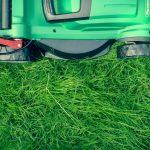
Start with a rake. Run a spring-tine rake over the patch to lift the flat runners and flowering stems up off the turf, then mow with the box on so the mower cuts, collects and carries them away. That stops it self-seeding, slows the spread by runners and weakens each plant in one pass. Then fork out the clumps with a hand fork or border fork, lifting the recently rooted sections along the runners too, as any node left behind can grow into a new plant. Reseed the bare patches straight away, as early autumn suits grass seed well.
A spring-tine rake costs about £10 to £18 ($13 to $23), an RHS-endorsed border fork around £37 ($47), and a bag of lawn seed £8 to £18 ($10 to $23). Keep buttercup out of the home compost heap, as the runners, roots and seed live through a cool heap; the council green waste bin is the safe home for it.
Why weedkiller is rarely the answer
The RHS is clear that non-chemical control works, so weedkiller is not needed. A selective lawn feed-and-weed can knock buttercup back while leaving the grass, but on a damp, compacted lawn it only treats what you can see, and the buttercup returns until the drainage and the thickness of the grass change. If you do reach for one, spot-treat the clumps rather than spraying the whole lawn. For most gardens the rake, fork and reseed route, plus better drainage, clears it without bringing chemicals near children, pets or nearby borders.
Stop it creeping back
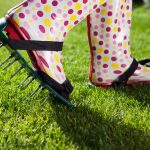
The lasting answer is the growing conditions. Open up the drainage and ease the compaction: spike the lawn every 10 to 15cm (4 to 6in), or hollow-tine it and brush a sandy top dressing into the holes to keep heavy soil open. Keep the grass thick and not too short, around 4 to 5cm (1.5 to 2in) through autumn, so it shades out any runners trying to root. Feed with an autumn lawn feed that builds roots rather than soft top growth. And watch the edges where the lawn meets beds and borders, as buttercup often creeps in from there; fork out the strays before they root across the grass. A dense, dry-footed lawn is one that buttercup struggles to get into.
Where you can live with it, buttercup is worth keeping in a rough corner or a wildlife patch. Its flowers feed bees, butterflies and hoverflies, and it sits on the RHS Plants for Pollinators list. The fork comes out only where you want fine, even grass.