
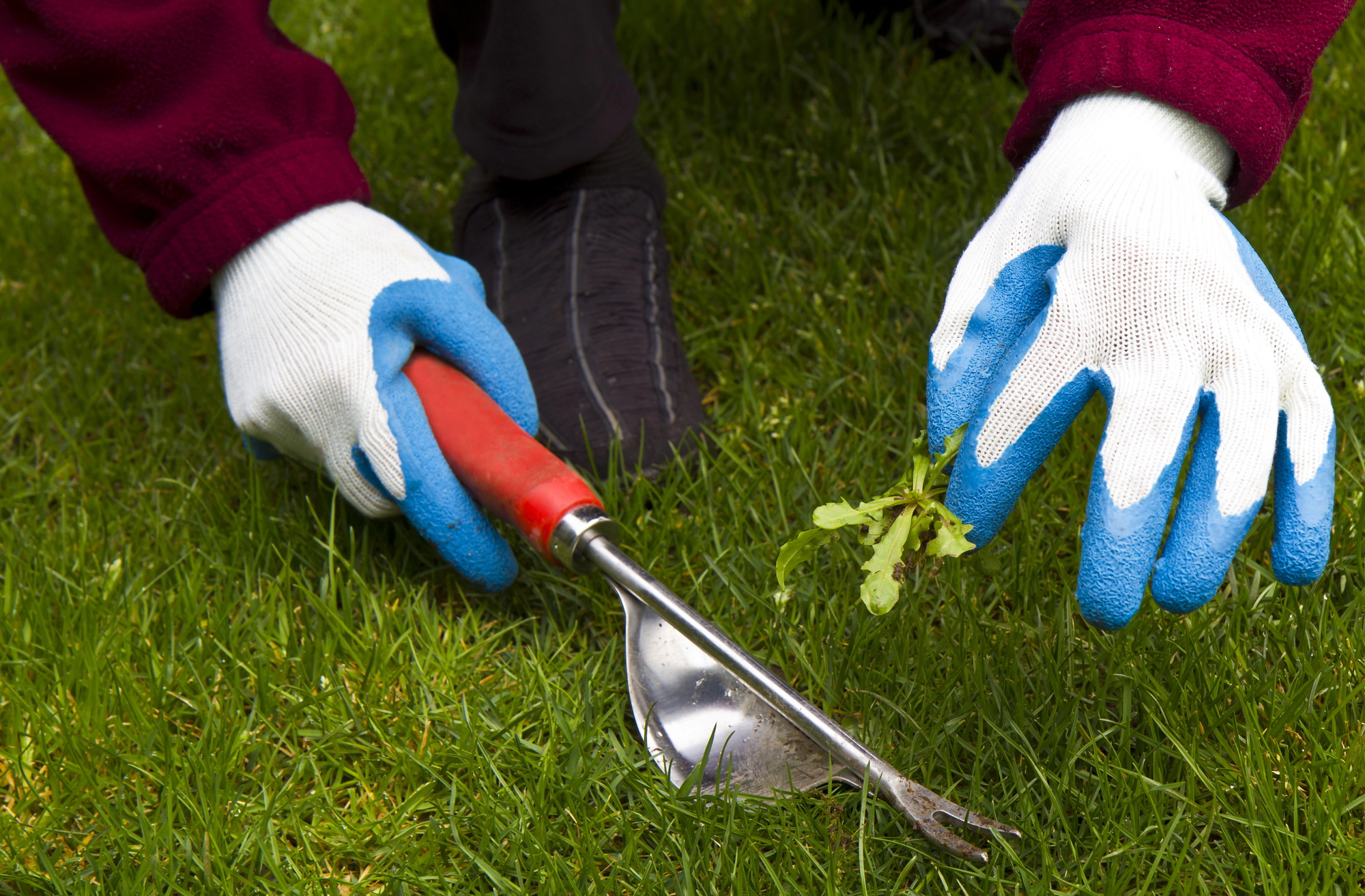
- Creeping buttercup takes hold in lawns that stay wet, and the quickest way to clear it without harming the grass is to fork out each plant with its rooted runners attached.
- Raking the lawn before you mow lifts the flat creeping stems so the blades cut and collect them, which weakens the plant and stops it setting seed.
- It keeps returning until you open up the soggy soil underneath, so spiking the lawn and improving drainage does more than any spray.
The Glossy Yellow Weed That Roots Itself as It Crawls
You can pick creeping buttercup out of a lawn from across the garden. Look for glossy yellow flowers sitting above low, flat stems that fan out in every direction. Each of those stems is a runner, and wherever it touches bare soil it puts down a fresh set of roots. One plant turns into a spreading mat, and mowing alone never clears it. The fix that works without wrecking the grass around it is to lift each plant with a hand fork, pulling up the rooted runner sections with the crown, then re-seed the small gaps you leave behind. Most lawns never need a spray.
What creeping buttercup actually is
The plant is Ranunculus repens, a perennial weed native to cooler, damp regions. Left alone it reaches about 50cm (20in) across. Each leaf splits into three deeply lobed, toothed leaflets, often marked with paler patches, and fine hairs cover the leaves and stems. The glossy five-petalled yellow flowers open from late spring through summer and often carry on into autumn, which is why clumps are still easy to spot now.
It is worth telling it apart from the weeds it grows alongside. Creeping cinquefoil carries five leaflets to the buttercup’s three, and silverweed shows silvery undersides, so the three toothed leaflets and the running, rooting stems are the giveaway. What makes buttercup stubborn is how it spreads, and it does so in two ways at once. Seed drops close to the parent plant and travels further on the wind or carried by birds. The runners creep outward and root at every node. The RHS describes a lawn-wide takeover plainly, noting that “Wet or waterlogged lawns will favour creeping buttercup.” Gardeners’ World points to the runners as the real problem, explaining that they root at the nodes, “which makes the whole plant hard to remove.” Snap off the top and leave the rooted runners, and it grows straight back.
Why it has taken over your lawn
Creeping buttercup is telling you something about the ground. It thrives where the soil stays wet, and wet lawns are usually wet for two reasons: the soil is compacted, and it drains slowly. When water fills the gaps between soil particles, it pushes out the air that grass roots need. Fine lawn grasses then root shallow and thin, bare damp patches open up, and the buttercup runners root straight into them. The weed is not so much the cause of a poor lawn as a sign of one.
This is why clearing the plants without changing the soil rarely holds. Groundskeepers treat the wet ground first, relieving compaction and moving surface water away, then let a thicker sward crowd the weed out. Pull every plant and leave the squelchy soil behind, and a new generation roots in the same patches within a season.
How to get rid of it without wrecking the grass
Start with a spring-tine rake. Rake firmly over the affected areas before you mow so the flat runners and low flower stems stand up. The RHS advice is to “rake over areas where creeping buttercup is growing to lift the developing runners,” which lets the mower cut and collect them. Doing this at every cut weakens the plants and stops them seeding.
Next, fork out the clumps. A hand fork handles scattered plants; a border fork (about £10 to £20, or $15 to $30, at B&Q, Wickes or Home Depot) is better for larger mats. Push it in around the crown, lever the whole plant up, and tease out the rooted sections of runner that trail away from it. Gardeners’ World rates digging it out as the most effective non-chemical method. Work when the soil is moist, as more of the root lifts cleanly instead of snapping off.
Re-seed the small bare patches you open up. A box of hard-wearing lawn seed costs about £6 to £10 ($9 to $14) at Argos or Amazon. Grass germinates while the soil stays above roughly 8C (46F), so an early-autumn patch roots well; once the ground turns cold, firm the bare soil over and sow in spring instead. Never drop buttercup on the compost heap, as the runners re-root in the warmth and you spread it again. Bag it for council green waste or a recycling site.
For a lawn that is more weed than grass, a selective lawn weedkiller earns its place. Products based on 2,4-D, sold as Resolva Lawn Weedkiller Extra and, in warmer regions, as weed killers such as Ortho Weed B Gon (about £9 to £12, or $12 to $18, at B&Q or Home Depot), kill broadleaf weeds and leave the grass standing. They work by mimicking a plant growth hormone that drives broadleaf plants to grow themselves to death, an effect lawn grasses shrug off. Gardeners’ World advises applying in “cool, moist and calm weather” so the spray does not drift onto borders. One caveat: 2,4-D only bites while the weed is in active growth, so an autumn application works best early, before the first hard frosts slow everything down.
Wear gardening gloves while you pull it. Buttercup sap contains protoanemonin, a compound that can redden and blister bare skin after prolonged handling, which is also why grazing animals leave the plant alone in a field. Gloves and a long sleeve keep the job comfortable, and they stop you spreading broken runner fragments from one patch to the next on your hands.
Autumn is a sensible time to work through a lawn like this. The soil is soft and moist after the first rains, so whole roots lift rather than tear, and the grass still has enough warmth left to knit over the small holes you leave. Clear the worst of it now, mark any patches too cold to re-seed, and the lawn goes into winter with far fewer plants ready to flower and seed when the weather warms again.
How to stop it coming back
This is the part most people skip, and it is the part that lasts. Open up the soil. Spike the lawn all over with a garden fork or a hollow-tine aerator, pushing in about 10cm (4in) deep every 15cm (6in) to break the compaction and let water drain away. Brush a free-draining topdressing of sharp sand and loam into the holes to keep them open. On lawns that sit wet all winter, this does more to see off buttercup than any amount of forking.
Then thicken the grass. Feed in autumn with a potassium-rich lawn feed to harden the turf for the cold months, and overseed thin areas so there are no gaps for a runner to root into. Keep mowing through the growing season and rake before each cut. Every runner you lift early is one that never flowers, and Gardeners’ World is blunt about timing: get the weed out while it is young, “before it’s had time to spread.”
Know when to stop fighting it plant by plant. If buttercup covers more than about half the lawn and the ground squelches underfoot, forking it out one clump at a time is a losing battle. The honest route then is a full renovation in spring: lift the turf, dig grit and compost into the soil to open it up, improve the drainage, and returf or reseed into ground where grass, not buttercup, has the upper hand.