- A dandelion holds on through one deep taproot, so the trick is lifting the whole root, not pulling the leaves off the top.
- Early autumn is close to the ideal time to clear them, while the soil is soft and before next year’s seed is set.
- A fork, thicker grass and a little patience clear dandelions for good, with none of the risks that come with lawn weedkiller.
Pull the leaves off and you have done nothing
A dandelion you grab by the leaves will be back within a fortnight. The flat yellow rosette you can see sits on top of a single fleshy taproot that drives straight down into the soil, and the plant regrows from whatever root is left behind. Get the root out and the plant is gone. Snap the top off and all you have done is prune it. That one fact decides everything else about clearing them.
For anyone standing over a lawn dotted with them, the timing is on your side. Early autumn is close to the best moment to act: the soil is still warm and damp enough to loosen its grip on the root, the plants are past their hardest flowering, and clearing them now leaves small gaps that fresh autumn grass can knit over before winter.
What a dandelion is, and why it keeps coming back
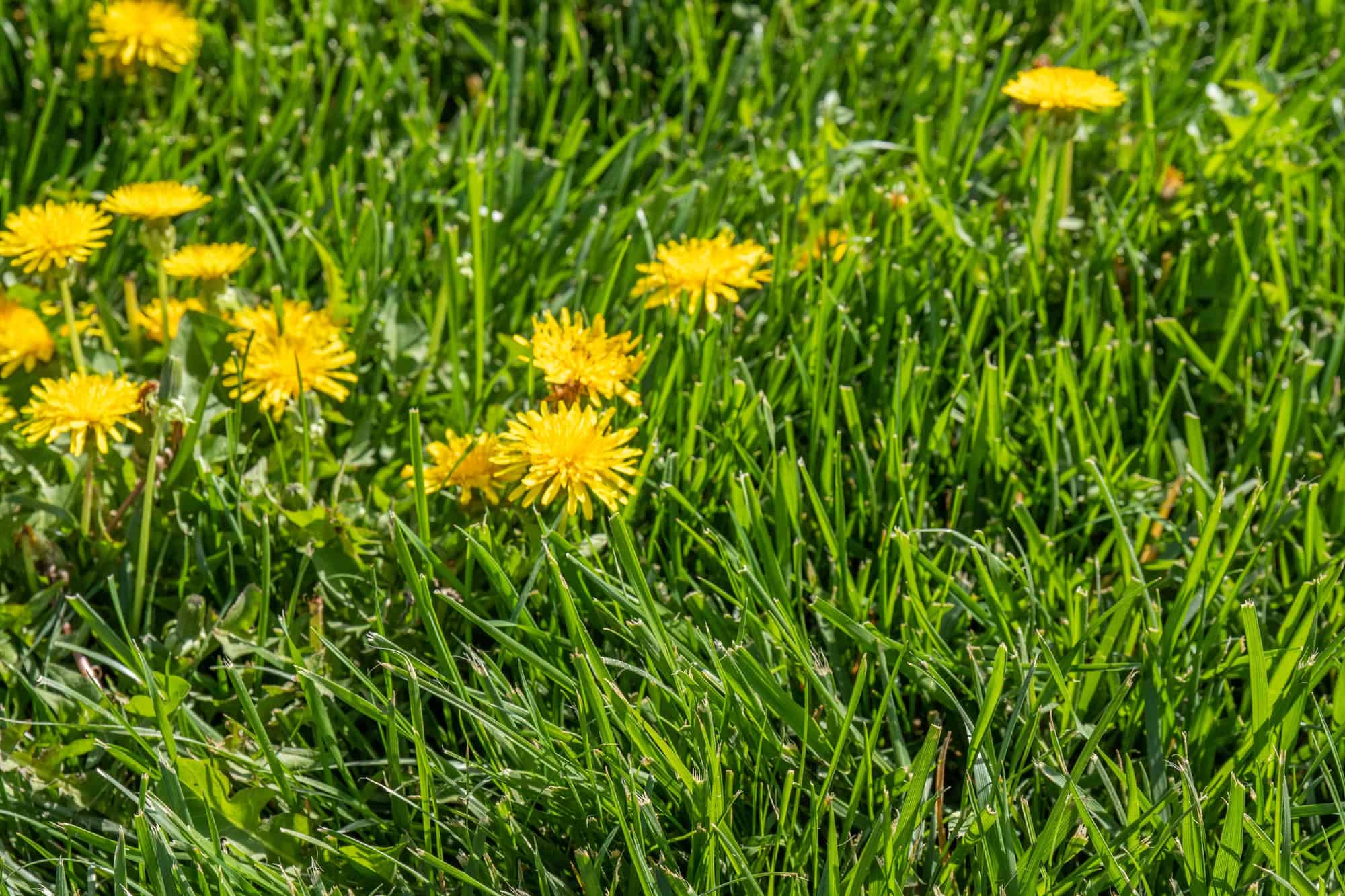
Dandelions belong to the genus Taraxacum, and botanists have named more than 200 micro-species in cooler northern climates alone. They share the same build: an evergreen rosette of long, lobed leaves, typically 15 to 30cm (6 to 12in) across and pressed flat in a mown lawn, growing from one central taproot. Hollow flower stalks carry the familiar yellow heads from spring right through to October, and every leaf and stalk bleeds a milky white sap when it snaps.
Two things keep them coming back. The first is that taproot, which regrows from fragments left in the ground. In garden soil it is usually less than 30cm (1ft) long, and it branches and forks in stony ground, so a careless dig that snaps it low simply leaves a new plant behind. The second is seed. A single flowerhead is really over a hundred tiny flowers packed together, and it becomes over a hundred seeds. The wind lifts those seeds and carries them up to 500m (1,640ft) from the parent. The comfort is that the seed is short-lived: after three months only about half is still able to grow, and not all of it lands somewhere it can. Stop fresh seed and the problem shrinks fast.
How to dig one out so it does not grow straight back
Dig them while they are young, before the taproot goes deep or the plant sets seed. A hand fork works, but a forked or spiral “dandelion weeder” is made for the job: it targets the taproot and lifts it with little soil disturbance. Push the tool in right beside the centre of the rosette, lever the whole root upward, and draw it out in one piece. Doing this after rain, or watering the spot first, softens the soil so the root slides out rather than snapping.
For a deep or awkwardly placed plant, take out as much root as you can, then pull off the regrowth each time it reappears. Starved of leaf, the root gives up over a few rounds. The one thing to get right is the finish: leave a finger of taproot and you have left a new dandelion. A hand fork runs about £5 to £10 ($6 to $13) and a long-handled grubber that saves your back around £20 to £35 ($25 to $45). Leaves can go on the home compost heap, but keep the roots out of it, as a cool heap will not kill them; drop roots in the council green waste or lay them on hot paving until they are completely dead.
The no-dig ways to thin out a lawn full of them
Digging out dozens one by one is slow, so lean on two other levers. Mow off the flowerheads before they turn into clocks, which stops fresh seed and steadily weakens each plant. Then make the grass itself do the work. Dandelions are colonisers of thin, bare turf, so a dense lawn shades out the seedlings before they get going. Feed the grass, overseed any gaps, and stop cutting it too short, and the lawn closes ranks over the space the dandelions want.
Why reaching for weedkiller usually backfires
The RHS is blunt on this: non-chemical control is effective, even if it takes longer, so there is no real need to spray. Selective lawn weedkillers stay in the soil for some weeks after they go on, and they have been linked to cases of herbicide contamination that turn up later in compost and damaged plants. Around children, pets and vegetable beds that is a cost worth avoiding. A spray also does nothing about the bare, thin patch that let the weed in, so the dandelions drift back. A fork plus a thicker lawn treats the cause, not the symptom.
How to stop dandelions taking hold again
Everything that keeps dandelions out is ordinary good lawn care. Raise the cut so the grass sits around 4 to 5cm (1.5 to 2in) through autumn, and never take off more than a third of the height in one go, so the turf stays dense. Feed with an autumn lawn feed to build roots, and overseed thin areas now for thick grass by spring. Relieve compaction by pushing a fork in every 10 to 15cm (4 to 6in), as hard, trodden soil favours weeds over grass. And cut off any seed clocks the moment you spot them, so no seed travels to a neighbour’s lawn or back to yours.
One last thought before you clear the lot. Dandelions are among the first flowers of the year to feed bees and other pollinators, when little else is out. If you have a rough corner or an edge you are happy to leave wild, a few plants there do real good. The fork is only for the fine grass where you want none.