
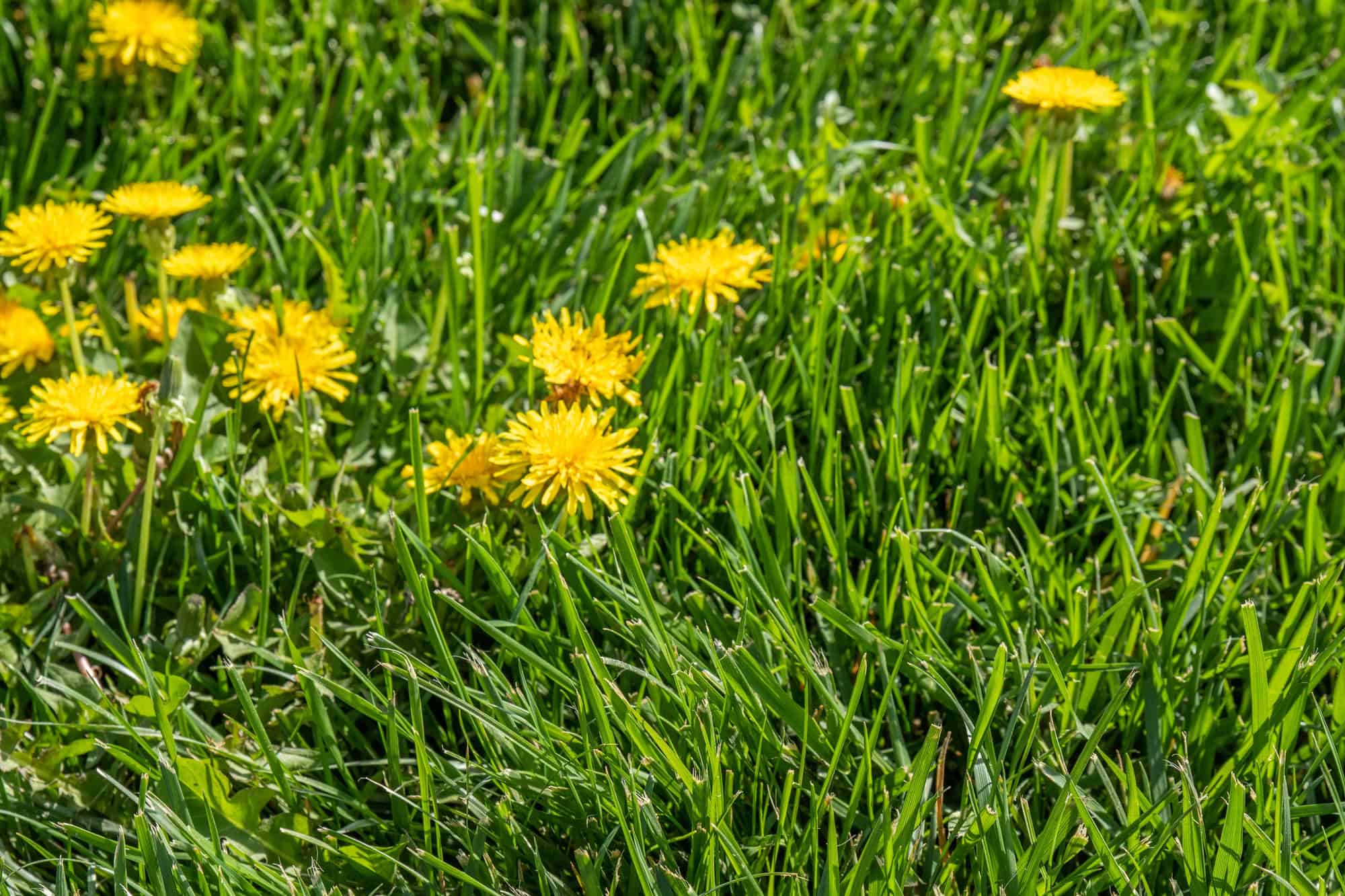
- Soak the soil round each dandelion, wait half an hour, then lever out the whole taproot with a narrow weeding tool, as any piece left behind can grow a new plant.
- Fill the hole straight away and keep the grass a little taller and thicker, so no bare soil is left for the next seed to land on.
- RHS advisers say hand removal works, if slowly, while selective lawn weedkillers stay in the soil for some weeks after they are applied.
Why Cutting Dandelions Off Never Gets Rid of Them
The fix is short. Water the soil around the plant and wait half an hour. Push a narrow weeding tool in beside the centre of the rosette and lever the entire root out in one piece. Fill the hole with soil, then keep the grass dense and a little longer so nothing new can settle into the gap.
Mowing, strimming and snapping off the yellow heads all miss the target. In a lawn the rosette of leaves sits flat against the ground, and lawn weeds in general are low-growing plants that put up with regular mowing and foot traffic. The mower blade clips the leaves and the root underneath carries on untouched.
The root is the whole point. A dandelion grows a large, tapering root straight down from the middle of the rosette, and the plant is evergreen, so the rosette and root carry on through winter. Lift the whole root and nothing is left to regrow from. Hand removal takes patience, and a whole lawn can need several seasons of it. Autumn is a good time to start, and the reason sits in that root.
What Is Going On Under the Flat Rosette
You can spot a dandelion by its rosette, which is typically 15 to 30 cm (6 to 12 in) wide and often flat in a lawn. The leaves are long, narrow and often lobed, and some have a pinkish-purple tint near the base. Damaged leaves and flower stems exude a milky latex.
Below ground sits the taproot. It is thicker and deeper than the plant’s other roots, which gives the dandelion access to water and nutrients from deeper in the soil. In gardens it is typically under 30 cm (1 ft) long, and in stony ground it tends to branch and fork. Roots sometimes grow at an angle too, so the root you are chasing does not always run straight down.
Two facts about that root decide how you tackle it. First, it regrows from pieces. A dandelion can regenerate from sections of root, which is why chopping a plant up with a spade, or snapping it off partway down, can leave you with more plants. Young plants build a taproot quickly, so the earlier you pull, the less there is to lose.
Second, the root is the plant’s larder. Late summer and early autumn is when plants move materials from the leaves down to the roots for storage, and the stored reserves feed new growth the following spring. Pull the plant now and you remove it just as it banks its winter supply. A piece left in the ground keeps its share of those reserves, which helps explain why a snapped root can rebuild a rosette.
Then there are the seeds. A single flowerhead holds over a hundred individual flowers, and each becomes a seed. The wind can carry them up to 500 m (1,640 ft) from the parent plant, so a bare patch in your lawn can be seeded from well beyond your fence. The seeds do not last long: after three months only half are still viable. Dandelions flower from March to October, though, so fresh seed keeps arriving through the growing season.
One balancing note: the early flowers feed bees and butterflies at a time when other sources are scarce, and many gardeners now welcome wildflowers in the lawn. If you can live with a few, leave them. Everything below is for the lawn where you want them gone.
How to Pull a Dandelion So the Whole Root Comes Out
Start with the right tool. A dandelion weeder is built for this job: it targets the taproot and limits soil disturbance. A hand fork works too, and some weeders can be used from a standing position, which saves kneeling. A spade or small garden shovel can make the job easier, and garden gloves protect your hands.
If a dandelion is carrying a flower that is starting to fade, snip it off first with secateurs, as removing fading flowers cuts the number of new seedlings. Handle any plant that has already turned to a seed clock gently, as picking it can send the seed blowing across the lawn.
Next, soak the soil. Water around the plant and wait half an hour. Water loosens the soil, so the root slides out whole instead of snapping partway down. If rain has already soaked the ground, you can start straight away. Pulling from dry soil risks a snapped root, and the lower half stays in the ground.
Now place the tool near the centre of the rosette and push it down beside the root. Prise the root up slowly by levering the handle back. With your free hand, grip the plant at its base and tug gently. If it holds, cut round it again with the tool. As roots can grow at an angle, move the tool to follow the root rather than hauling on the leaves.
Check what you have pulled. The taproot is a large, tapering root, so a stub or a broken end means a piece is still in the ground. Take out as much of the remaining root as you can reach. For a stubborn plant, remove what you can, then pull the regrowth whenever it appears. Over time that weakens the plant.
Finally, deal with the waste. The leaves can go in the home compost bin. The roots cannot, as roots need high temperatures to be destroyed and a home heap runs cooler, so a composted root can start a new plant. Put them in your council green waste bin, or lay them on sunny paving until they are completely dried and dead.
What to Do With the Bare Hole Before Winter
Never leave the hole open. Lawn weeds are quick to colonise bare ground where the grass is patchy, so an empty hole next to a thin patch invites the next seed. Fill it with soil and tread it level with the surrounding lawn.
Whether you sow grass seed straight away depends on your climate. For good germination the soil needs to be at least 7°C (45°F). In cooler northern climates it is getting too late for sowing this far into autumn, so firm the soil in and sow in spring. A handy sign that the soil is still warm enough is weed seedlings germinating in the lawn. In warmer southern regions, where the soil is above that temperature, sow seed on the filled holes straight away.
Keep fallen leaves off the lawn while the patches fill. A layer of leaves smothers the grass and blocks out light and moisture. If you need to mow, do it in mild weather, as grass keeps growing above 7°C (45°F), and set the blades a little higher than in summer. Where you have sown, set the cutting height to at least 5 cm (2 in).
Why Spraying Is the Wrong Shortcut
A bottle of lawn weedkiller looks quicker than an afternoon with a weeding tool, but RHS advice is to leave it on the shelf. Selective weedkillers used on lawns to kill dandelions remain in the soil for some weeks after application, and they have been linked to cases of herbicide contamination. Non-chemical methods work, though they take time, so there is no need to spray.
The trouble can travel. Selective lawn weedkillers can damage other plants when contaminated clippings go onto the compost heap and the compost is used as a mulch.
Pulling keeps the grass and everything around the dandelion safe. It is slow, but it removes the root rather than the leaves.
How to Stop Them Coming Back
The best defence is thick grass. Dense, healthy growth makes it more difficult for weeds to establish and spread, and a lawn with bare soil does the opposite.
Cutting height helps. Mow at 5 to 7.5 cm (2 to 3 in) and leave the clippings on the lawn. Avoid very short mowing, especially in summer, as it weakens the grass and leaves bare patches for weeds to take.
Overseed thin spots before the weeds do. Howard Kaufman, a lawn care professional who has offered both traditional and organic care, broadcasts four times more grass seed on organic lawns than on conventionally treated ones, so the grass crowds out dandelions before they establish.
Cut the flowers before they turn to seed. From spring through autumn, snip faded dandelion flowers with secateurs, or mow regularly to deadhead low-growing weeds. A single head makes over a hundred seeds, so a few minutes with secateurs saves pulling later.
Pull new plants as they appear rather than waiting for an infestation. Young plants have had less time to build a deep taproot, and a dandelion left alone lives between five and 10 years.
Keep the compost rule: roots go in the green waste bin or dry on sunny paving, never in the home heap.
Know when to call it a patch job. If one section of lawn is thick with dandelions, hand pulling gets slow and the bare holes add up. In that case, cut out the turf with a sharp spade and lift it away. Remove the weed roots, lightly fork over the soil, rake it level, tread it down and lay fresh turf. For the rest of the lawn, pulling in autumn, thicker grass and a higher cut are your best chance of a spring with far fewer yellow heads.