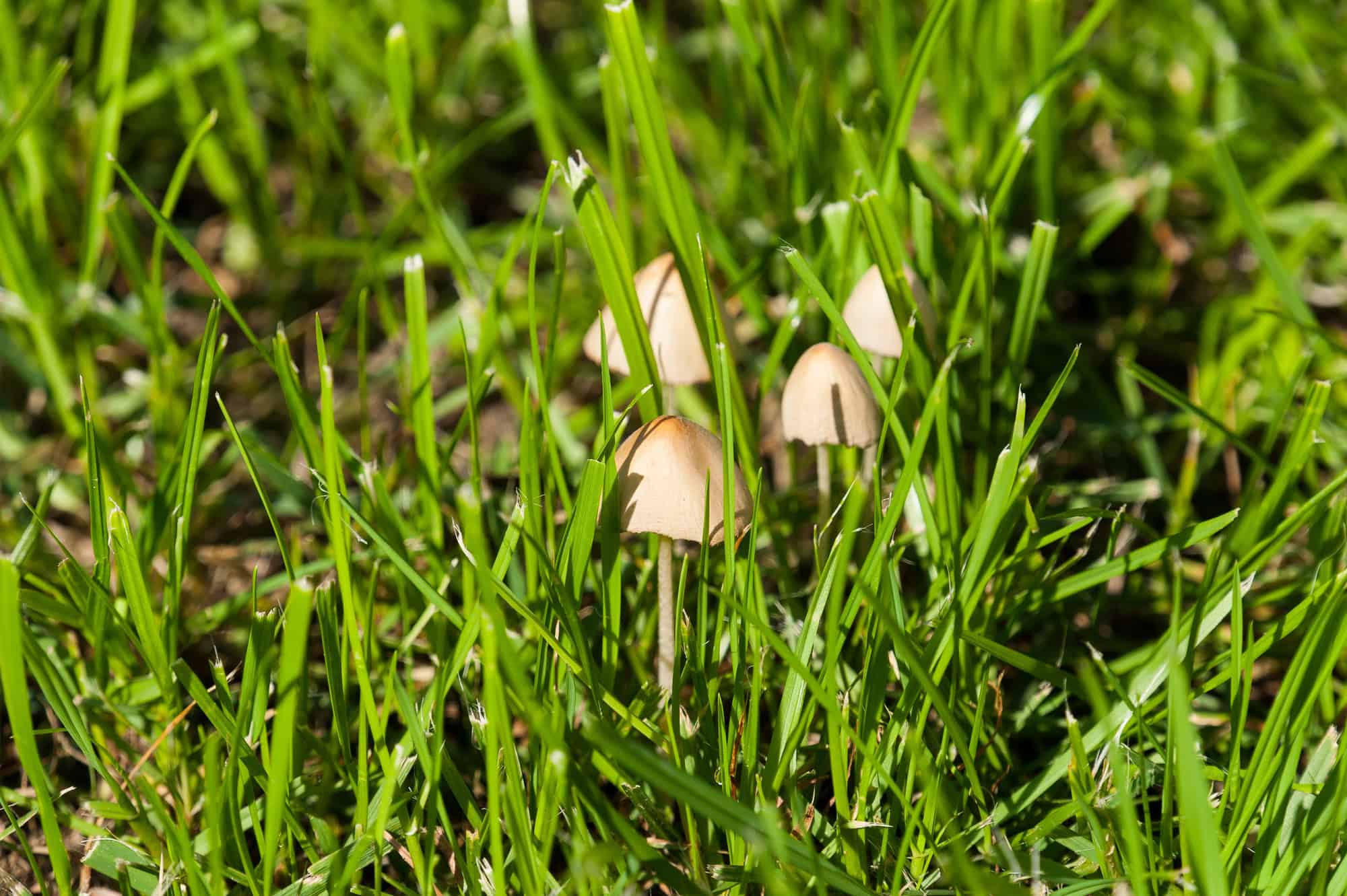
- Lawn mushrooms are the fruiting bodies of underground fungi feeding on buried dead roots and thatch, and most of them help your soil rather than harm it.
- Pull larger ones by hand and scatter small clusters with a stiff broom on a dry day, before the caps open and shed spores.
- Keep them from returning by making the surface drier and airier: rake up leaves, mow a little shorter, and clear the thatch that feeds them.
Those Caps Are Not a Disease, They Are a Sign of What Is Happening Under the Grass
You walked out this morning and the lawn had grown a scatter of pale caps overnight. A ring of them near the old tree stump, a few clumps by the border, maybe a lone toadstool in the middle of the grass. It looks like something has gone wrong. In almost every case, nothing has.
Mushrooms and toadstools are the fruiting bodies of fungi that live in the soil all year as a fine web of threads called mycelium. For most of the year you never see them. In late summer and autumn, when the ground is damp and mild, the fungi push up caps to release spores and spread. The caps are short lived. The fungus below carries on whether you pull them or not, which is the single fact that shapes everything you do next.
Here is the fast version if you want the lawn clear before visitors arrive. Put on gloves, pull the larger caps by hand, and use a stiff garden broom to knock the smaller clusters apart on a dry, sunny day, when they shrivel to a fraction of their size within hours. Bin them rather than composting them near the lawn. That clears what you can see. The rest of this explains why they came, and how to make the grass a place fungi find harder to fruit in.
Why They Appear in the First Place
Fungi feed on decaying organic material, and a flush of caps tells you there is a food source under the grass. The usual culprit is buried dead wood: the roots of a shrub or tree taken out years ago, an old fence post, or timber left when the garden was built. As that material rots, the fungus breaking it down eventually fruits at the surface. The other common trigger sits right under your feet, in the layer of dead grass and moss known as thatch. When thatch builds past roughly 1cm or half an inch, it holds damp against the soil and gives surface fungi a steady meal.
Most of these fungi fall into two groups, and knowing which you have tells you whether to worry. Saprophytes feed only on dead and decayed matter. They are harmless, and as they work they release minerals and nutrients back into the soil and build its organic content, so they are doing your lawn a quiet favour. The second group, mycorrhizal fungi, wrap themselves around living roots in a partnership: the fungus draws sugars from the plant, and in return its threads reach far out into the soil and ferry water and nutrients back to roots that could never cover that ground alone. The bright red, white spotted fly agaric that appears under birch is one of these. Both groups point to living, working soil rather than a problem.
There is one exception worth learning by sight. Honey fungus produces clumps of honey coloured toadstools, often on or near tree stumps in autumn, and it attacks and kills the roots of woody plants. If caps keep appearing around a shrub or tree that is dying back for no clear reason, and you find a white fungal sheet between bark and wood at ground level, that is a different matter and worth a positive identification before you plant anything new nearby.
The Fairy Ring, and Why It Keeps Coming Back
A ring of caps, sometimes with a band of dark green grass just outside it, is a fairy ring. The green comes from the fungus feeding as it works, releasing nitrogen that the grass at the edge takes up, so the turf there grows faster and darker than the rest. One of the fungi behind these rings, Marasmius oreades, spreads outward year on year and the ring can widen to several metres across.
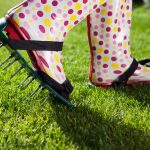
You can knock back the visible part by scarifying and aerating the ring, then oversowing any bare or worn patches with fresh grass seed to thicken the turf. What you cannot do with a rake is reach the fungus living below the surface. It will almost certainly fruit again next autumn, and the honest advice from the Royal Horticultural Society and Gardeners’ World alike is to expect that and learn to live with it. Where the white fungal web in the soil turns water repellent and grass starts to brown, break the affected area up with a garden fork and water it well so moisture can reach the roots again. A garden fork runs about £15 to £30, or $20 to $40.
How to Clear What You Can See, Safely
Act soon after caps appear, before they mature and open to drop their spores, as removing them early cuts down the next wave. Wear gloves. Pull the larger mushrooms whole, and take a stiff-bristled broom to the smaller clusters, scattering them apart on a dry, sunny day so the pieces dry out fast. Do not gather them to eat. The word mushroom gets used loosely, but plenty of wild caps are toxic, and you should never eat anything from the lawn without a clear identification from a recognised expert.
If you have a dog or young children, treat every unknown cap as poisonous and clear them straight away. Signs a dog has eaten something toxic include heavy drooling, vomiting, diarrhoea, loss of balance and seizures. If you suspect it, contact a vet straight away and, where you can, take a sample of the fungus with you so it can be identified. No fungicide is sold for controlling lawn toadstools, and in almost every case none is needed, so ignore any product that claims otherwise.
How to Stop Them Coming Back
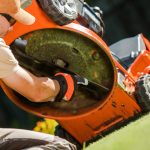
Fungi fruit where the surface stays damp, shaded and full of decaying material, so the whole aim is to make the top of the lawn cleaner, drier and airier. Three habits do most of the work. Rake up fallen leaves and twigs through autumn rather than letting them sit and rot on the grass. Keep mowing while growth continues, taking the lawn down to around 4cm or 1.5 inches, as short grass dries far quicker after dew or rain than long grass that traps humidity at soil level. And clear the thatch: run a spring-tine rake through the turf, or a powered scarifier on a larger lawn, to lift out the dead grass and moss that holds moisture and feeds surface fungi. A spring-tine rake costs about £10 to £18, or $13 to $23, and an electric scarifier runs roughly £70 to £150, or $90 to $190.
If buried wood is the source, the only lasting cure is to dig it out. Where a stump or old roots sit shallow enough to reach, lifting the rotting timber removes the meal the fungus is living on and the caps stop returning. Deeper wood is rarely worth the upheaval of digging a lawn apart, and as the fungus itself does no harm to the grass, most gardeners leave it and simply clear the caps each autumn as they show.
Get those surface habits right and the lawn holds far fewer caps year on year, though the fungus never fully leaves. That is the reframe worth keeping: a scatter of mushrooms in early autumn is the mark of soil that is alive and feeding your grass, not a lawn that is failing. Clear the ones you would rather not look at, keep the surface tidy and dry, and let the rest get on with the work you cannot see.