- Autumn is the best window of the whole year to lay new turf: the soil still holds summer warmth, rain does most of the watering for you, and the roots knit in before winter so the lawn is ready to walk on by spring.
- Most of the work is in the ground, not the turf; dig it over, clear the old weed roots, firm and level the surface, and rake in a pre-turf feed at about 35g per square metre (1oz per square yard) before a single roll goes down.
- Lay the pieces staggered like brickwork, push them tight with no gaps, water so it soaks right through, then leave it alone for about three weeks until the grass passes a gentle tug test.
Why Autumn Beats Every Other Time to Start a New Lawn
A new lawn laid in the next few weeks has almost everything working in its favour. The ground still holds the warmth of summer, so new roots push down fast into soil that has not yet turned cold. The steadier autumn rain keeps the turf moist without you dragging a hose around the garden every evening. And the grass gets months of cool, damp weather to anchor itself before you ever ask it to take a footstep. The Royal Horticultural Society calls mid autumn the best time to lay turf, with the window staying open from mid autumn right through to early spring whenever the soil is neither frozen nor sodden.
Turf laid in high summer tells a harder story. The heat dries the pieces from the edges in, the joints shrink and gap, and you end up tied to a watering can twice a day to stop the whole thing browning off. The RHS advises against laying from mid spring to early autumn for that reason, as grass laid in hot weather needs so much water to survive. Start now and the weather does the hard part, which is why the same lawn costs you far less effort and far less water.
The payoff is a lawn that is quietly rooting all through the quiet months and stands ready to use the moment growth picks up in spring. Here is how to give it the best possible start, from the ground up.
Get the Ground Right First
The part that decides whether your lawn looks flat and even in three years is not the turf. It is the soil underneath, and it is the step most people rush. Start by digging or rotovating the whole area to a depth of 20cm to 25cm (8in to 10in). That breaks up any compaction so roots can travel down rather than hitting a hard pan and stalling, which is what leaves a new lawn looking tired within a season.
As you dig, fork out the roots of tough perennial weeds like couch grass and bindweed. A short length of their white root left in the ground will push straight up through your new lawn within weeks, and once it is under the turf it is far harder to reach. Work in plenty of well-rotted manure or garden compost at the same time to hold moisture and feed the young roots.
Then wait. Leave the dug ground to settle for at least a few days, and five to six weeks if you can spare it, so the soil drops to its natural level rather than sinking in patches after the turf is down. Hoe off any weed seedlings that appear in the meantime. When you are ready, firm the surface by treading it over several times in different directions with short, shuffling steps, heel to toe, then rake it level. Firming drives out the air pockets that cause a new lawn to sink into dips, and the raking gives you the smooth, even bed the turf needs. Last, rake in a general pre-turf fertiliser at the maker’s rate, or about 35g per square metre (1oz per square yard). A box costs around £5 to £12 (roughly $7 to $16) at B&Q, Wickes or a garden centre.
How Much Turf to Order and What It Costs
Measure the length and width of your new lawn, multiply them for the area, and check the size of the turf pieces the supplier sells before you order. Rolls in cooler northern markets usually cover one square metre each. Add about five per cent to your total to cover trimming the edges and the odd damaged piece, so you are not left one roll short on the day.
Standard garden turf runs about £3 to £7 per square metre (roughly $4 to $9 per square metre) from B&Q, Wickes, Homebase or a local turf grower. In warmer southern regions, sod sold by the piece at Home Depot or Lowe’s works out at about $0.35 to $0.85 per square foot. Buy the freshest turf you can and lay it the day it arrives. Turf left rolled up on the pallet for more than a day or two yellows and heats up in the middle, and pieces that have started to cook never recover the deep colour of a fresh roll.
Laying It So the Joints Disappear
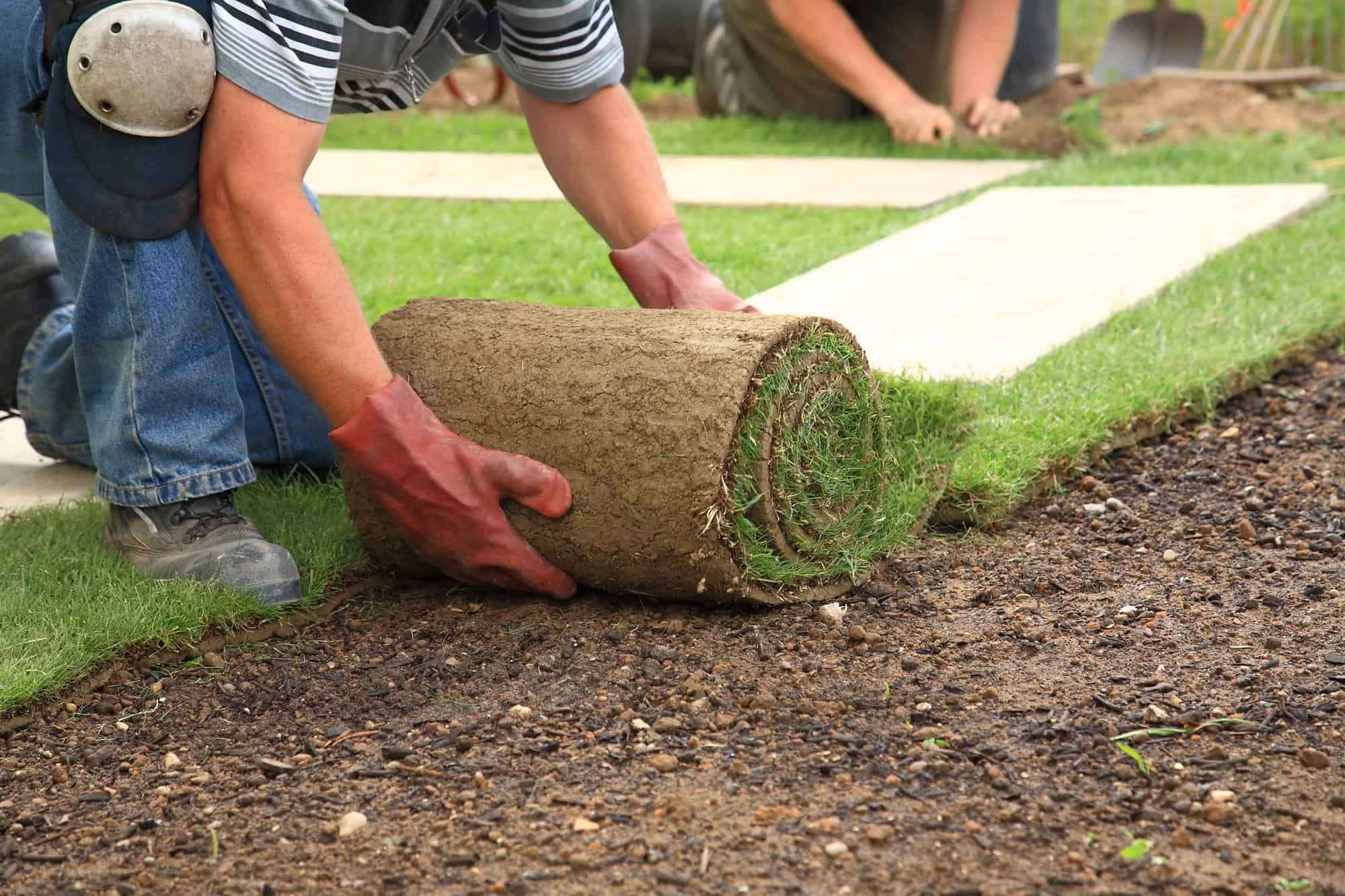
Work from a straight edge, such as a path or a plank laid along one side, and lay your first row tight against it. For every row after that, stagger the joints so they fall halfway along the pieces either side, exactly like bricks in a wall. Staggered joints spread the load as you work and stop a continuous seam opening up into a visible line. Push each piece hard against its neighbours so there are no gaps, as open joints dry out fastest and are the first strips to brown and die back.
Never kneel or walk on the soil you have prepared or on the turf you have just laid. Stand and kneel on a board or plank instead, and move it along as you go, so your footprints do not press dips into the finished surface. Keep a bucket of sandy soil beside you and trickle a little under any piece that sits low, lifting it to the level of the rest. Trim the outer edges to shape with a sharp knife or a half-moon edging iron once the whole area is down.
With every piece in place, firm the lawn gently with a light roller or a home-made tamper to settle the turf onto the soil and close any air gaps beneath it, which is what lets the roots reach down into the bed rather than sitting on top of it. To finish, brush a mix of sharp sand and soil, or garden compost, into the seams between the pieces. That fills the hairline joints, holds moisture along the edges, and helps the rows grow together into one surface rather than a grid you can still pick out months later.
Watering and the First Few Weeks
Water the new lawn well straight after laying if no rain is forecast, and soak it enough that the water passes right through the turf and into the soil below. Wetting only the top layer of the turf is the classic mistake, as it draws the roots up to the surface chasing the moisture and leaves you with a lawn that cannot cope the moment the weather turns dry. In the cool, wet weeks of autumn the rain often does this for you; through any dry spell, water deeply about once a fortnight rather than little and often.
Stay off the turf for the first few weeks while the roots take hold. The temptation to admire it up close is strong, but a footprint now shows for a long time. Check progress with a gentle tug on the grass. If it lifts easily the roots have not knitted in yet; when it holds firm and resists the pull, the turf has rooted.
That usually takes about three weeks. Give it the first cut only once it passes the tug test, with the mower blades set high, taking no more than the top off and never scalping it close. A light early cut thickens the grass up before winter without stressing the young roots. Leave any real feeding or overseeding until growth is strong in spring. Do the groundwork well and water it right, and the lawn you lay over the next few weeks will root quietly through the cold and be ready to walk on, play on and enjoy by spring.