A bumpy lawn is one of the most fixable problems in the garden, and you almost never need to dig it up and start again. The rule that decides your method is the depth of the unevenness. Anything shallower than about 2 to 3 centimetres (roughly an inch) can be cured by spreading a thin levelling mix over the lawn, a little at a time, and letting the grass grow up through it. Deeper hollows and humps need the turf lifted and soil added or removed underneath. What you should not do is reach for a roller, which flattens the surface for a week and compacts the soil for a year. Done properly, over a growing season, a lumpy lawn becomes smooth enough to walk and mow without a single bare patch.
Find Out Why It Is Bumpy First
Before you spread anything, work out what made the lawn uneven, because the cause changes the cure. The most common reason is simple settlement: soil that was never firmed properly when the lawn was laid sinks unevenly over the years. Other culprits include worm casts flattened into low mounds, ruts pressed in by a mower or wheelbarrow on soft ground, the craters left when ants or moles have been at work, old footprints set hard in a dry summer, and the slow collapse of a buried tree stump or root as it rots. Frost heave can lift patches over winter, and a lawn laid over rubble or builder’s spoil will always have hard high points.
It is also worth checking that you are dealing with genuine unevenness and not a spongy surface, which feels bumpy underfoot but is caused by a thick layer of thatch rather than an uneven soil profile. Press a finger into the lawn. If it sinks into a soft, springy mat above the soil, the answer is scarifying to remove thatch, not levelling. If the soil surface itself rises and falls, you have a true levelling job, and the depth of the worst dips tells you which of the two methods below to use.
The Topdressing Method for Shallow Bumps
For the general low-level lumpiness most lawns suffer from, topdressing is the answer. Start by mowing on a normal to low setting so the contours of the lawn are easy to read. Then make or buy a levelling mix. The standard blend is roughly 70 per cent sharp sand to 30 per cent screened topsoil or loam, which is free-draining enough not to turn to mud and fine enough to settle between the grass blades. Bulk bags of ready-made lawn dressing are widely sold from around £85 (about $110) per tonne, and a tonne covers roughly 200 square metres, while small 25-kilogram handy bags suit a single problem area. Avoid pure topsoil or compost on its own, as it caps the surface and drains poorly.
Spread the mix into the hollows by the shovelful, then work it across the lawn with the back of a rake, a stiff brush, or a lawn lute, which is a wide flat levelling tool that costs around £30 to £60 (about $38 to $76) and makes the job far quicker on a larger lawn. The single most important number to remember is this: never apply more than about 10 millimetres (a third of an inch) in one go, and always leave the grass tips showing through. Grass manufactures its energy in the upper part of the blade, so if you bury the growing crown under a thick layer, the plant cannot photosynthesise, it starves, and the patch dies, leaving you with bare soil and a deeper dip than you started with. Thin layers let the grass grow up through the dressing within a couple of weeks.
Water the dressing lightly to help it settle, let the grass grow up and through it, then mow and repeat after three to four weeks. A badly settled lawn may need three or four light applications spread across a season to reach a smooth finish, which sounds slow but keeps the grass alive the whole time. This is the same technique covered in our guide to topdressing in late spring, applied here with levelling in mind.
Deeper Hollows and High Spots: Cut and Fill
When a dip or a hump is deeper than about 2 to 3 centimetres (an inch), do not try to bury it under dressing, because the layer needed would smother the grass. Instead, lift the turf and adjust the soil beneath it. Using a half-moon edging iron or a spade, cut an H-shape or a cross through the turf across the bad spot, slide the spade under each flap, and peel the living turf back like opening a book. For a hollow, fork over the exposed base to relieve compaction, then add soil or your sand-and-loam mix and firm it until the level matches the surrounding lawn. For a high spot, scrape soil away instead. Fold the turf flaps back into place, press them down so the seams knit together, brush a little dressing into the joints, and water well.
The advantage of cutting and filling is that the grass never leaves the surface, so there is no bare patch and recovery is almost immediate. It is more work than spreading dressing, but for a pronounced hump or a sunken drain run it is the only method that fixes the problem in one go rather than over a whole season.
Why Rolling Is the Wrong Fix, and Aftercare
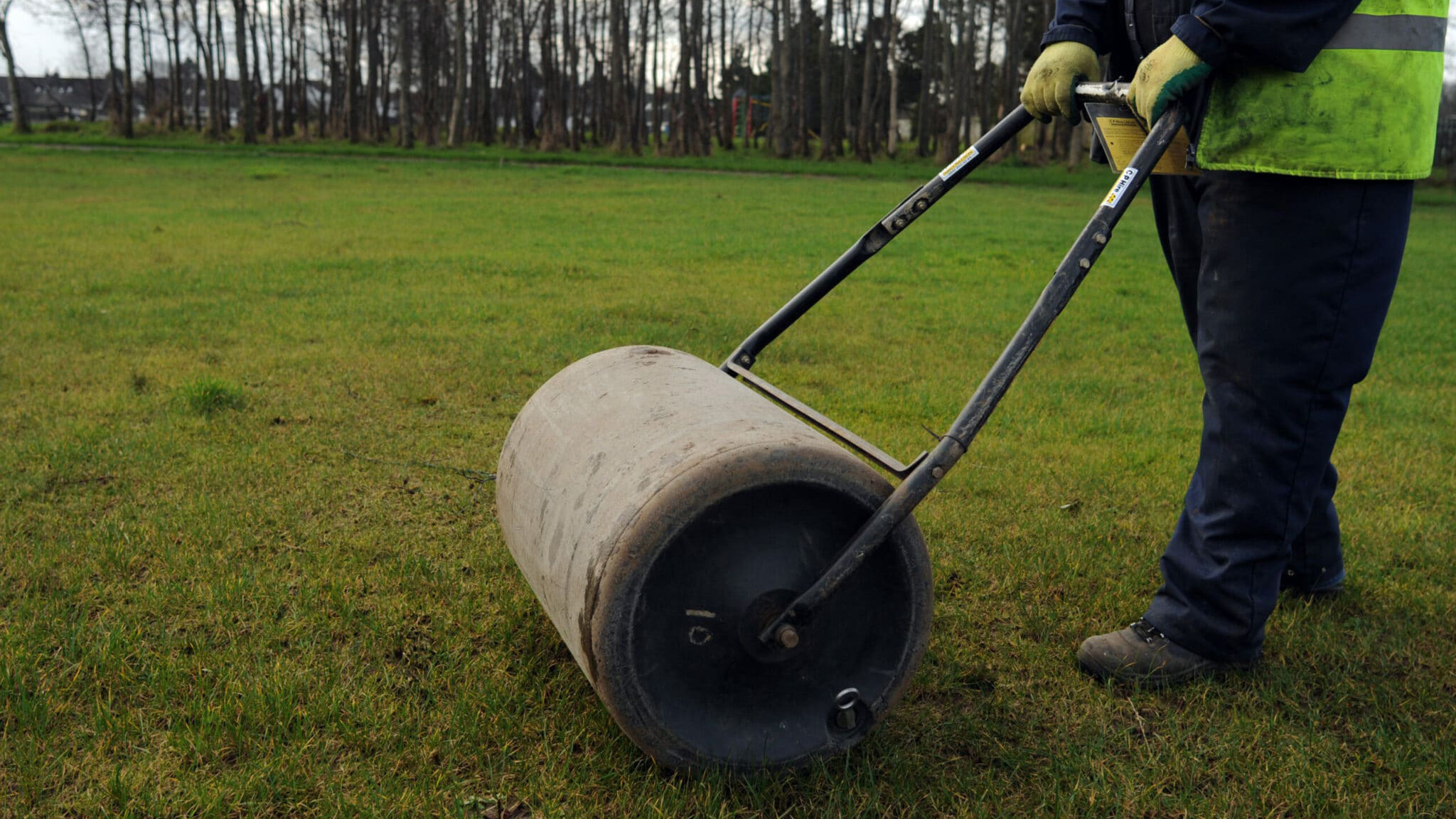
It is tempting to think a heavy roller will simply press the bumps flat. It will not. A roller pushes the high points down for a short time, but it does nothing to fill the hollows, so the surface stays uneven, and worse, it squeezes the air out of the soil. That compaction reduces drainage and root growth, weakens the grass, and creates exactly the conditions that moss and shallow-rooted weeds move into. The bumps then return as the soil recovers. If compaction is part of why your lawn is uneven, the fix is aeration, not rolling, and our guide to compacted soil and tired lawns explains how to relieve it.
On a larger lawn it pays to work in sections rather than dressing the whole area at once. Mark the worst dips with canes before you mow, so you can still find them once the grass is short and the contours flatten in the light, then dress and level one strip at a time, dragging the lute in two directions so you do not simply push the mix from one low spot into the next. Watch how much you apply near the edges of each hollow, where it is easy to build the level too high and create a fresh hump. If recurring worm casts are part of the problem, brushing the casts out when they are dry, rather than treading them flat when wet, stops them rebuilding the very lumps you are trying to remove, because a flattened cast is just a new patch of bare, raised soil waiting for moss to move in.
Whichever method you use, the aftercare is the same. Overseed any thin areas straight after dressing by scattering grass seed into the fresh mix, keep it moist until it germinates, and mow high until the new grass establishes. Time the work for active growth, which means spring or early autumn in cooler climates, or summer only if you can keep the lawn watered, and feed lightly afterwards to drive recovery. Get the timing wrong and the consequences are quick: dress during a heatwave without watering and the mix bakes into a crust while any seed fails, bury the grass too deeply and you trade bumps for dead patches, and roll instead of fill and you end up with a compacted, mossy lawn that settles straight back into the lumps you tried to remove.