
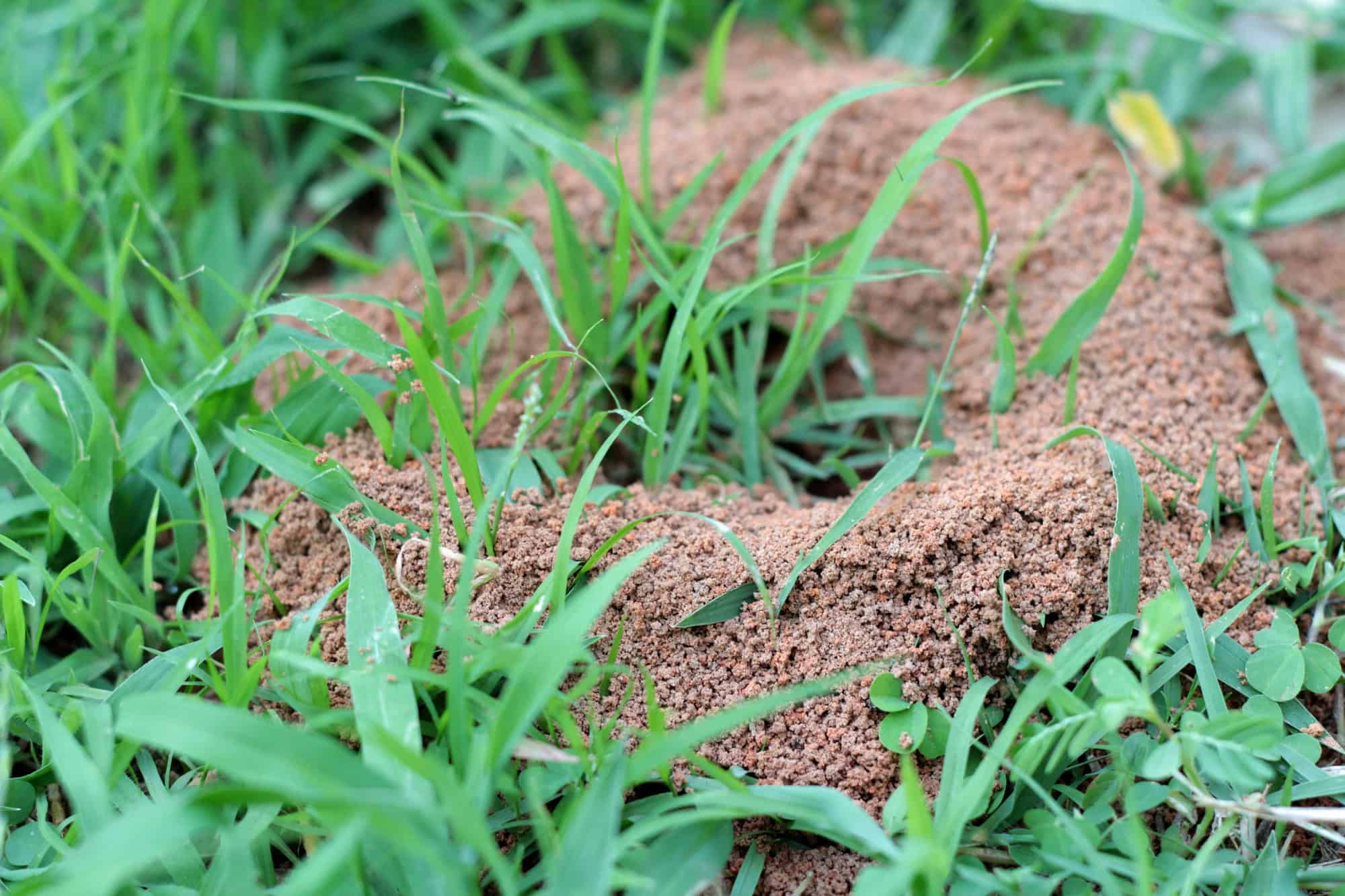
The fastest way to deal with ant hills in a lawn is also the gentlest: wait for a dry day, knock the loose soil flat with a stiff brush or the back of a rake, and brush it into the surrounding grass before you mow. You do not need to kill the ants, and in most lawns you should not try. The mounds are a cosmetic and mechanical nuisance rather than a threat to the grass, and the soil the ants bring to the surface is actually fine, well-aerated material you can put to use. The trouble only starts when you reach for boiling water or harsh chemicals, both of which kill the grass and leave you with bare patches that look far worse than the original mounds.
Why Ants Build Hills in Your Lawn
The ants you find under a lawn, usually the common black garden ant Lasius niger, are not feeding on your grass. They nest in the soil because a sunny, free-draining lawn is warm and dry, ideal for raising brood. The “hill” is simply spoil: as the colony excavates its tunnels, workers carry fine grains of soil to the surface and deposit them around the nest entrance, exactly as you would pile earth beside a hole you were digging. A mound grows fastest in warm, dry spells from late spring through summer, which is why ant hills seem to appear overnight in June and July.
This is worth understanding because it tells you the problem is mechanical, not biological. The grass under and around the mound is rarely damaged by the ants themselves. The harm comes from the loose soil smothering the grass beneath it and, more seriously, from your mower. A mound left to harden creates a bump that the mower either scalps, shaving the grass down to bare earth on the high point, or rides over with the blade striking soil and stones, which blunts and chips the blade. A scattering of hardened ant hills can wreck a mower blade in a single season and leave a lawn pocked with brown scalp marks. So the goal is not extermination, it is keeping the surface level and the soil dispersed.
How to Level Ant Hills the Right Way
Choose a dry day, because dry soil brushes away cleanly while wet soil smears into the grass and forms a cap that smothers it. Work through these steps. First, before mowing, walk the lawn and knock down each mound with a stiff yard broom, a besom, or the back of a spring-tine rake, spreading the loose soil thinly across the surrounding grass rather than leaving it in a heap. A thin scatter of fine soil does no harm and actually acts as a light top dressing. Second, brush vigorously so the grass blades stand back up through the soil rather than staying buried. Third, only then mow, with the cut set no lower than 30 to 40mm (about 1.2 to 1.5 inches) so the blade clears any slight remaining unevenness without scalping.
For a mound that keeps returning in the same spot, loosen the soil with a hand fork or aerator and gently disturb the top few centimetres of the nest. Raking and aerating the area breaks up the tunnels near the surface and improves drainage, which makes the site less attractive and encourages the colony to relocate to a quieter corner. This is the key insight that generic advice misses: you are not trying to win a battle of attrition with the colony, you are making the immediate area inconvenient so the ants move themselves. Repeated gentle disturbance every week or two through the summer is far more effective, and far kinder to the lawn, than any single drastic treatment.
If a colony is very large and persistent, in a spot where you cannot tolerate it such as the edge of a patio or a path, a thin layer of food-grade diatomaceous earth (around £9/$12 for a 1kg tub from Amazon or most garden centres) applied around the nest entrance on a dry day will gradually thin the colony. It is a natural powder of fossilised algae that works mechanically, abrading the waxy coating on the ants’ bodies so they dehydrate, and it carries no risk to grass, pets, or children. Its one limitation is that it only works while dry, so you must reapply after rain or watering. A solution of one tablespoon of plain washing-up liquid in a litre (about a quart) of water, poured into the nest in the cool of early morning or evening when most ants are at home, is another grass-safe option that breaks down the ants’ surface protection.
Methods to Avoid and Why They Backfire
Boiling water is the classic mistake. It is widely recommended and it is both ineffective and damaging. A kettle of boiling water cannot reach the queen deep in the nest, so the colony survives and rebuilds, but it scalds and kills every grass plant it touches, leaving a dead brown circle that takes weeks to recover and often fills with weeds first. You trade a low green mound for a bare dead patch, which is a clear step backward. Strong ant-killer powders and petrochemical drenches sold for hard surfaces are equally poor choices on a lawn, because they kill the grass roots along with the ants and can leave the soil tainted for months.
Flattening a mound by treading it down when the soil is wet is another quiet error. Compressing wet soil into the base of the grass caps the surface, blocks air and water, and smothers the very plants you are trying to protect, so the mound site ends up yellow and thin. Always disperse the soil when it is dry and crumbly, never press it down wet.
Keeping Ant Hills From Coming Back
Ants favour dry, undisturbed, sun-baked soil, so the conditions that encourage them are the same ones that come with a neglected or very free-draining lawn. Regular care discourages them without any direct treatment at all. Mowing keeps the colony disturbed, while occasional deep watering during dry spells removes the dry-soil advantage the nest depends on, making the ground less hospitable. A lawn that is fed, mown, and watered in dry weather, with the surface raked and aerated once or twice a year, tends to carry far fewer mounds than a starved, parched one, because the soil rarely stays dry and undisturbed long enough for a colony to settle and grow large.
Accept too that a few ants in a lawn are a sign of healthy, living soil. They aerate the ground, prey on other pest larvae, and break down organic material, so a war of eradication is neither winnable nor worth fighting. The realistic target is a level, mowable surface through summer, achieved with a brush, a rake, and a dry afternoon. Get that routine right and the mounds become a five-minute job before each mow rather than a season-long battle, and your mower blade will thank you for it. Get it wrong by reaching for boiling water or powders and you simply swap a cosmetic bump for a genuine bare patch, which is a far harder thing to put right.
It helps to recognise an ant hill for what it is, because not every lump in a lawn has the same cause and the wrong diagnosis leads to the wrong fix. An ant hill is a loose, conical pile of fine, sieved soil with a small hole at or near the centre, and it sits on top of otherwise healthy grass. Worm casts, by comparison, are smaller, darker, sticky coils of soil scattered across the lawn rather than gathered into a single mound, and they are best simply brushed away when dry and never treated, since earthworms are among the most useful creatures in any lawn. Mole hills are larger, made of coarser clods pushed up from deeper down, and signal a different problem entirely. Identifying the fine, dry, sandy texture of true ant spoil tells you the gentle brush-and-disperse approach is the correct one.
If you do ignore ant hills through a whole summer, the consequence is predictable rather than dramatic. The mounds harden into firm bumps, the grass on each peak gets repeatedly scalped until it dies back to bare soil, and those small bare spots become the first place crabgrass, moss, or annual weeds establish, because they germinate readily in open, disturbed ground. By autumn an untreated lawn can look lumpy and moth-eaten, and levelling hardened mounds then takes topdressing and reseeding rather than a quick brush. Spending five minutes knocking the mounds flat before each summer mow is the difference between a level lawn in September and a patchy repair job, which is why the small, regular habit beats the single big intervention every time.