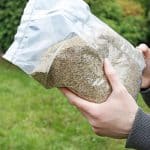
- The glossy lawn on the front of a seed bag tells you nothing, so turn the bag over and read the list of grasses inside.
- A bag sold as “quick” or “fast” can hold up to 90 percent annual ryegrass, which sprouts quickly but lives for one year.
- A blend of named grasses matched to your sun, shade and foot traffic holds up better than a cheap single-type bag.
The Front of the Bag Sells a Dream, and the Back Tells You What You Are Buying
You picked the bag with the perfect green lawn on the cover. A few months later half the patch had thinned out, and the rest was coarse and wiry. The photograph was never a promise. The fix sits in the small print on the back, and it takes two minutes to read.
Three things on that ingredients list decide whether the seed is worth paying for. Look for named grasses, ideally with named varieties. Look for a blend of several grasses rather than one. And if perennial ryegrass appears, look for the word “turf” or “fine” next to it. A bag that fails on all three is selling you filler in a pretty package.
Treat the words “quick” and “fast” with the most suspicion. Roger Cook, a contractor at This Old House, has a blunt rule for them: “One thing when you go and you see anything that says quick or fast, you better check the contents of the bag.”
Read the Ingredients, Not the Front
Start with the grasses themselves. Real lawn seed lists species by name: perennial ryegrass, tall fescue, red fescue, browntop and so on. A vague line such as lawn seed or hard-wearing mix, with no species behind it, gives you nothing to judge.
Then look for varieties. A cultivar is a named, selected variety of a species, and a premium blend names them. A premium blend names its cultivars, such as ‘Midnight’ Kentucky bluegrass. A bag that lists only common names, such as plain “tall fescue”, points to older, lower-quality seed types. Cheap seed never performs really well, however much fertiliser you add, so the label is where to catch the problem.
Finally, find the ryegrass line. RHS advisers say any perennial ryegrass in the mix must be a turf or fine type. Bargain seed can carry weeds and coarse agricultural ryegrass, which grows into a lawn better suited to grazing than to family afternoons in the garden. You cannot see that difference in the packet, but you can see whether the label claims it.
Seed is one purchase where the cheapest bag tends to be the poorest. A reputable brand with a full ingredients list costs more per bag, and less than sowing twice.
What “Quick” and “Fast” Usually Mean
Cook says some of these bags hold up to 90 percent annual ryegrass. It sprouts quickly and lives for one year. The lawn looks fine for a season, then the grass that was never meant to last dies back, and you are standing over thin ground with the seed spreader again. Turf specialists at Purdue University call annual ryegrass a common ingredient in low-quality seed mixtures, and they advise choosing a mixture with no annual, Italian or intermediate ryegrass in it. Those are the words to hunt for on the label.
That makes annual ryegrass the right choice for a construction site, where you need temporary cover and nobody cares about next year. It is the wrong choice for a permanent lawn. This Old House lists it among the grasses to avoid for the same reason, alongside creeping bentgrass, which needs daily mowing and intensive care.
Speed buys less than the bag suggests. Lawn seed should take seven to ten days to germinate, so a bag that promises a lawn in days is promising the wrong thing. Autumn sowing gives the seedlings time to root in through the winter. Spring-sown grass can root in more slowly, as it puts its energy into flowering.
A quick lawn label is not always a trap. Many named mixes, including quick lawns, drought-tolerant lawns and easy-care lawns, usually turn out, once you read the ingredients, to be close to one of three standard blends. So the front never settles it. The back does.
Match the Blend to the Patch of Lawn
Once the ingredients look honest, choose the blend that fits the ground you will sow. The RHS describes three standard mixes.
- **General-purpose lawn.** Hard-wearing grasses for foot traffic, children and pets, usually a blend of perennial ryegrass, tall fescue, red fescues and browntop. It grows quite fast and needs regular mowing.
- **Luxury or fine lawn.** A blend of fine-leaved turf grasses, usually Chewing’s fescue, strong and slender creeping red fescue and browntop. It grows slowly, forms a dense, soft surface and can be mown low, but it wears less well.
- **Shady lawn.** For light to medium shade under trees or beside a fence or hedge. Most contain hard fescue, strong and slender creeping red fescue and browntop. The leaves are fine and the grass is usually not very hard wearing.
Measure your own conditions against that list. Count the hours of direct sun a patch gets. Full sun means six or more hours, partial shade means four to six, and full shade means fewer than four. Fine fescues are the shade choice. Turf specialist Mary Owen says fine fescues “as a group are lower maintenance than the other grasses”, and she adds that creeping red fescue is especially valuable for shady areas.
Traffic counts just as much. Owen puts the case for wear this way: “Perennial ryegrass mixes very well with Kentucky bluegrass. It’s a little bit tougher than Kentucky bluegrass. So, in a lawn where there might be a lot of kids playing, you’d wanna see some perennial ryegrass in that lawn.” A play area wants the tougher blend, and an ornamental front lawn wants the finer one.
Climate comes before everything else. Grass seed falls into two families. Cool-season grasses, which include fine fescue, Kentucky bluegrass, perennial ryegrass and tall fescue, grow best at 60 to 75 degrees Fahrenheit (16 to 24 C). Warm-season grasses, which include Bermuda, centipede, St. Augustine and zoysia, grow best at 80 to 95 degrees Fahrenheit (27 to 35 C). Owen says the choice of grass type comes up again and again when homeowners struggle: “I think it comes down to two main reasons. One is they may not be growing the right grass for their particular area and the other is maintenance.”
A mix of species protects you from your own guesses. “Selecting the right type of turf grass is key, and planting a variety of species and cultivars helps your lawn become established as the seeds’ strengths and weaknesses offset each other,” says Gerald Henry, associate professor of environmental turf grass science at the University of Georgia. A custom blend can mix shade-tolerant and drought-resistant types for the different spots in one lawn. If one grass struggles in a damp corner or a baked bank, another fills the gap. For a longer look at matching species to a site, grass type selection is the place to start.
Why Cheap Seed Costs More in the End
Seed is already the cheaper route to a lawn. It costs less than turf, comes in a wider choice of mixes, and can wait until conditions are ideal, while turf deteriorates if it is not laid soon after delivery. That last point is useful to you now, and the closing section comes back to it.
The saving disappears when the bag is wrong. Cheap seed with weeds in it means weeding. Coarse ryegrass means a lawn that never looks fine however you mow. Annual ryegrass means reseeding the whole area next year. Add the second bag, the second afternoon and the second round of watering, and the bargain has cost more than the good seed would have.
Even the right seed fails if it goes down badly. The sowing method that protects what you paid for is simple:
1. Measure out the quantity for the area. The sowing rate per square metre (square yard) is printed on the packet and varies by mix.
2. Split the seed into two equal batches.
3. Sow the first batch by walking up and down in parallel rows, scattering as evenly as you can.
4. Sow the second batch walking from side to side, so the two passes cross.
5. Rake lightly so soil covers most of the seed.
6. Cover with horticultural fleece, weighed down at the edges, to keep birds off and the soil warm and moist. Where birds are a bigger problem, raise the sowing rate by 50 per cent to cover losses.
Seedlings appear about a week to ten days after sowing. When they reach 5 to 7.5 cm (2 to 3 in) tall, refirm the soil lightly, and two or three days later cut the grass by about one third of its height with sharp blades.
How to Stop It Happening Again
Keep the empty bag, or photograph the back of it. Next autumn you will want to know what grew and what did not, and the ingredients list is the only record you have. If a patch thinned out in year two, check whether annual ryegrass was in the mix. If the grass came up coarse, check for the missing word “turf” or “fine”.
Match the timing to the bag. The two sowing windows run from September to November and from March to April, with early autumn the better option, as seedlings establish before the first hard frosts. Mid-November is the tail end of the autumn window, and in cold weather or colder areas the advice is to wait for March or April. You do not need to rush a bag onto cold ground. Buy the right seed now while you are reading labels, keep it, and sow in the spring window. Seed can wait for the right conditions, which turf cannot.
If a worn strip or bare patch needs repair before then, the same label rules apply. Tackle thin turf the way you would overseed a worn lawn, and pair a good blend with a plan for the cause.
A path that keeps turning to mud will swallow any seed, so read how to stop a muddy shortcut wearing bare before you scatter another handful.
Read the back, trust the named grasses, and ignore the photograph. A bag that lists its species, names its varieties and keeps “quick” out of the sales pitch is the bag worth carrying to the till.