
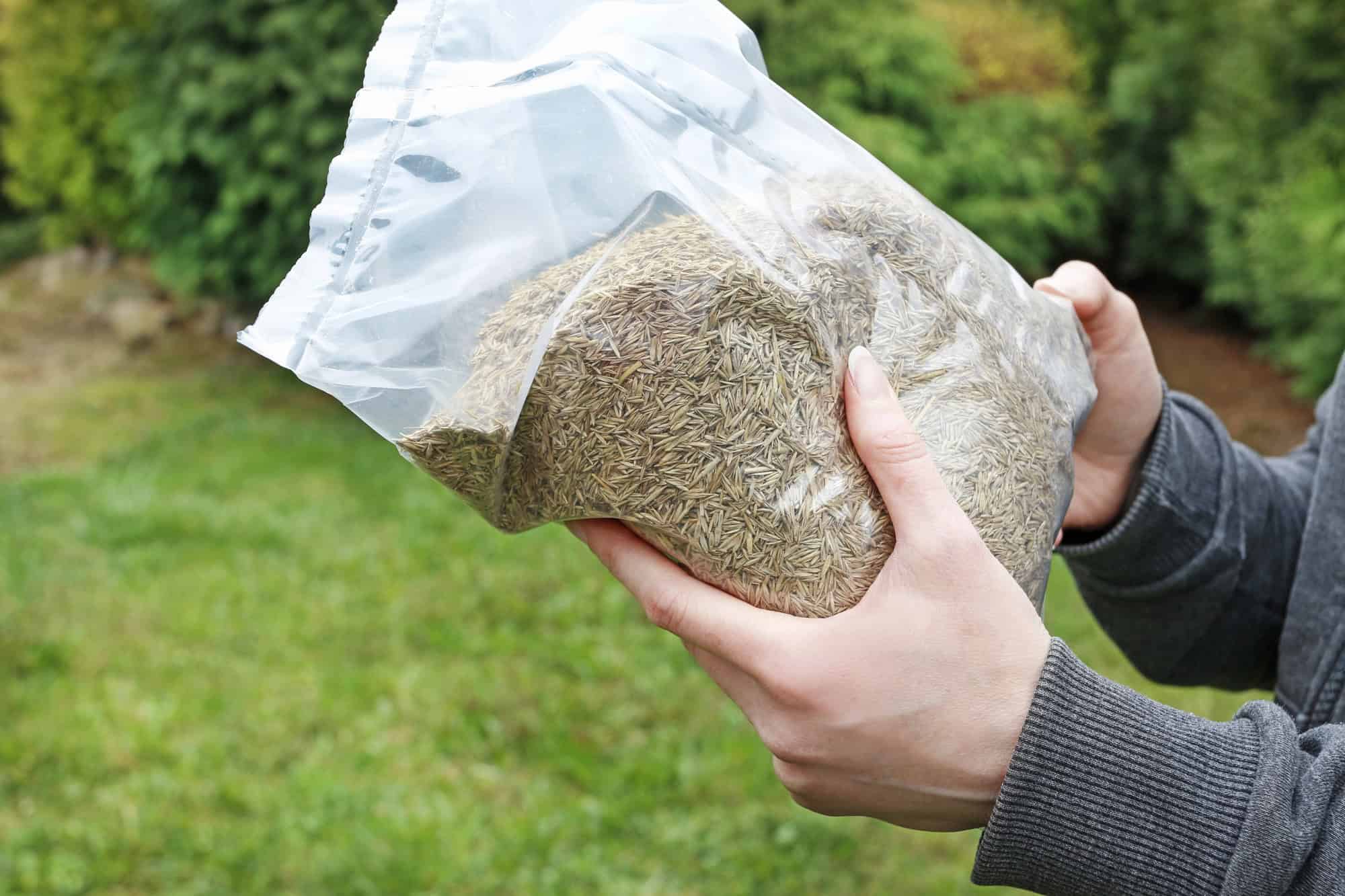
You can sow grass seed in the middle of summer and get a thick, even result, but you have to respect one hard truth first: the heat that drives established grass to grow fast is the same heat that kills tender seedlings. Almost every failed summer sowing comes down to a single cause, the surface drying out between waterings. Get the watering and a little shade right and a summer lawn establishes quickly in the warm soil. Get them wrong and you waste your seed, your starter feed and three weeks of effort.
Why Summer Seeding Is Harder Than It Looks
The first thing to settle is which type of grass you are sowing, because that decides whether summer is the perfect time or a fight against the season. Cool-season grasses, the ryegrasses, fescues, bents and meadow grasses that make up most temperate lawns, germinate best when the soil sits at around 10 to 18C (50 to 65F). They slow down and go semi-dormant once the soil climbs past about 18 to 21C, so sowing them in high summer means working against their natural rhythm. Warm-season grasses such as bermuda, zoysia, bahia and centipede are the opposite. They want soil at 18 to 24C (65 to 75F) and thrive when sown in late spring through mid-summer. Knowing which camp your seed belongs to tells you how hard you will have to work.
Whichever type you sow, the real enemy is surface drying. A grass seed is sown into the top 6 to 12mm (a quarter of an inch or less) of soil, and that thin surface layer is exactly the zone that bakes dry fastest on a hot day. When the surface temperature climbs above roughly 35C (95F), seed dries out and dies before it can root. Worse, once a seed has begun to germinate and pushed out its first tiny root, a single dry-out will kill it outright. There is no recovery. This is why summer sowings fail even when the seed was good and the soil was prepared well: not the heat in the abstract, but one dry afternoon at the wrong moment.
Prepare the Seedbed Properly
Good preparation buys you a margin for error later. Rake out dead grass and moss, and loosen the top 1 to 2cm (about half an inch) of soil so the seed has fine, crumbly material to nestle into. Firm the surface gently with the back of a rake or your feet and level out any hollows, because hollows collect water and bake into hard crusts. Choose seed that fits the spot: a hard-wearing ryegrass blend for sunny, well-used areas, a fescue-heavy mix for drought tolerance and finer looks, and a shade-tolerant blend if you are seeding under trees. In warm climates, a bermuda or zoysia seed will romp away in summer soil.
Before sowing, rake in a phosphorus-rich starter fertiliser at the rate on the box, usually around 35g per square metre. Phosphorus, the middle number in the feed ratio, is the nutrient that drives root initiation in young seedlings, and a seedling that roots quickly is a seedling that survives the heat. Sow at roughly 35g of seed per square metre for a new lawn, or about 25g per square metre when overseeding into thin grass. Cover the seed with 6 to 12mm of soil by raking very lightly. That shallow covering counts in both directions: too shallow and the seed sits exposed to drying and hungry birds, too deep and the seedling exhausts its tiny energy store before it ever reaches the light. Finish by firming the surface again, with a light roller or by treading, so each seed is in close contact with moist soil rather than sitting in an air pocket.
Watering: The Step That Makes or Breaks It
This is the part that decides everything. The goal is to keep the top 2.5cm (1 inch) of soil constantly moist, but never waterlogged, for the first two to three weeks. In summer heat that means light misting two to four times a day, not one heavy soak. The reason is simple physics. A single deep watering drains straight past the shallow seed zone within an hour, and by midday the surface where the seed sits has dried out again, even though the soil a few centimetres down is still damp. Frequent light misting keeps a film of moisture exactly where the seed is, in the morning, around midday, and again in mid-afternoon when the sun is at its harshest. Once the seedlings are 2 to 3cm tall and rooted, switch to watering once a day, more deeply, to coax the roots downward and toughen the new grass.
There is a trap on the other side too. Hot weather combined with waterlogged soil is its own killer, because saturated soil holds no air, and roots that cannot get oxygen cannot take up water or nutrients and simply drown. Moist and crumbly is the target, not muddy. The single most effective summer aid is shade. A thin scatter of clean straw, a jute or paper germination net, or a length of shade cloth or burlap rigged over the area for the hottest hours of the day will drop the surface temperature by several degrees and slow evaporation dramatically. That one step is often the difference between half your seed coming up and nearly all of it taking. Lift any solid cover once the seedlings are through and growing.
Timing, the First Mow and the Mistakes That Kill a Sowing
Sow in the cooler part of the day, early morning or late afternoon, and never sow the day before a forecast heatwave when you cannot keep up with the watering. Keep feet and pets off the seeded area while it establishes, because a single trampled line becomes a bare stripe. Leave the first mow until the new grass reaches about 7 to 8cm (3 inches), then take off only the top third with a sharp blade while the grass is dry, so you cut cleanly rather than tugging shallow-rooted seedlings out of the ground. Hold off on heavy nitrogen feeds until the lawn has been cut two or three times.
The mistakes that ruin summer sowings are nearly always about commitment to watering. Sowing on a Friday and going away for the weekend is the classic one, and a single missed day in a heatwave can wipe out everything that had germinated. Watering deeply once a day feels thorough but leaves the seed zone dry through the worst of the afternoon. Sowing too deep buries the seed beyond its reach to the light, and using a cheap, shade-intolerant blend in a shady spot guarantees a thin result no matter how well you water. The consequence of any of these is the same: patchy, gap-toothed germination, money spent on seed that never came up, and a bare seedbed that weeds colonise before the grass can close in. If you cannot commit to checking and misting the area several times a day for two to three weeks, the honest advice is to wait for the cooler, wetter weather of early autumn, when a cool-season lawn all but sows itself.
Overseeding Thin Patches Without Starting Over
Most summer seeding is not a full new lawn but patching up thin or worn areas, and the same rules apply with one extra challenge: the existing grass around the patch competes with your new seedlings for water and light. Mow the area short, down to around 2.5cm (1 inch), before you sow, so the established blades do not shade out the seedlings while they find their feet. Scratch up the bare soil with a rake until you can see fresh earth, because seed scattered on top of a hard, capped surface or onto thatch simply will not make the soil contact it needs to root. Sow a little more thickly than you would for a new lawn, since some seed will be lost to the competition, and keep that patch on the same misting routine as the rest.
One trick that lifts the success rate on patches is to mix the seed with a handful of sieved compost or fine topsoil before scattering it. The dark, moisture-holding material sits around each seed, holds water far better than bare summer soil, and is dark enough to warm quickly in the morning without baking like exposed earth. For larger renovations, a bag of seed pre-coated with a moisture-retaining gel does the same job and is widely available at B&Q, Home Depot, Amazon and most garden centres for a few pounds or dollars more than plain seed. Whichever route you take, keep traffic off the repaired area until it has been mown twice, and the patch will knit into the surrounding lawn so well that by autumn you will struggle to find where it was.