If you want a new lawn, early autumn is the window to aim for. From September to November the soil still holds summer warmth, rain becomes reliable again, and the weather sits between the extremes that stall germination. Sow now and grass seedlings push through in seven to ten days, then root deeply through winter so the lawn is thick and settled by spring. Seed is cheaper than turf, gives you a far wider choice of grass types, and stores happily until conditions are right. It asks for a little patience and good groundwork, and it rewards both.
Why early autumn beats spring for sowing
Grass seed germinates best when the soil is warm and moisture is steady. Early autumn delivers both. The ground has banked heat over summer and sits at roughly 10 to 15C (50 to 59F), which is warm enough for perennial ryegrass and the fescues to fire quickly, while cooler air keeps the surface from drying out between waterings. Sow in April and the soil is often still cold from winter, so germination drags and the young grass competes with a fresh flush of spring weeds.
There is a deeper reason to favour the back end of the year. Autumn-sown seedlings put their energy into roots. They anchor down and build a strong system before the first hard frosts, then sit quietly through winter ready to surge in spring. Spring-sown grass behaves differently. Warming days and lengthening light push it toward flowering and top growth, so it roots more slowly and stands up less well to its first hot spell. Sow in September and the plant does the invisible work underground when you most want it to.
Choose the right seed for the way you use the lawn
The seed you scatter decides what you can ask of the finished lawn, so match the mix to the site and the traffic it will take.
- General-purpose mixes blend hard-wearing grasses, usually turf-grade perennial ryegrass, tall fescue, red fescues and browntop bent. They shrug off children, dogs and regular footfall, grow fairly fast and want regular mowing. This is the sensible pick for a family garden.
- Luxury or fine mixes use fine-leaved grasses such as Chewings fescue, creeping red fescue and browntop bent. They form a soft, tight, close-cut sward that looks superb but bruises under heavy use, so keep them for ornamental areas rather than a football pitch.
- Shade mixes lean on hard fescue and creeping red fescue for light to medium shade under trees or beside a fence. They cope with less light but stay on the delicate side.
Buy quality and read the bag. Cheap seed can carry weed seed or coarse agricultural ryegrass bred for grazing rather than gardens, which leaves you with clumpy, pale patches that never knit into the rest. Any perennial ryegrass on the label should say “turf” or “fine”. A reputable box such as Johnsons Lawn Seed or Gro-Sure Smart Seed runs around £15 to £25 (about $19 to $32) and covers a useful area, which is money well spent against the cost of starting again.
Preparing the seedbed, where most new lawns are won or lost
Groundwork is the part people rush, and it is the part that shows for years. Start several weeks ahead of sowing. Clear every scrap of perennial weed first, digging out the roots of couch grass and bindweed by hand, as any fragment left behind will regrow straight through your new grass. Then dig or rotovate the soil to about 20cm (8in) deep to loosen compaction and let roots travel. On light, fast-draining ground, work in plenty of well-rotted compost or manure to hold moisture where the seedlings can reach it.
Now wait. Leave the dug soil to settle for five to six weeks and let a fresh crop of weed seedlings appear, then hoe them off on a dry day. Skipping this settling step is the classic mistake: the ground sinks unevenly after sowing and you end up with a lawn full of hollows.
When the plot is clean, firm it. Tread the whole area with small shuffling steps, then cross it again at a right angle. Firming knocks out the air pockets that later collapse into dips, and it gives seed the close contact with soil it needs to draw up water. Rake the surface one way and then across it to a fine, crumb-textured tilth, lifting out stones and breaking clods as you go. Finally, rake in a general fertiliser such as Growmore at 70g per square metre (2oz per square yard) to give the roots something to feed on as they establish.
Two tools earn their keep at this stage. A sturdy spring-tined rake at around £15 to £20 (about $19 to $25) breaks the surface into a fine tilth far faster than a flat soil rake, and a stainless digging fork at around £25 to £35 (about $32 to $44) makes light work of loosening compacted ground and lifting weed roots whole. Rushing the raking is the second common error after skipping the settling period. A lumpy surface with buried stones gives patchy germination, as seed sitting on a clod dries out while seed in a hollow drowns, and every bump you leave now is a bump the mower will scalp for years.
Sowing an even lawn
Even coverage is the whole game, and there is a simple trick to get it. Measure out the rate printed on the packet, which is normally around 35 to 50g per square metre (one to one-and-a-half ounces), tip it into a plastic cup and mark the level so you can repeat it without re-measuring. Mark the plot into one-metre squares with canes and give each square one cup.
Better still, split the seed for each area into two batches. Walk the first batch up and down in parallel rows, scattering as evenly as you can, then sow the second batch walking side to side across the first. The crosshatch pattern cancels out the thin and heavy streaks that a single pass always leaves. Rake lightly afterwards so most of the seed is just covered, which keeps it moist and hidden from birds.
Time the sowing to the weather. Seed down just after rain, or a day before light rain is forecast, races away. Avoid a long dry spell, when the surface bakes before roots form, and avoid sowing straight before a downpour that washes your careful spread into the low corners. Birds will take their share, so cover the area with horticultural fleece pegged at the edges, which also traps warmth and speeds germination, or lift the sowing rate by half to cover the losses. A roll of fleece costs only around £6 to £8 (about $8 to $10).
Looking after a new lawn
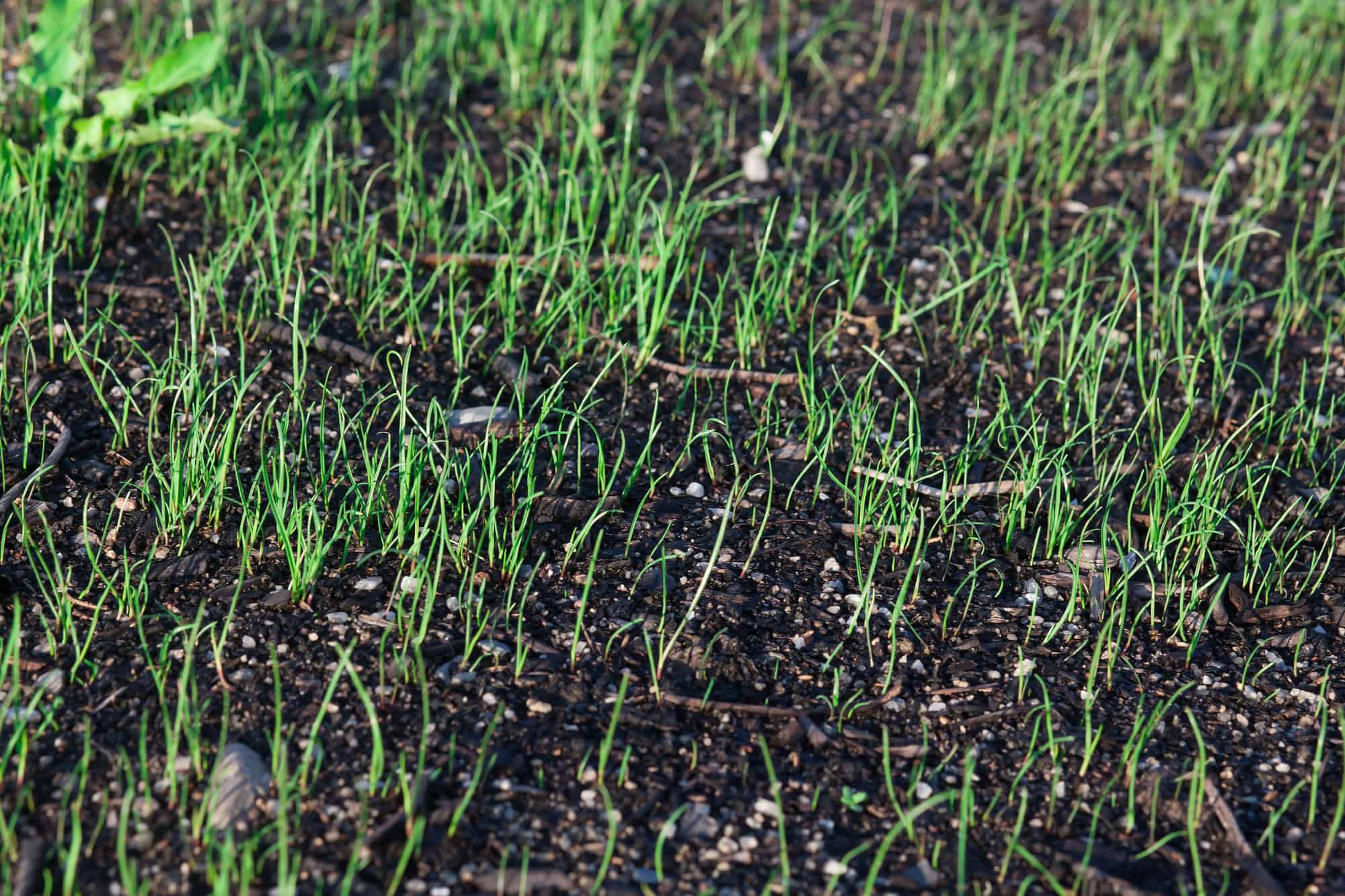
Green haze usually shows within seven to ten days. From there the job is steady moisture and a light touch. Water with a can and rose or a hose on a gentle spray whenever rain fails, keeping the surface damp but never flooded, as a hard jet will float the seed into puddles and leave bald rings once it dries.
When the grass reaches 5 to 7.5cm (2 to 3in), firm it again with a light roll or a gentle tread to settle any lifted roots, wait two or three days, then take the first cut. Remove no more than a third of the height and make sure the blades are sharp, as blunt blades tear soft young grass out of the ground rather than slicing it. A cylinder mower gives the cleanest finish here; take the front roller off so it does not flatten the seedlings. The one-third rule is not fussiness. Cutting harder strips away the leaf the plant needs to photosynthesise, and a seedling has little in reserve to recover.
For an autumn lawn, that single trim is usually the last cut needed until spring. Keep foot traffic off for as long as you can, ideally right through to June, so the roots knit undisturbed. If small dips appear as the ground settles, brush a thin layer of sieved compost into them rather than trying to lift the turf. Do the groundwork, sow into warm September soil, and you will walk out onto a thick, even lawn next summer that a spring sowing rarely matches.