When a heatwave sends your lawn brown and dormant, the grass stops growing and the mower goes quiet for weeks. That idle stretch does more harm to a petrol engine than most people realise, and the damage happens out of sight in the fuel system. A mower parked full of ordinary pump petrol in July can refuse to start in September, and the fix often costs more than the storage prep would have taken. Ten minutes of work before you wheel it into the shed saves that trouble.
The single most useful step is to treat the fuel, not drain it dry. That runs against the old advice to empty the tank, and the reason for the change comes down to what modern petrol does when it sits still. Here is how to shut a petrol mower down for a dormant spell, keep the engine healthy, and have it fire first pull once the rain returns and the grass wakes up.
Why a Mid-Summer Break Is Rougher on a Mower Than Winter
Most guidance on mower storage assumes you are packing up for winter. A drought break is different in two ways that catch owners out. The first is heat. A shed or garage in a hot spell can sit well above 30 degrees C (86 degrees F), and warmth speeds up the chemistry that spoils petrol. Fuel that might last three months in a cool October shed can turn gummy in half that time through a baking August.
The second is that the break is open-ended. You do not know if the grass wakes up in two weeks or six, so the mower sits in limbo, half ready to use. People leave it full of fresh petrol, expecting to mow any day, and that fuel slowly degrades while they wait for rain that keeps not coming. A planned three-month winter layup gets proper prep. A drought pause rarely does, which is why it causes more starting failures.
Anything over 30 days without use is the point where fuel problems start, according to Briggs and Stratton, the largest small-engine maker. Plenty of summer dormant spells run longer than that. Treat any break you expect to last a month or more as real storage, and give the machine the same care you would in November.
Fuel Is the First Thing That Goes Wrong
Nearly all pump petrol now contains ethanol, labelled E10 where it holds up to 10 percent. Ethanol pulls water out of the air, a trait known as being hygroscopic, and over a few weeks the fuel absorbs enough moisture to separate. The watery layer sinks to the bottom of the tank, right where the fuel line draws from, and the lighter parts of the petrol evaporate off and leave behind a sticky varnish. That varnish coats the tiny jets inside the carburettor, and a blocked jet is the classic reason a stored mower turns over but will not fire.
There are two sound ways to handle this, and one poor one. The poor option is to run the tank dry and leave it empty. An empty tank sounds tidy, but it lets air and moisture reach the carburettor and bare metal, and the gum and varnish still form on any droplets left behind. Gold Eagle, the maker of STA-BIL, warns that a dry tank invites condensation and rust in the tank, fuel lines, and cylinder. Empty is not the safe choice most people assume.
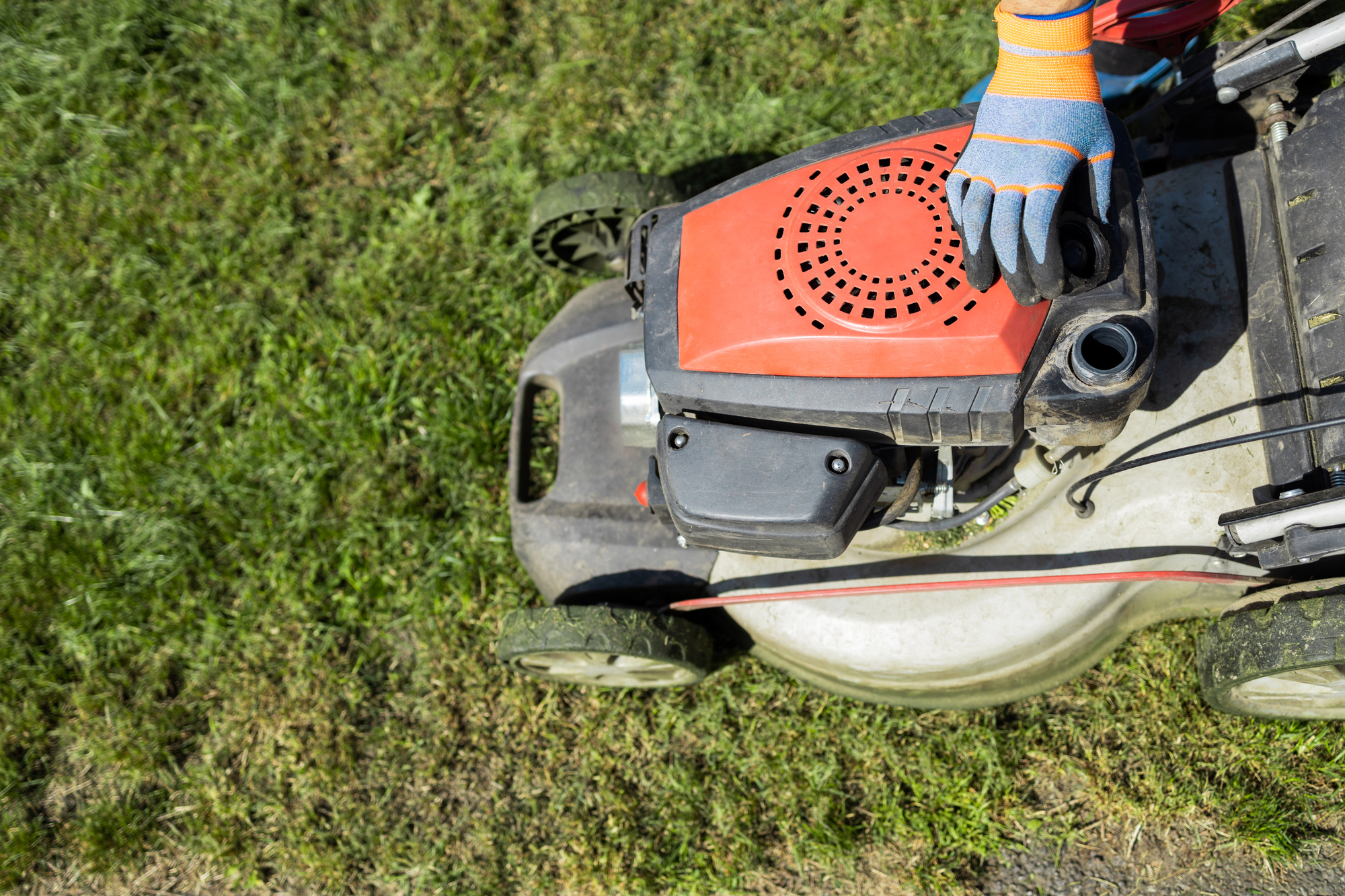
The better first option is a fuel stabiliser. A product such as STA-BIL Storage (around £10/$12 for a bottle that treats many tanks) or Briggs and Stratton Fuel Fit keeps petrol usable for up to 24 months and stops the gum forming. Fill the tank nearly full with fresh petrol, add the stabiliser at the dose on the bottle, then run the engine for ten minutes so the treated fuel reaches right through the carburettor. A near-full tank also leaves little air space for moisture to gather, which is the second half of the protection.
The second option, best for a longer or uncertain break, is to run the carburettor dry after treating the tank. Add stabiliser, run the engine a few minutes, then turn off the fuel tap if the mower has one and let the engine run until it stalls from starvation. That empties the carburettor bowl of fuel that could varnish, while the treated petrol in the sealed tank stays sound. This pairing gives you the cleanest restart of all.
The Ten-Minute Shutdown Routine
Once the fuel is sorted, the rest of the machine takes a few minutes more. Start by disconnecting the spark plug cap and tucking it away from the plug, so the engine cannot fire while your hands are near the blade. This one habit prevents the worst mowing-shed injuries and costs nothing.
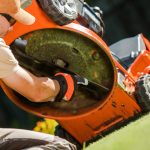
Next, tip the mower on its side with the air filter and carburettor facing up, never down, so oil and fuel do not flood them. Scrape the caked grass off the underside of the deck with a plastic scraper or a stiff brush. Wet clippings left to bake on hold moisture against the metal and rot the deck from below, and a clean deck also cuts better when you return. A blob of dried grass on the blade throws it out of balance and adds to engine wear.
While the mower is tipped, check the blade. A drought break is a good moment to unbolt it and either sharpen it on a bench or drop it at a shop for around £8/$10. A sharp blade cuts cleanly and reduces the ragged wounds that let disease into stressed summer grass. Refit it, then set the mower back on its wheels.
If your machine has a separate oil sump and the oil is dark and thin, change it now with a fresh SAE 30 or the grade in your handbook. Old oil holds acids that pit engine internals while the machine sits. For a cordless mower rather than petrol, the rules flip: store the battery indoors at around half charge in a cool spot, not on the charger and not in a hot shed, where heat degrades the cells fastest. Wipe the machine down, and park it somewhere dry and out of direct sun.
Bringing It Back When the Rain Returns
When the grass greens up and starts to grow, restarting a properly stored mower is quick. Reconnect the spark plug cap. If you drained the carburettor, open the fuel tap and give the primer bulb a few presses to draw treated fuel through. Check the oil level on the dipstick before the first pull, top up if needed, and look over the blade bolt to confirm it is tight.
Pull the cord or press the button, and a mower that went into storage with treated fuel should catch within a few tries. If it splutters at first, let it run a minute to clear any settled fuel from the lines. A machine that was left full of untreated petrol tells a different story: hard starting, rough running, and often a carburettor strip and clean at £40 to £80 (roughly $50 to $100) at a repair shop, plus a week without a mower right when the lawn needs cutting.
One more point for the first cut back. Dormant grass that has just recovered is fragile, so set the mower high, around 5cm (2 inches), and take only the top third of the leaf off. The mower will thank you for the storage care, and the lawn will thank you for the gentle return. Ten minutes spent before the shed door closed turns into a clean, first-pull start and a machine ready for the rest of the season.