
- Stale petrol left in the tank over winter gums up the carburettor and corrodes the fuel system, the single most common reason a mower will not start in spring.
- A proper end-of-season service takes about an hour: sort the fuel, change the oil, scrape the deck, and check the plug, filter and cooling fins.
- Skip it and you gamble on a repair bill or a dead machine the week the grass starts growing again.
The Hour That Decides Whether Your Mower Starts in Spring
A petrol mower takes real punishment over a mowing season, then gets shoved into a shed and forgotten for five or six months. That long idle spell is where the damage happens. Fuel breaks down, moisture creeps in, acids build up, and the machine that ran fine in September refuses to fire in April. Mechanic Audrey Meinking sums up the choice in a line: “If you don’t take an hour or two for maintenance or bring your machines to a pro for servicing, there’s a big chance you’ll be stuck watching the grass grow come spring.”
As the cutting season winds down, an hour of work now is the difference between a first-pull start and a trip to the repair shop. Here is the order to do it in, and the reason each step works.
Deal With the Fuel First
Petrol is the number one killer of stored mowers, and the fault lies with what modern fuel is made of. Most pump petrol contains ethanol, which draws water straight out of the air. Left in a tank for months, that fuel oxidises and separates, and the ethanol pulls in enough moisture to corrode metal and leave a sticky varnish behind. As it evaporates it deposits gum in the fine jets of the carburettor, and those blocked jets are what stop the engine catching in spring.
Manufacturers split into two camps on how to handle it. Honda and John Deere, for example, recommend different routes for their machines: either drain the fuel system completely, or fill it with fresh, stabilised petrol. Check your owner’s manual to see which your engine wants, then follow one of the two methods below.
To drain it dry: take off the fuel cap and tip the mower over a drain pan to empty the tank. Look for a drain valve or bolt on the carburettor bowl, open it and let the last of the fuel out; if there is no valve, run the engine until it stalls. Then pull the starter rope a few more times to clear what is left, and once it will not fire at all it is ready to store. Take the old petrol to a local recycling facility.
To store it with stabilised fuel: the trick is to mix the stabiliser with fresh petrol, never old. Add fuel stabiliser to an empty can first, then fill the can with fresh petrol at the pump so the two blend thoroughly. This Old House puts the dose at around one ounce of stabiliser per two gallons (roughly 30ml per 7.5 litres). Fill the mower with the treated fuel, then run the engine for ten minutes so stabilised petrol reaches the carburettor bowl. Top up the tank and store it full. A bottle of fuel stabiliser costs about £8 to £13 ($10 to $15); a 250ml bottle treats around 25 litres of petrol and a good one holds fuel stable for up to three years while shielding the system from ethanol.
One firm rule: never add stabiliser to old petrol. It cannot revive fuel that has already gone off, and it only works blended into fresh petrol. Any leftover fuel is safest funnelled into your car’s tank and burned off soon, or kept in an approved metal or plastic container in a detached shed, at least 15 metres (50 feet) from any ignition source.
Change the Oil Before It Sits
Used engine oil is not just dirty, it is corrosive. Over a season it fills with fuel, moisture, soot and acids, and if you leave that brew inside the engine all winter it eats away at bearings and cylinder walls while the machine sits idle. Changing the oil at the end of the season, rather than the start, means the internals spend the long layoff coated in clean oil instead of acid.
On a four-stroke mower, where the oil and petrol stay separate, drain the oil at least once a season or every 50 hours of use. Slide a pan under the machine on a tarp to catch spatter, then tip the mower with the air filter and carburettor facing up so nothing drains into them. Pull the oil plug, let it run out, refit the plug and refill with fresh SAE 30 oil rather than a thicker multigrade such as 10W-40. Run the engine for a couple of minutes to spread the clean oil over every internal part, and take the old oil to a recycling centre or auto parts store.
A litre of the right mower oil costs about £8 to £14 ($10 to $18), a trivial sum next to the price of the seized engine that acidic oil can leave you with.
Scrape the Deck Clean
Look under the mower and there is a good chance the deck is packed with caked grass, mud and leaves from a summer of cutting. Left in place over winter, that damp layer holds moisture against bare metal and rusts the deck from the inside, while blocking the discharge chute and the airflow the mower needs to cut and bag cleanly.
With the machine safe to tip (fuel dealt with, spark plug lead off), scrape the underside with a dull chisel, a putty knife or a wire brush. For stubborn baked-on dirt, a low-pressure blast from a pressure washer loosens it. This Old House landscaping contractor Roger Cook finishes the job with a protective coat: “I’m gonna spray the underside with a lubricant. That’s gonna make it slick so that no grass is gonna stick in there anymore.” A slick deck sheds clippings all next season and stays rust-free through the winter.
Spark Plug, Air Filter and Cooling Fins
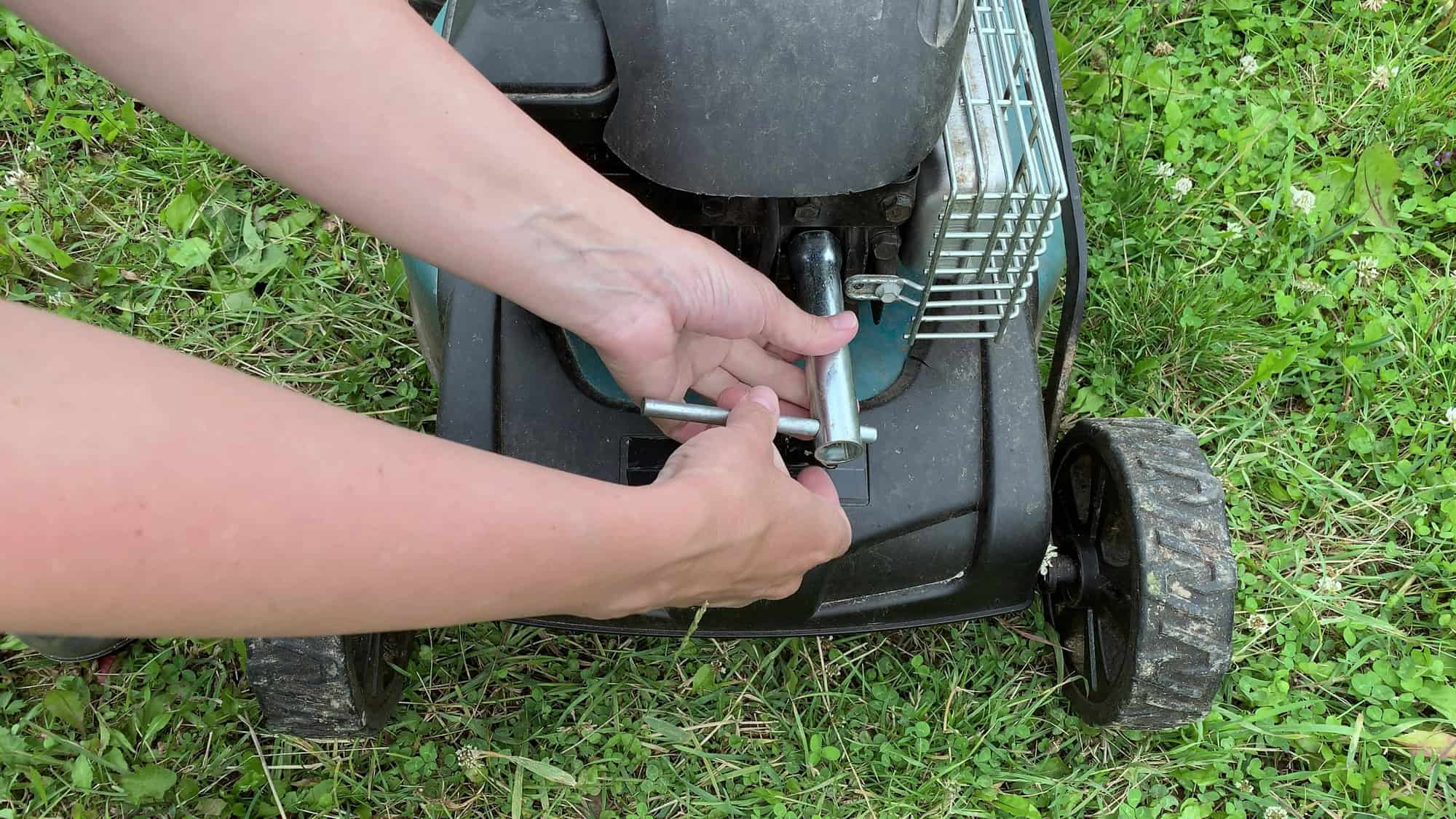
Before you touch anything near the blade, pull the spark plug lead off. A connected plug can kick the engine over and turn the blade while your hand is on it, and that is how people lose fingers. With the lead off, take the plug out with a socket and read it: oily residue or black carbon deposits mean it should be swapped. A new plug is only a few pounds or dollars (roughly £3 to £7, or $4 to $9) and a fresh one fires more reliably than a tired one, so many people simply fit a new plug at the end of every season.
Check the air filter next. A clogged filter chokes the engine and wastes fuel. If it is a paper element, fit a new one with the folded edges facing out; a replacement runs about £5 to £12 ($6 to $15). If it is an oil-soaked foam filter, wash it in warm soapy water, let it dry fully, then work a little clean oil back into it before refitting. Finish by clearing the cooling fins around the engine with a screwdriver or a lolly stick, as a fin packed with dried grass makes the engine run hot and shortens its life next summer.
While you have the plug lead off and the mower tipped, it is a sound moment to take the blade off for sharpening, wedging a scrap of timber against it to stop it turning as you undo the bolt. Remove the same amount of metal from each cutting edge so the blade stays balanced. As Roger Cook warns, “If it’s out of balance, it can cause damage to the machine,” as a blade spinning thousands of times a minute off its centre hammers the crankshaft bearings. An inexpensive plastic balancer from a hardware store, around £5 to £10 ($6 to $13), tells you when the blade sits level.
Where and How to Store It
Put the mower away in a dry shed or garage, up off a damp concrete floor if you can, on a board or an old pallet so condensation cannot wick up into it. A loose cover keeps dust off without trapping moisture underneath.
Cordless mowers need one extra step. Do not leave a lithium battery in a freezing shed all winter. Cold drains and damages the cells, so bring the pack indoors, store it somewhere cool and dry at roughly half charge, and top it up once in midwinter rather than leaving it flat for months. Do the same with the charger. Handled this way, the battery keeps its capacity and is ready the moment the grass needs its first cut.
None of this is hard, and none of it is expensive. An hour spent on fuel, oil, the deck and a few small parts is what stands between a mower that starts on the first pull in spring and one that sits dead in the shed while the lawn races away without it.