The dark and light bands that turn an ordinary lawn into a striped sports field look like the work of two different shades of grass, but they are nothing of the sort. Every blade is exactly the same colour. The stripes are an optical trick created by bending the grass in different directions so it reflects light back to your eye in different amounts. Once you know that, you can produce a striped lawn on almost any patch of cool-season grass with a roller and a little technique, and you do not need expensive turf or any chemical treatment to do it.
How Stripes Actually Work
A stripe is a difference in reflected light, not a difference in the grass. When a blade of grass is bent away from you, you are looking down at the broad, flat upper face of the leaf, which catches and reflects more light back to your eye, so that band appears pale, silvery and light green. When a blade is bent toward you, you mostly see the tips and the darker underside and shaded base, which reflects less light, so that band looks dark green. Mow one row so the grass leans away and the next row so it leans toward you, and you see alternating light and dark bands. Walk to the opposite end of the lawn and the same stripes swap shades, because the direction you are viewing from has reversed. That is the giveaway that the effect is entirely about light and viewing angle.
Two things follow from this. First, longer grass stripes far better than short grass, because a longer leaf bends further and presents more of its surface to the light, giving a stronger contrast between the bands. Scalping a lawn short for tidiness kills the very contrast you are trying to create. Second, soft, pliable, cool-season grasses such as perennial ryegrass, the fescues and meadow grasses bend and hold their lean beautifully, which is why they are the classic striping grasses, while stiff, wiry warm-season grasses spring back upright and barely stripe at all.
It also explains why stripes fade and why they are completely harmless to the lawn. The grass naturally tries to grow back upright toward the light, so the lean relaxes over a few days and the pattern softens until you mow again, which is normal and nothing to worry about. Because all you are doing is bending leaves over, striping puts no stress on the plant and does no damage to a healthy lawn, so you are free to experiment as often as you like.
The Kit You Need
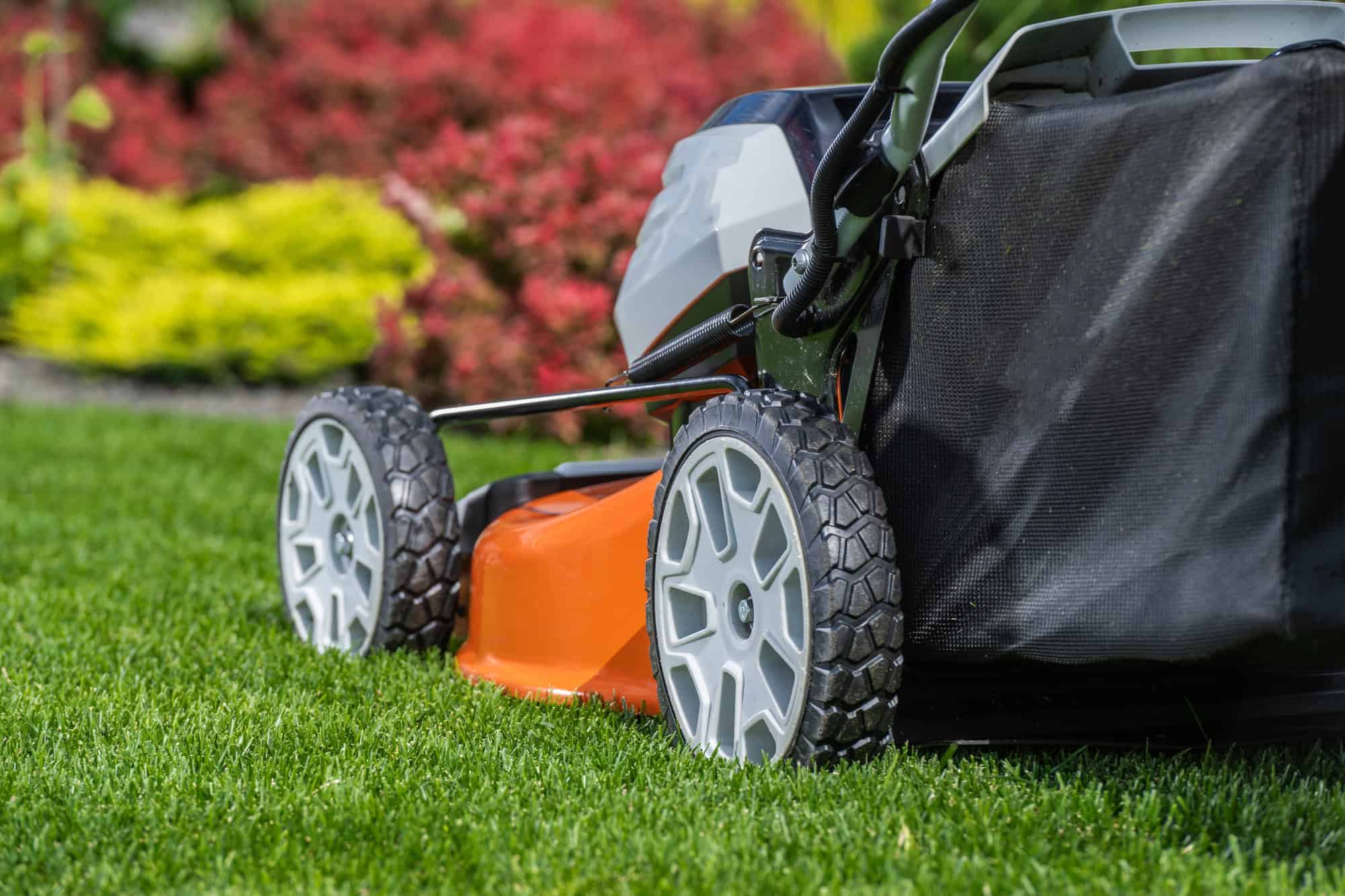
The component that makes stripes is a roller that presses the grass flat in the direction of travel as you mow. Many cylinder mowers and a good number of rear-roller rotary mowers already have a heavy rear roller built in, which is why they leave stripes as standard. Rear-roller rotary models from makers such as Hayter, Cobra and Webb typically start around £200 to £350 (about $260 to $450) and suit most domestic lawns. If your mower has no roller, you do not need to replace it. A bolt-on or clip-on striping kit, essentially a weighted roller bar that fits behind the mower deck, costs around £30 to £70 (about $40 to $90) at garden machinery dealers, Amazon or Screwfix and turns an ordinary rotary mower into a striping one. For very small lawns, even a separate garden roller pushed over the grass after mowing in your chosen pattern will lay the stripes down. Whatever the tool, keep the blade sharp, because a clean-cut leaf bends over neatly while a blade torn by a blunt mower frays and refuses to lie flat, blurring the stripe.
How to Mow Crisp Stripes Step by Step
Start by raising your cutting height to around 4cm to 5cm (1.5 to 2 inches) so the grass is long enough to bend and hold a defined lean. Mow the lawn once first to even it out, then plan your lines. Lay the first stripe along the straightest reference you have, a path, driveway, fence or border edge, because every other stripe keys off this one and a wavy first pass means a wavy lawn. The trick to a straight line is to fix your eyes on a point about three metres (ten feet) ahead rather than on the ground just in front of the mower, exactly as you would steer a car by looking down the road. At the end of the run, lift or turn the mower clear of the cut area, come back alongside and mow the return stripe in the opposite direction, overlapping the previous wheel line very slightly so no uncut sliver is left between bands.
Work your way across the lawn in these alternating up-and-back passes, and finish with one lap around the whole perimeter to tidy the ends of the stripes and hide your turning marks. For a chequerboard, simply mow a second complete set of stripes at ninety degrees to the first once you have finished, and the overlapping lean creates the squares. A diagonal pattern across the lawn, or two diagonal sets crossing to make diamonds, reads as more elaborate but uses exactly the same alternating method, just keyed off a diagonal first line rather than a straight edge. To sharpen any pattern, go back over the lines afterwards with the roller running in the same direction you mowed, and the contrast deepens noticeably. The stripes always look most dramatic in the low light of early morning or evening and when you view the lawn with the sun behind you, so judge your results then rather than under a flat midday sky.
Keeping a striped lawn looking its best comes down to consistency rather than effort. A lawn that is mown on a regular schedule, fed through the growing season and watered in dry spells carries the dense, upright growth that lays over into clean, even bands, so striping rewards the same routine care that keeps any lawn healthy. Mow often enough that you are never removing more than a third of the leaf in one cut, since a lawn allowed to grow long and then scalped back loses both its colour and its ability to hold a crisp stripe. On a busy week, even running just the roller over the existing lines without dropping the blade will refresh a fading pattern in a few minutes.
Common Mistakes and How to Fix Them
The most common mistake is cutting too short. A scalped lawn has no leaf length to bend, so the stripes come out faint or vanish entirely, and the fix is simply to raise the deck and let the grass grow a little longer. The second is a wavy first pass, which throws off the whole pattern; slow down, pick a straight edge to follow and look well ahead. The third is turning sharply on the cut turf at the end of each row, which scuffs and tears the grass and leaves brown crescents at the ends. Lift the mower or make a wide loop on already-cut ground, and hide the turns under the final perimeter lap. The fourth mistake is mowing in exactly the same direction and the same wheel lines every single week. Over time that compacts the soil along those lines and wears ruts and a grain into the lawn, so rotate your pattern, mowing the stripes in a different orientation each week, which keeps the grass standing evenly and the soil from compacting. A fifth, quieter mistake is expecting bold stripes from a drought-stressed or hungry lawn; thin, weak grass simply has not the body to lay over cleanly, so a well-fed, well-watered lawn stripes far better than a struggling one. Done this way, striping is purely cosmetic and does the lawn no harm at all, so there is nothing to lose in experimenting. For more on getting a clean finish, see our guide to mowing height through the seasons.