A tired lawn that has come through a dry summer with hollows, bare patches and thin, uneven grass rarely needs digging up. The fastest way to rebuild the surface is top dressing: spreading a thin layer of sandy, free-draining soil across the whole lawn and working it down into the sward. Early to mid-autumn is the moment to do it, while the soil holds summer warmth and the grass is back in active growth. Get the timing and the material right and you build a smoother, healthier surface that fine grasses prefer. Get it wrong and you smother the very grass you are trying to save.
What Top Dressing Actually Does to a Lawn
Top dressing is the job of adding a thin layer of bulky, sand-based material to the surface of an established lawn. It renovates grass that is tired, patchy or bumpy, and it sets up ideal conditions for new seed to root. The material is a blend of sandy loam or good free-draining topsoil, sharp sand and well-rotted organic matter. You can mix your own or buy it ready made.
Three things happen when that layer is brushed into the grass. First, the dressing fills small surface hollows, so the ground sits level and the mower cuts an even height instead of scalping the high spots and missing the dips. Second, the sharp sand opens up the top few centimetres of soil, which improves drainage and reduces the surface compaction left by a summer of foot traffic. Water and air move down to the roots more freely. Third, the organic matter feeds soil life and holds moisture in the root zone, where the grass can reach it. Repeated over two or three seasons, thin dressings build a fine, free-draining upper layer, which is exactly how greenkeepers create a true, fast surface.
This is not an annual chore for most gardens. The material is heavy, bulky and needs spreading evenly, so top dressing is an occasional task to reach for when a lawn has gone bumpy or thin, rather than something to repeat every year. Expect the lawn to look messy for a couple of weeks until the grass grows back through the layer, and keep off it until the blades are pushing through strongly.
Why Early Autumn Is the Right Window
Timing decides whether this job helps or harms. Early to mid-autumn is the best window, and the reasons are biological. The soil still holds warmth banked through summer, moisture is returning after the dry months, and the grass has shifted its energy back into root growth ahead of winter. Any seed you sow into the fresh dressing germinates fast in warm, moist ground and establishes before the first frosts. Do the same job in late spring and the young grass has to compete with summer heat and drought within weeks. Late spring is a workable second choice, but autumn wins.
Only top dress when growing conditions are good and the grass is growing well. A lawn that is still brown and dormant from drought will not knit the dressing in. The other rule is dryness. Work only when the lawn is dry and the weather has been reasonably dry, and time the job so you can finish before rain returns. Wet dressing clags into lumps, smears across the grass and smothers it, and you cannot brush a damp, sticky mix down into the sward. Dry material flows between the blades and settles where you want it.
How to Top Dress a Lawn Step by Step
The best results come from preparing the lawn first. Scarify to pull out thatch and moss, then aerate, ideally with hollow tines that lift small cores of soil. Top dressing straight after hollow-tine aeration lets the sand fall into the open holes, which keeps those drainage channels propped open long after the surface has closed over. Then dress, and sow seed last into any thin areas.
Work through it in order:
- Mow the grass on a low setting for a short cut, without scalping the lawn, then wait for the grass to dry completely.
- Using a shovel, spread the dressing with a fan-shaped throwing motion rather than tipping it out in one heap. A rough guide is 2 to 4kg per square metre (roughly 4 to 9lb per square yard), rising to 6kg (about 13lb) where a lawn needs a heavier dressing to fill hollows. Start light. It is far easier to add more than to scrape off a layer that is too thick.
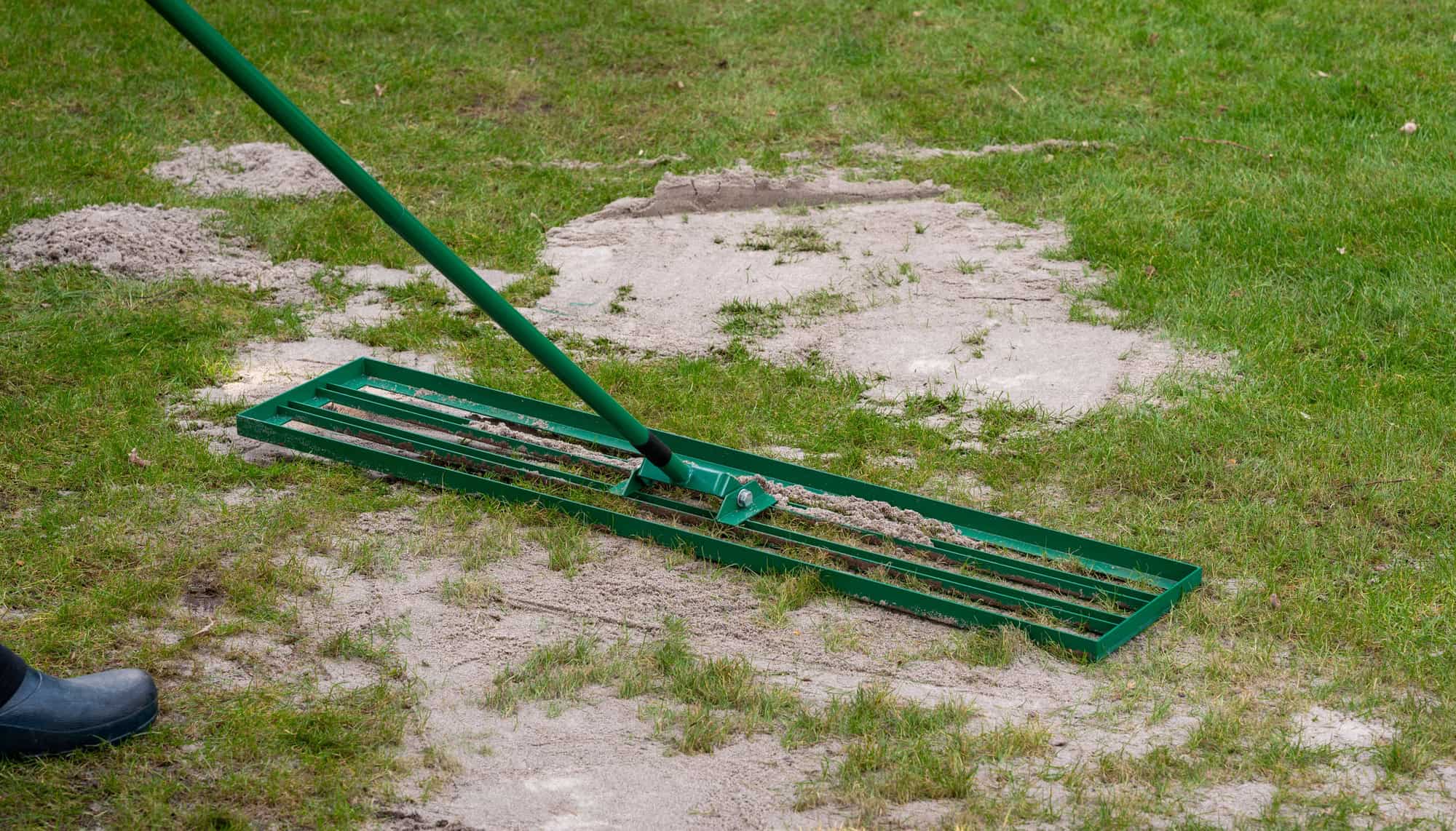
- Work the dressing into the grass with a rubber rake or the back of a straight-headed metal rake, pushing it into hollows and down into the root zone until the grass is visible again. The aim is to work it in, not to bury the blades.
- Finish by going over the whole lawn with a stiff, long-handled garden broom to level the surface.
- Leave the mower off for at least a week, ideally two. If no rain falls in that time, water the lawn so the dressing settles down, otherwise the mower will lift the loose material straight into the grassbox.
To thicken a thin lawn, sow grass seed straight after dressing while the surface is open. Rake lightly to work the seed into the root zone, then keep the lawn moist until it germinates. The dressing gives the seed an ideal bed to root into, which is why the two jobs pair so well.
Getting the Material Right
The single biggest mistake is the wrong sand. Top dressing wants sharp sand, the gritty, angular kind, never builder’s sand. Builder’s sand is fine and often carries lime and salts, and its tiny particles cap the surface and cut drainage rather than open it, which is the opposite of the point. If you mix your own, the standard blend is three parts sharp sand, six parts weed-free sandy loam topsoil and one part peat-free compost such as coir or sieved leaf mould. You will need a bucket as a measure, a shovel, a wheelbarrow and a clean hard surface or a tarpaulin to turn it on.
Buying it ready mixed saves the hard graft. A sand-based product such as Rolawn Lawn Topdressing comes in a 500-litre bulk bag that covers up to 167 square metres (about 200 square yards) at a 3mm layer, and costs in the region of £75 to £90 (roughly $95 to $115) delivered. For a small lawn or spot repairs, bagged dressings of around 25kg run about £8 to £12 ($10 to $16) from garden centres, B&Q or Wickes. In warmer regions the same product is sold as top dressing sand or a sand and compost mix through Home Depot and Lowe’s. Collecting a bulk bag locally often works out cheaper than paying carriage on such heavy material, and any dressing you do not use needs storing under cover so it stays dry and easy to spread.
The consequences of getting it wrong are worth spelling out. Lay the dressing too thick and it smothers the grass, which yellows and thins where light cannot reach the blades. Use the wrong sand and you cap the surface and reduce the drainage you set out to improve. Dress a wet lawn and the mix bakes into a compacted skin. Spread thin, on a dry day, into grass that is actively growing, and none of that happens.
What to Do Next
Book the job for a dry spell in the next few weeks while the soil is still warm. Scarify and aerate first, spread a light dressing of a sharp sand mix at 2 to 4kg per square metre, brush it in, and oversow any thin patches straightaway. Water it in if the skies stay dry, keep off it for a fortnight, and by spring you will have a firmer, more level, better-draining surface that grows thicker grass. For a badly bumpy lawn, resist the urge to fix it in one heavy hit. Two or three thin dressings across successive autumns level the ground without ever smothering the grass.