If patches of your lawn have started to feel spongy, lift like a loose carpet, or get torn up overnight by birds, foxes or badgers hunting for a meal, the cause is almost certainly grubs feeding on the roots below. With most chemical grub controls now withdrawn from garden shelves, nematodes have become the one treatment that reliably clears chafer grubs and leatherjackets without reaching for poison. They are living organisms, not a spray, and that changes how you use them: get the soil temperature, the moisture and the timing right and they work, get any one of the three wrong and you have watered in an expensive dose of nothing.
How Nematodes Actually Kill a Grub
Nematodes are microscopic worm-like animals that live naturally in soil. The species sold for lawn pests, Heterorhabditis bacteriophora for chafer grubs and Steinernema feltiae for leatherjackets, hunt actively through the moisture film around soil particles until they find a host. They enter the grub through its natural openings, then release a bacterium they carry inside them. That bacterium multiplies and kills the grub within a day or two, and the nematodes feed and breed on the remains before a new generation moves off through the soil to find the next target. One application seeds the ground with millions of them, so the treatment keeps working as they reproduce.
The living nature of the treatment is its strength and its weakness. Unlike a chemical, nematodes multiply and spread, so a single dose reaches grubs the watering can never touched. But they are fragile. They cannot move through dry soil, they die in bright sunlight within minutes, and they stop hunting when the ground is too cold. Every rule that follows exists to keep the nematodes alive long enough to find their prey.
Work out which pest you have before you buy, as the two need different nematodes. Chafer grubs are fat, C-shaped larvae with a creamy-white body, an orange-brown head and three pairs of little legs near the front, and they sit in the top few centimetres of soil from late summer onward. Leatherjackets are the larvae of crane flies, grey-brown, legless and tube-shaped like a stubby length of hose, and they do most of their damage in spring. Both chew grass roots, and both draw the same tell-tale signs on the surface: yellowing patches that lift away with no anchor, spongy turf underfoot, and lawns pulled apart at night by birds and mammals digging for the larvae. Cut a small flap of turf with a spade and fold it back, and you will see the culprits in the top layer of soil.
Getting the Timing and Soil Temperature Right
Soil temperature is the first hurdle. Nematodes move and reproduce best between 15 and 25 degrees C (59 to 77 degrees F). Chafer grub nematodes need the soil at 12 degrees C (54 degrees F) or above to work, and leatherjacket nematodes want at least 10 degrees C (50 degrees F). A cheap soil thermometer pushed 5cm (2 inches) into the ground, read in the early morning, tells you where you stand. Warm summer soil sits comfortably in range, so a July or August dry spell is no barrier as long as you water.
Timing to the pest’s life cycle counts for as much as temperature. The best window is late summer into autumn, roughly September and October, when the eggs have just hatched and the young grubs are small, feeding hard and sitting close to the surface. Small grubs die easily and are easy for the nematodes to reach. By late autumn the grubs burrow deeper to overwinter and grow a tougher skin, which puts them out of range. There is a second spring window, around April, for grubs that fed through winter, but the autumn treatment on newly hatched grubs gives the highest kill rate. Treat too early and the eggs have not hatched; treat too late and the grubs are too big and too deep.
Order the pack that names your pest. A chafer grub product will not perform against leatherjackets and the reverse holds too, as each nematode species is matched to the host it hunts. Some suppliers sell a combined lawn pest pack that pairs both species for gardens carrying the two, which spreads the cost across a single autumn treatment. Whatever you choose, check the treatable area on the box against the size of your lawn and buy enough to cover it at the full dose, since spreading one pack too thin across a large area drops the number of nematodes per square metre below the level that clears an infestation.
How to Apply Them Step by Step
Nematodes are sold as a pale powder or clay in sealed packs kept in the fridge. Nemasys Chafer Grub Killer, one of the most widely stocked, treats up to 100 square metres from a pack holding around 50 million nematodes and costs in the region of £25/$32, with a matching Nemasys product for leatherjackets. Buy them for a specific weekend rather than in advance: they are alive, carry a use-by date only a couple of weeks out, and must stay refrigerated until the moment you apply them. A pack left warm in a shed is dead on arrival.
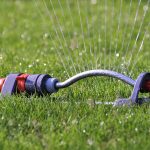
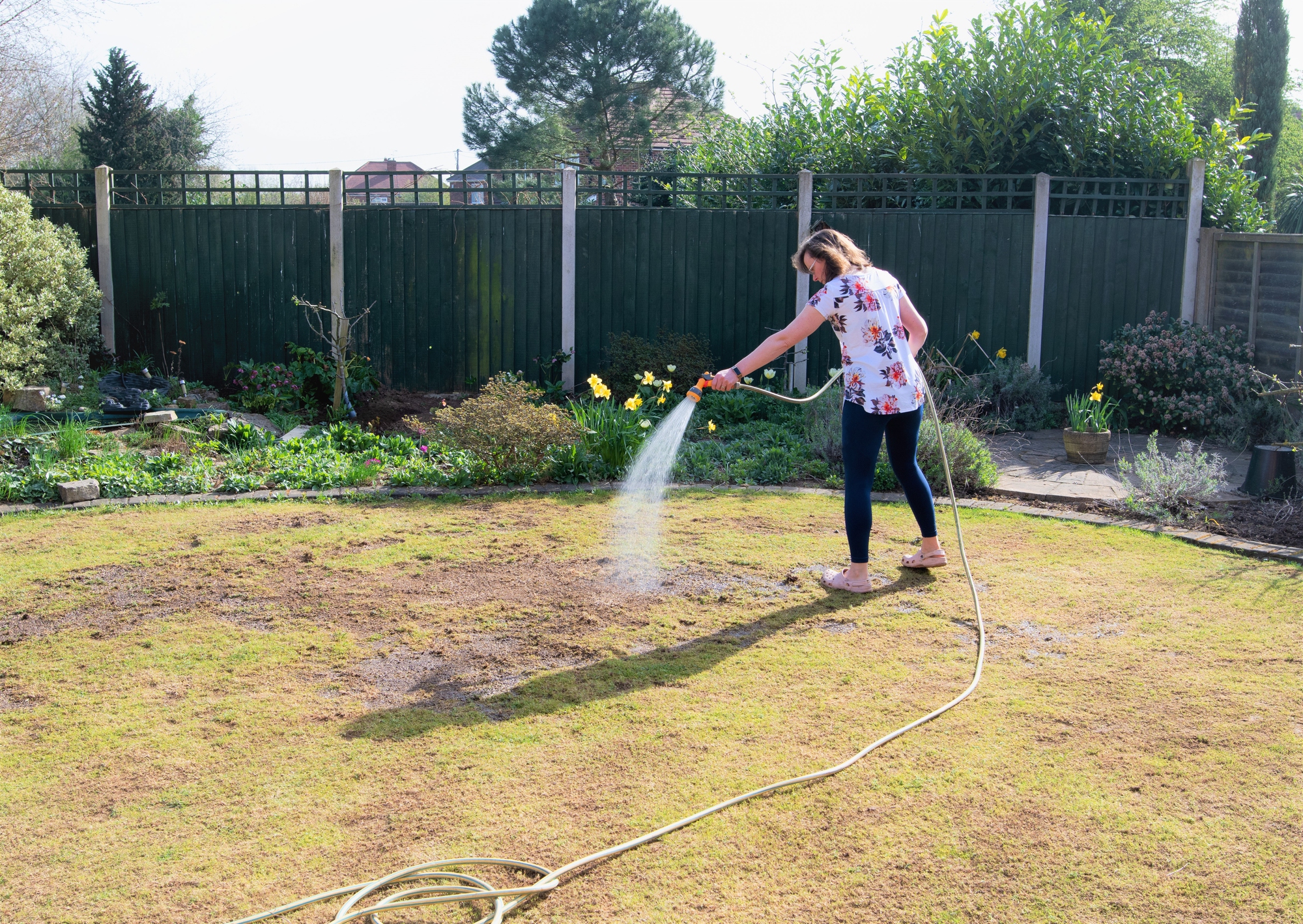
Water the lawn first if the soil is at all dry, as the nematodes need a moist surface to swim into. Mix the whole pack with water in a bucket following the dose on the label, keep it stirred so the nematodes stay suspended rather than settling, and apply it through a watering can fitted with a coarse rose, a hose-end applicator, or the purpose-made cans some suppliers sell. Remove any fine filter from the can first, as the nematodes are large enough to clog a fine mesh. Pick a dull, overcast day or the evening, never bright sun, as ultraviolet light kills them in minutes. The moment the pack is down, water it in heavily with 5 to 10mm of water to wash the nematodes off the leaves and down into the root zone where the grubs are. Then keep the lawn damp for at least two weeks so the nematodes can move and breed. This after-care is the step people skip, and a lawn left to dry out in the fortnight after treatment wastes the whole dose.
When Nematodes Fail and How to Know They Worked
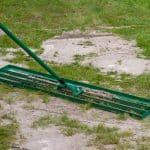
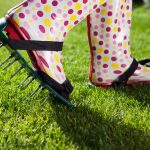
Preparing the surface lifts the success rate. If the lawn carries a thick thatch layer, the nematodes struggle to pass through it to reach the soil, so scarifying to thin the thatch and spiking the ground to open channels gives them a clear route down. A wetting agent applied a day before helps on hard, water-repellent soil that would otherwise shed the treatment. These small steps decide whether the millions of nematodes in the pack actually reach the grubs or sit stranded on top of the thatch.
Give it three to four weeks to judge the result. Lift a spadeful of turf from an affected patch and count the grubs against what you saw before treating; a sharp drop, and grubs that look limp or reddish-brown rather than plump and white, tells you the nematodes did their work. The damage on the surface takes longer to heal, as the roots the grubs chewed need to regrow, so overseed the torn patches and keep them watered to speed recovery. If you see no change at all, the usual culprits are soil that was too cold, a pack that sat warm and died before it went down, or a lawn that dried out in the days after. None of those is a fault in the method. Fix the condition that let them down, treat again in the next window, and the grubs come under control without a drop of pesticide.