The quickest way to lose a green lawn in a dry spell is to keep cutting it as short as you did in spring. Raise the mower by one notch before the hot weather arrives and the same lawn holds its colour weeks longer than a neighbour who scalps theirs to the soil. For a utility lawn, lift the cut to around 40 to 50mm (1.5 to 2 inches) from late June onwards. The reason sits in a single rule of turf science: the length of grass above ground roughly mirrors the depth of roots below it.
This is the cheapest drought defence available. It costs nothing, takes one adjustment of a lever, and protects the lawn before damage starts rather than trying to revive it afterwards.
Set the Mower Higher Before the Heat Arrives
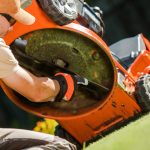
Most rotary mowers carry a single height lever or a separate adjuster on each wheel, usually marked in numbered steps rather than millimetres. Find the cutting heights for those steps in the handbook, then choose the setting that leaves the grass about 40 to 50mm (1.5 to 2 inches) tall for a general family lawn. A fine ornamental lawn can sit a little lower at 25 to 35mm (1 to 1.4 inches), but even those should come up during the hottest weeks. The move that protects the grass is lifting the cut one or two steps higher than your spring setting and holding it there until the weather cools.
Make the change before a heatwave, not during one. Cutting grass that is already heat-stressed and wilting tears more moisture from each blade through the cut wound and pushes the plant closer to dormancy. If a dry spell has already set in and the lawn looks tired, skip a cut entirely rather than mowing stressed turf. The grass will not run away from you, and a missed mow does far less harm than a hard cut in 30-degree heat.
Why Taller Grass Survives a Dry Summer
Three mechanisms work together when you leave the grass longer. The first is root depth. A grass plant builds and maintains a root system in proportion to the leaf area it carries. Keep the blades at 50mm and the roots reach down 15 to 30cm (6 to 12 inches), tapping moisture that short-rooted turf never reaches. Scalp the same lawn to 15mm and the roots shrink back to match, leaving the plant drinking only from the top few centimetres of soil that dry out first. The taller lawn has a deeper, larger reservoir to draw on, which is why it stays green while the shaved lawn browns.
The second is shade. Longer blades lie over each other and shade the soil surface, dropping the surface temperature and slowing evaporation sharply. Bare, sun-baked soil between short blades can lose water several times faster than soil shaded by a taller sward. The third is photosynthesis. Grass manufactures its energy in the upper part of each blade, and a longer blade carries more of this working tissue. A plant cut too short has to spend stored root reserves rebuilding leaf before it can feed itself again, and during drought it has nothing spare to spend. Taller grass keeps feeding itself and keeps its roots intact.
Longer grass also crowds out weeds. Many summer lawn weeds, including annual meadow grass and young crabgrass, need warm bare soil and sunlight at ground level to germinate. The shade from a taller sward starves those seeds of the light they need, so raising the cut quietly cuts your weed problem at the same time.
The One-Third Rule and a Sharp Blade
Whatever height you choose, never remove more than one third of the total blade length in a single cut. If the grass has grown to 60mm, take it back to 40mm, not down to 20mm. Going further strips away too much of the energy-producing leaf at once and forces the plant to raid its roots to recover, the exact reserve it needs to ride out dry weather. If the lawn has got away from you and grown long, bring it down over two or three cuts a few days apart rather than one drastic scalp.
Blade sharpness changes the outcome as much as height. A sharp blade slices the grass cleanly, sealing a small wound that loses little water. A blunt rotary blade tears and bruises the tip, leaving a ragged, whitened edge that dries out and browns within a day, and acts as an entry point for fungal disease. Run a finger along the cutting edge: if it is rounded rather than crisp, sharpen it. A hand file costs around 10 pounds (about 13 dollars) and restores the edge in fifteen minutes, while a sharpening kit for an angle grinder runs about 15 pounds (about 19 dollars). On a busy summer lawn, sharpen the blade once a month.
If your soil has gone hard and water runs off rather than soaking in, a liquid wetting agent helps the little rain or watering you do reach the roots. Products such as a lawn soil wetting agent cost around 10 to 14 pounds (about 13 to 18 dollars) for enough to treat an average lawn, and they break the surface tension that makes dry, compacted ground repel water. Used alongside a higher cut, they keep more of every drop where the roots can use it.
What Happens If You Scalp the Lawn in Summer
A summer scalp shows its damage within days. The lawn yellows, then browns in the most exposed areas first, usually south-facing slopes and the strip along paths and driveways where reflected heat is highest. With the protective leaf canopy gone, the soil surface bakes, soil life slows, and any surviving grass struggles to regrow because its roots have shrunk back to match the short top. Bare patches open up, and into that warm, sunlit soil come the weeds you were trying to avoid. What looked like a tidy short cut in June becomes a thin, weed-flecked lawn by August.
Recovery from a scalp is slow and costs more than prevention ever would. You wait for cooler, wetter weather, then feed, overseed the bare areas at about 35 grams per square metre, and water the new seed in, often six to eight weeks of work to undo one bad cut. Raising the mower one notch and keeping the blade sharp avoids all of it. The lawn that goes into a dry summer a little longer and a little less stressed is the one still standing green when the rain returns.
It pays to check what height your mower actually cuts, because the numbered settings rarely match the real grass height. Mow a test strip, then push a ruler down to the soil and measure the standing grass. Mowers leave the grass slightly taller than the deck setting once the blades spring back up, and wheels sink into soft ground, so the true cut often sits 5 to 10mm above the dial. Knowing the real number lets you set the lawn at a deliberate 45mm rather than guessing from a worn lever, and it stops the common surprise of a lawn cut far shorter than intended on the first pass of the season.
Frequency changes in a dry summer too. In spring you might mow twice a week, but as growth slows under heat and drought the grass barely lengthens, and there is no reason to cut on a fixed schedule. Mow when the grass has genuinely grown a third taller than your chosen height, which in a hot dry July might mean once every ten to fourteen days rather than weekly. Each pass of the mower wheels compacts the soil a little and each cut costs the plant some leaf, so fewer cuts during stress is kinder to the lawn. Walk out, look at the length, and let the grass tell you when it needs cutting rather than the calendar.