A scarifier and a thatch rake look like rivals on the shop shelf, but they do different jobs, and buying the wrong one for your lawn either wastes money or tears the turf to shreds. The short version: a thatch rake or powered lawn rake skims loose moss and dead debris off the surface, while a scarifier cuts vertical blades down into the thatch layer and soil to slice out the dense, matted material a rake cannot reach. If your lawn feels spongy underfoot and has a thick brown layer below the green, you need a scarifier. If it is just shedding a little moss and loose thatch, a rake is plenty, and it is gentler and far cheaper. Here is how to tell which your lawn actually needs, and how to use it without doing harm.
What thatch is, and why it decides which tool you need
Thatch is the layer of living and dead organic matter, mostly old stems, roots and runners, that builds up between the green grass and the soil surface. A thin layer of up to about 1cm (half an inch) is healthy. It cushions the lawn, insulates the crowns and holds a little moisture. The trouble starts when thatch builds faster than soil organisms can break it down, and the layer thickens past 1cm. A thick thatch layer acts like a sponge sitting on top of the soil. It holds water at the surface so roots stay shallow, it stops feed and rain reaching the soil, and it harbours the damp, airless conditions that disease and moss love. Left unchecked, the grass roots start growing into the thatch itself rather than the soil, and the whole lawn becomes spongy, drought-prone and weak.
You can measure your thatch in two minutes. Cut a small wedge of turf about 8cm (3 inches) deep with a trowel or spade and look at the side of the plug. Between the green blades on top and the dark soil below you will see a brown, fibrous band. If that band is under 1cm (half an inch) thick, a light rake is all you need. If it is closer to or beyond 1.5cm (just over half an inch), or if the lawn springs underfoot like a mattress, that is scarifier territory. This single test is the one that should drive your buying decision, not the size of the lawn or the price of the machine.
The thatch rake: light, cheap and gentle
A thatch rake, also called a springbok or spring-tine rake, is a hand tool with springy curved tines that pull loose moss and surface debris up out of the sward. It works on top of the thatch rather than cutting into it, which is why it is the right choice for light, regular maintenance and for small lawns. A decent springbok rake costs only around £12 to £25 (about $15 to $32) from any garden centre, B&Q, Screwfix or Amazon, and beyond a little effort it cannot really damage the lawn. The powered version is an electric lawn raker, which spins a reel of flexible wire or plastic tines to do the same surface job faster across a bigger area without wrecking your back.
The honest limit of a rake is depth. Hand raking lifts moss and the loose top debris, but it barely touches a thick, established thatch layer locked in below. If you rake and rake a spongy lawn and it still feels like a mattress a week later, you have hit the ceiling of what a rake can do, and you are working far harder than the result justifies. That is the moment to step up to a scarifier rather than keep punishing yourself and the grass with a tool that cannot reach the problem.
The scarifier: deeper, tougher and easy to overdo
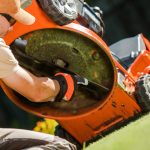
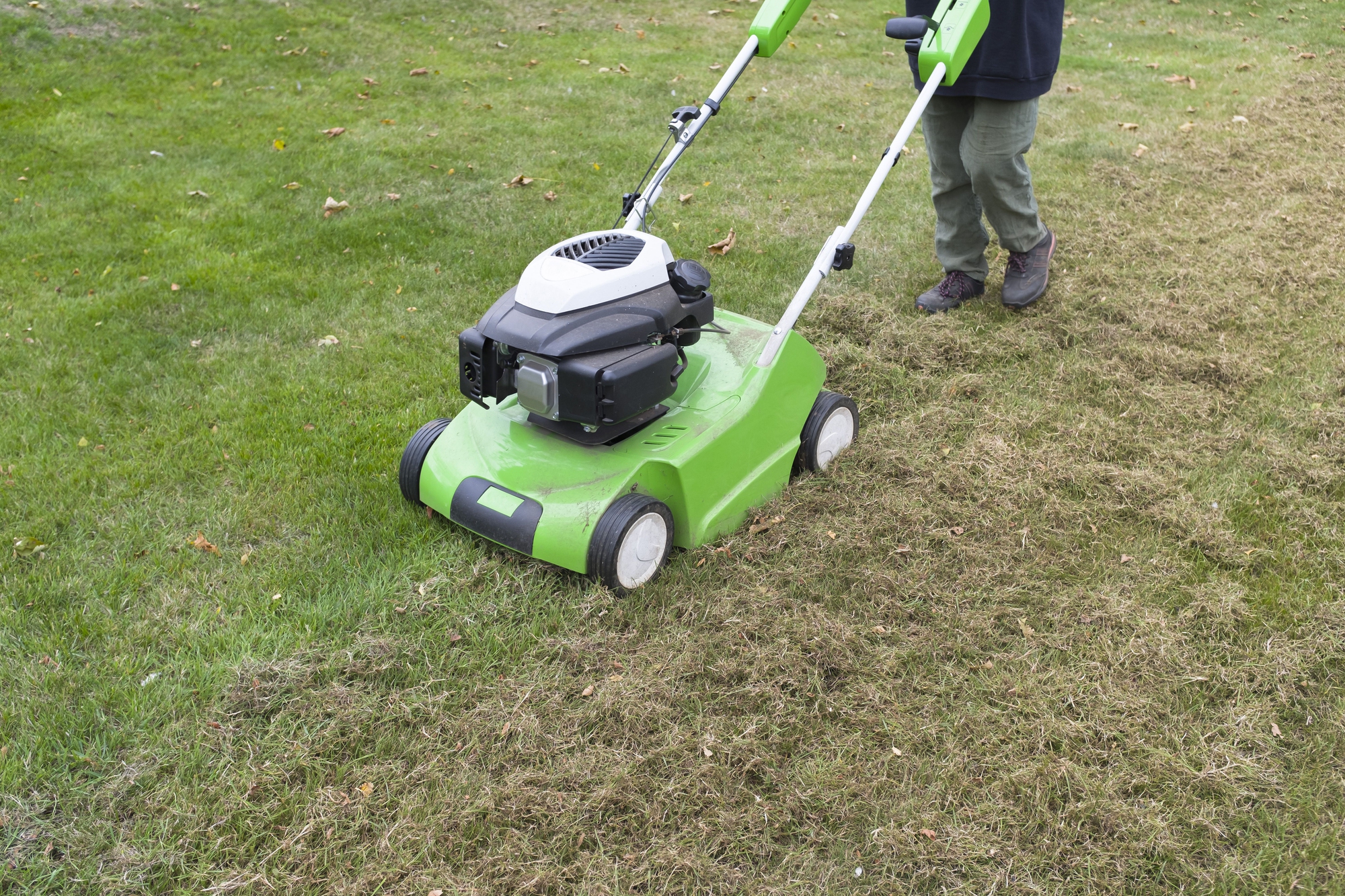
A scarifier uses fixed steel blades on a rotating drum that cut vertically down through the thatch and just nick the soil surface, slicing the matted layer apart so it can be lifted out. This is a far more aggressive action than raking, and it is the only practical way to clear a thatch layer thicker than about 1cm (half an inch). Electric scarifiers suit most domestic lawns and are well matched to small and medium gardens because the power lead keeps them light and quiet. A popular example is the Bosch UniversalVerticut 1100, a 1100-watt corded scarifier that sells for around £130 to £210 (about $165 to $265) depending on retailer, with adjustable working depth so you can set how deep the blades bite. Petrol scarifiers cost more and suit large lawns where a cable is impractical. Many machines come with two interchangeable drums, a bladed scarifying cartridge and a wire-tined raking cartridge, so one tool covers both jobs at different depth settings.
The power that makes a scarifier effective also makes it easy to abuse. Set the blades too deep and you tear out healthy grass and crowns along with the thatch, leaving the lawn looking shredded and bare. The correct approach is to set the depth so the blades just reach the soil surface and no more, then make one pass. If the lawn needs more, make a second pass at right angles rather than diving deeper in one go. A scarified lawn always looks shocking immediately afterwards, thin and brown with heaps of debris, and that is normal. It recovers quickly if you scarify at the right time and feed and water afterwards.
Whichever tool you use, the job is only half done when the blades or tines stop. Scarifying and heavy raking both pull an astonishing volume of material out of a lawn, far more than most people expect, and that debris has to be collected and removed or it smothers the grass you are trying to help. Rake it up, bag it or compost it, and then look at the lawn underneath. After a proper scarify the surface will be thin and open, which is the ideal moment to overseed any bare areas and apply a light feed, because the seed now has direct contact with soil and the existing grass has room to thicken. Done this way, the thin, brown shock of a freshly scarified lawn turns into the thickest, healthiest growth of the year within a month.
Timing is the mistake that ruins lawns
Choosing the right tool counts for nothing if you use it at the wrong time of year, and this is where keen gardeners do the most damage. Both raking and scarifying are best done when the grass is growing strongly enough to recover, which means spring or early autumn, with early autumn usually the safest window because the soil is warm, moisture is reliable and there is still growing season left for the lawn to heal before winter. The soil should be moist but not waterlogged, because scarifying very wet ground tears the roots and clumps the debris, while scarifying bone-dry summer turf rips out grass that has no moisture to recover with.
That makes the middle of a hot, dry summer the worst possible time to scarify. The grass is already stressed, often semi-dormant, and ripping into it now strips away its protection and exposes bare soil to bake and to weed seeds. If your lawn is spongy and thatch-bound right now, note it down and plan to scarify in September when conditions turn in your favour. For the time being, a gentle surface rake to lift loose moss is the most you should do. Match the tool to your thatch depth, set it to the right depth, and use it in spring or early autumn, and you clear the thatch that is choking your lawn without trading one problem for another. Get those three decisions right, the tool, the depth and the timing, and the same machine that can shred a lawn becomes the single most useful thing you do for it all year.