
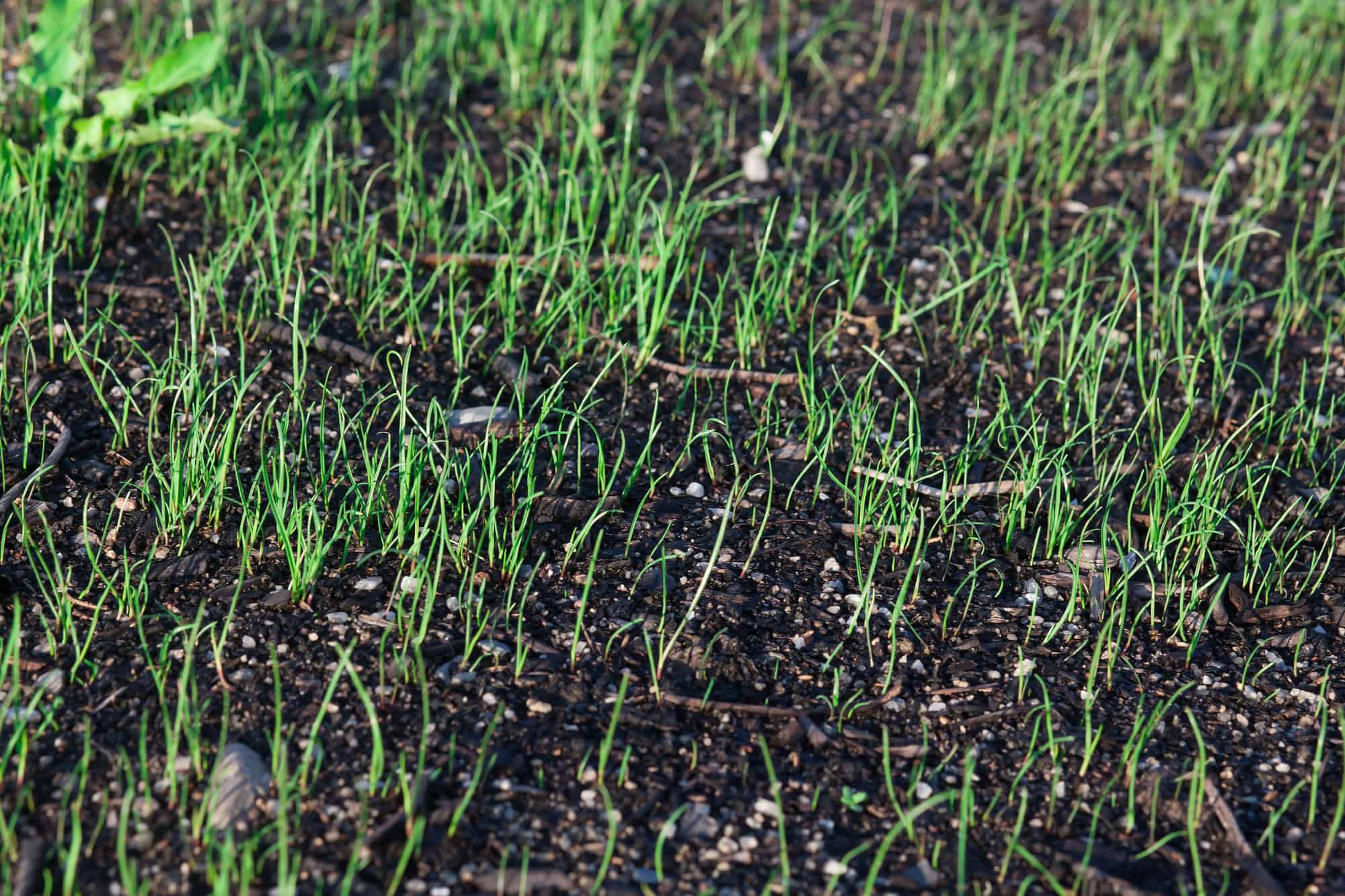
Seeding a lawn from scratch gives you more control over the result than any other method of lawn creation. Unlike turf, which arrives as a pre-grown product with the grass species already chosen for you, seeding a lawn lets you pick the exact grass varieties for your soil type, climate, light levels, and the way you plan to use the lawn. You can create a fine ornamental lawn, a hard-wearing family lawn, a shaded woodland lawn, or a wildflower-and-grass meadow, all from seed, and at a fraction of the cost of turf.
The trade-off is time. A seeded lawn takes 8 to 12 weeks to establish compared with 3 to 4 weeks for turf, and it demands more attention in those first weeks to protect the seedlings from drying out, washing away, and being eaten by birds. But if you are willing to put in the groundwork, a seeded lawn will repay you with a stronger, deeper-rooted sward that is perfectly matched to your conditions. This guide covers every step from soil preparation through to the first mow.
When to Seed a Lawn
Timing is the single biggest factor in whether seeding a lawn succeeds or fails. Grass seed needs soil temperatures of at least 8 to 10 degrees Celsius to germinate, consistent moisture for the first four to six weeks, and enough growing season ahead of it to establish before the stress of winter or summer.
In the UK, the best window for seeding a lawn is early to mid-autumn, from late August through to the end of September. Soil temperatures are still warm from summer, autumn rain keeps the surface moist without manual watering, and there is enough growing time before winter for the seedlings to develop a root system. The lack of weed competition is another advantage, as most annual weed seeds have already germinated and died off by late summer.
The second-best window is mid-spring, from mid-April to the end of May. Soil temperatures are rising through the ideal range and daylight hours are increasing. The downside is that spring-sown lawns face heavier weed competition, as weed seeds germinate alongside the grass, and you are more likely to need supplementary watering if spring turns dry. Avoid the common mistake of sowing too early. A March sowing into cold, wet soil will sit dormant for weeks and is far more likely to rot or be eaten by birds than a late April sowing into warmer ground. Our article on spring seeding mistakes covers the pitfalls in detail.
Summer sowing (June to August) is risky because of the heat and the watering demand. Winter sowing (November to February) is not recommended as the seed will not germinate until spring and is vulnerable to rotting, frost heave, and bird predation through the cold months.
Choosing the Right Grass Seed
Grass seed is sold in mixes rather than single species, and the mix you choose should match how you plan to use the lawn. UK lawn seed mixes typically contain combinations of perennial ryegrass, fescues, bent grasses, and smooth-stalked meadow grass in varying proportions. Each species brings different strengths.
Perennial ryegrass (Lolium perenne) is the workhorse of UK lawns. It germinates fast, usually within 7 to 10 days, establishes quickly, and tolerates heavy foot traffic, which makes it the dominant species in family lawn and hard-wearing mixes. The leaf is medium to coarse in texture. For a detailed look at this species, see our guide on perennial ryegrass.
Chewings fescue (Festuca rubra subsp. commutata) and creeping red fescue (Festuca rubra) are fine-leaved grasses that produce the dense, velvety appearance of an ornamental lawn. They tolerate closer mowing and lighter soils than ryegrass but are less hard-wearing. They also perform better in shade. More detail is available in our guides on Chewings fescue and creeping red fescue.
Browntop bent (Agrostis capillaris) is another fine grass used in ornamental and golf-green mixes. It is very dense and tolerates extremely close mowing but is slow to establish and aggressive once settled, sometimes crowding out other species. Our browntop bent guide covers its characteristics.
Smooth-stalked meadow grass (Poa pratensis) is a spreading grass that fills gaps naturally through underground stems called rhizomes. It is slower to establish than ryegrass, typically taking 14 to 21 days to germinate, but it produces a dense, self-repairing sward that tolerates both wear and drought once mature. See our article on smooth-stalked meadow grass for more.
For most domestic lawns in the UK, a general-purpose mix containing 40 to 60 percent perennial ryegrass and the balance in fescues is a reliable all-rounder. For a finer ornamental lawn, choose a mix with 80 percent or more fescues and bents. For a shaded lawn, look for a mix labelled for shade, which will be higher in creeping red fescue and wood meadow grass.
Preparing the Soil
Good soil preparation is the difference between a lawn that establishes evenly and one that comes up in patches, washes out in the first downpour, or fails entirely. The time you spend on this step will save you weeks of frustration later.
Start by clearing the area of all existing vegetation, debris, and large stones. If there is an existing lawn that you are replacing, remove it by cutting the turf off with a spade or turf cutter to a depth of about 30 millimetres, or kill it with a non-selective herbicide and wait two to three weeks for it to die back completely before proceeding.
Dig or rotavate the soil to a depth of 150 to 200 millimetres. This breaks up compaction, incorporates air into the soil, and creates a loose, open structure that grass roots can penetrate easily. If the soil is heavy clay, work in sharp sand or a soil improver at a rate of about one barrow load per 5 square metres to improve drainage. If the soil is very sandy and drains too fast, adding well-rotted compost or topsoil will improve its ability to hold moisture and nutrients. Getting the soil health right at this stage makes everything that follows easier.
Rake the surface to a fine tilth, removing any remaining stones, roots, and lumps. The finished surface should look like coarse breadcrumbs, with no clods larger than about 15 millimetres. Walk slowly across the area, treading it with your heels to consolidate the soil gently without compacting it. This process, known as heeling, firms the surface just enough to prevent the seed sinking into soft pockets while leaving the soil open enough for roots to grow.
Finally, rake the surface one more time to create a shallow, crumbly seedbed. Apply a pre-seeding fertiliser at the rate recommended on the packet, typically a low-nitrogen starter feed that promotes root growth rather than leaf growth. Rake the fertiliser in lightly so it is incorporated into the top 10 to 15 millimetres of soil.
Sowing the Seed
Check the seed packet for the recommended sowing rate. For most lawn seed mixes, this is between 25 and 50 grams per square metre. Ornamental mixes with finer seeds tend to be at the lower end, hard-wearing ryegrass mixes at the higher end. Sowing too thinly leaves gaps that weeds will colonise. Sowing too thickly creates overcrowding, which weakens the seedlings and increases the risk of fungal disease.
For an even distribution, divide the total amount of seed in half. Sow one half walking in one direction across the area, and the second half walking at right angles. This cross-hatching pattern ensures every part of the surface gets a consistent coverage. On a calm day, you can scatter the seed by hand with a gentle sweeping motion. On a breezy day, or for larger areas, a seed spreader gives a more even result.
After sowing, rake the seed into the surface very lightly with the back of a rake. The aim is to cover most of the seed with a thin layer of soil, no more than 2 to 3 millimetres deep, so that it has good contact with the moist soil underneath while still being close enough to the surface to receive light for germination. Do not bury the seed deeply. Grass seed needs light to trigger germination, and seed buried more than 5 millimetres deep will often fail to emerge.
Roll the surface lightly with a roller or walk over it on planks to press the seed into the soil. This improves seed-to-soil contact, which is the most important factor in fast, even germination. If you do not have a roller, the back of a spade pressed firmly across the surface in overlapping patches will do the same job.
Watering After Seeding
From the moment the seed goes down, the surface must be kept consistently moist until the seedlings are well established. This is not the same as soaking it. Waterlogging will wash seed into puddles and drown germinating seedlings. The goal is a surface that is damp to the touch but not sitting in water.
Use a fine sprinkler or a hose with a gentle rose attachment. A high-pressure jet will blast the seed out of position and erode the prepared surface. Water for 10 to 15 minutes two to three times per day in dry weather, reducing to once per day if rain is providing some of the moisture. The most critical period is the first 14 days. If the surface dries out completely at any point before the seedlings emerge, the germinating seeds will die. There is no recovering from that, as you will need to reseed the bare areas.
Once the seedlings are up and growing, typically after 10 to 21 days depending on the species, you can gradually reduce the watering frequency while increasing the depth of each session. This encourages the young roots to grow downwards in search of moisture rather than staying at the surface. By week six, the grass should be deep-rooted enough to cope with a normal watering schedule. Our guide on how often to water your lawn covers the transition to established-lawn care.
Protecting the Seedbed
Birds are the biggest threat to a newly sown lawn. Sparrows, finches, and pigeons will eat large quantities of grass seed in a short time, leaving bare patches in the lawn. The most effective deterrent is a light covering of horticultural fleece or fine netting pegged down over the seeded area. This also helps retain moisture and provides a degree of frost protection for early or late season sowings. Remove it once the grass is about 25 millimetres tall.
Other options include laying twigs or branches across the surface to make it harder for birds to land, or using a bird scarer or reflective tape. Treated seed coated with a bird deterrent is available from some suppliers, though results are mixed.
Heavy rain shortly after sowing can wash seed into rivulets and low spots, leaving bare areas on higher ground. If heavy rain is forecast within a day or two of sowing, it is worth covering the area with fleece to break the force of the rain. On slopes, consider laying a biodegradable erosion control mat or scattering a thin layer of straw over the seed to hold it in place.
When the Grass Comes Up
Germination times vary by species. Perennial ryegrass is the fastest, typically appearing within 7 to 10 days. Fescues take 10 to 14 days. Smooth-stalked meadow grass is the slowest at 14 to 21 days. A mixed seed will germinate unevenly, with the ryegrass showing first and the finer grasses filling in over the following weeks. Do not panic if the lawn looks patchy in the first two weeks, as the slower species have not yet appeared.
The seedlings will be thin, pale, and delicate for the first few weeks. Keep foot traffic off the area entirely until the grass is at least 50 millimetres tall, which is usually four to six weeks after sowing. If you need to cross the area for watering, use planks to spread your weight.
The First Mow
The first mow is a milestone, but it needs to be done carefully. Wait until the grass is 60 to 75 millimetres tall, then set the mower to its highest setting and remove no more than a third of the blade length. Use a sharp blade. A dull blade will tear the young seedlings out of the soil rather than cutting them cleanly, and that can undo weeks of work. Our article on how sharp mower blades should be covers the standards to aim for.
For the first two or three cuts, use a rotary mower rather than a cylinder mower if possible. Cylinder mowers can pull young plants out of loosely consolidated soil because of the way the cutting action works. A rotary mower with a sharp blade gives a cleaner cut on young grass without the pulling force.
After the first few mows, gradually lower the cutting height over successive cuts, dropping by one notch each time, until you reach your preferred mowing height. For most UK lawns, this is between 25 and 40 millimetres. Do not rush to get there. The young grass needs time to tiller, which means producing side shoots that thicken the sward, and mowing too short too early prevents this.
Feeding and Weed Control
Do not apply any fertiliser for the first six to eight weeks after sowing, beyond the pre-seeding starter feed you applied at soil preparation. The seedlings are too young to handle a full-strength feed and the risk of root burn is high. After eight weeks, a light application of a balanced lawn fertiliser at half the recommended rate will give the establishing grass a boost. Build up to a full feeding programme from the following season.
Do not apply any herbicide for at least 12 weeks after sowing. Most selective lawn herbicides will damage or kill young grass seedlings. If weeds appear, and they almost certainly will in a spring sowing, remove them by hand. Once the grass has been mown at least four or five times and is well established, it is safe to apply a selective herbicide if weed pressure is still a problem. Our guide on when to apply weed killer covers the safe timing.
Seeding a Lawn vs Laying Turf
Both methods produce a good lawn, but they suit different situations. Seeding is cheaper, typically costing a quarter to a third of the price of turf for the same area. It gives you a wider choice of grass species, which means you can tailor the lawn to your exact conditions. And a seeded lawn develops its root system in situ from day one, which often produces a deeper, more resilient root structure than turf, where the roots are severed at harvest and need to regrow.
Turf gives you an instant lawn. You go from bare soil to a green surface in a single day, and the lawn is usable within three to four weeks. Turf is also less vulnerable to birds, drought, and washout because it arrives as a mature plant rather than a bare seed. For areas with erosion risk, steep slopes, or where you need an immediate result, turf is the better choice.
If time is not a factor and you want the best long-term result for the least cost, seeding wins. If you need a lawn quickly or the site conditions make seed establishment difficult, turf is the pragmatic choice. Many lawn owners use a combination: turf for the main visible area and seed for the edges, shaded corners, and difficult spots where a specific grass mix is needed.
Overseeding an Existing Lawn
Seeding a lawn does not have to mean starting from scratch. Overseeding, which is scattering seed into an existing lawn to thicken it up and fill bare patches, is one of the most effective and underused lawn improvement techniques.
The best time to overseed is early autumn or mid-spring, exactly the same windows as for new sowing. Mow the existing lawn short, to about 20 millimetres, and scarify or rake the surface vigorously to remove thatch and expose bare soil. Scatter the seed at about half the rate you would use for a new lawn and rake it in lightly. Top-dress with a thin layer of compost or fine topsoil to improve seed-to-soil contact, and water as you would for a new sowing.
Overseeding is particularly useful for lawns thinned by drought, disease, shade, or heavy wear. It introduces fresh, vigorous grass plants into the sward without the disruption of tearing up and replacing the whole lawn. For more on timing and technique, see our guide on when to overseed your lawn.
Common Mistakes When Seeding a Lawn
The most common mistake is sowing too early in spring when the soil is still cold. Seed sown into soil below 8 degrees Celsius will sit dormant for weeks, rotting or being eaten rather than germinating. Wait until the soil has warmed consistently. A soil thermometer costs a few pounds and removes the guesswork.
The second most common mistake is letting the seedbed dry out in the first two weeks. Even one afternoon of the surface drying to a crust can kill thousands of germinating seeds. If you cannot commit to watering two or three times a day for the first fortnight, choose turf instead or wait for a period when rain is forecast.
Other frequent errors include burying the seed too deeply, which prevents light from reaching it and stops germination; sowing at too high a rate, which causes overcrowding and weak, spindly seedlings; mowing too soon or too short on the first cut, which pulls seedlings out of the soil; and applying fertiliser or herbicide too early, which burns the young roots or kills the grass outright.
Seeding a Lawn – Frequently Asked Questions
How long does it take for grass seed to grow?
Perennial ryegrass germinates in 7 to 10 days, fescues in 10 to 14 days, and smooth-stalked meadow grass in 14 to 21 days. A mixed seed lawn will look fully green within three to four weeks as the slower species catch up. Full establishment, where the lawn is thick enough to use normally, takes 8 to 12 weeks.
What month is best for seeding a lawn in the UK?
September is the best single month. Soil temperatures are warm, autumn rain keeps the surface moist, and weed competition is low. Late April and May are the best spring options. Avoid sowing in June through August unless you can commit to heavy watering, and avoid November through March when soil temperatures are too low for germination.
How often should I water newly sown grass seed?
Two to three times per day in dry weather for the first two weeks, keeping the surface consistently moist without waterlogging. After the seedlings emerge, reduce to once per day, then every other day from week four onwards. By week six, transition to a normal watering schedule.
Can I seed a lawn over an existing one?
Yes, this is called overseeding. Mow the existing lawn short, scarify or rake to expose bare soil, scatter seed at half the new-lawn rate, top-dress with fine compost, and keep the surface moist. Overseeding is one of the best ways to thicken a tired or patchy lawn without starting from scratch.
Do I need to cover grass seed after sowing?
Raking the seed lightly into the top 2 to 3 millimetres of soil and rolling the surface is usually sufficient. A light covering of horticultural fleece or fine netting is recommended to protect against birds. Do not bury the seed more than 5 millimetres deep, as grass seed needs light to germinate.
Why is my grass seed not germinating?
The most common causes are soil temperature too low (below 8 degrees Celsius), the surface drying out between waterings, seed buried too deeply, or old seed that has lost its viability. Check the date on the seed packet and the soil temperature, adjust your watering, and be patient. Some species take up to three weeks to appear.
Should I use a seed spreader or sow by hand?
For areas larger than about 50 square metres, a seed spreader gives a more consistent coverage and reduces the risk of patchy germination. For smaller areas, hand sowing with the cross-hatching technique described in this article works well. On windy days, a spreader is always the better option to prevent seed drifting off target.
When can I mow a newly seeded lawn?
Wait until the grass is 60 to 75 millimetres tall, typically four to six weeks after sowing. Set the mower to its highest setting and remove no more than a third of the blade length. Use a sharp blade to avoid pulling seedlings out of the soil. Lower the cutting height gradually over subsequent mows.
Sources
- Royal Horticultural Society. “Lawns: Sowing Seed.” RHS Gardening Advice. https://www.rhs.org.uk/lawns/seed-sowing
- The Lawn Association. “Establishing a New Lawn from Seed.” Technical Guidance Notes.
- Sports Turf Research Institute (STRI). “Grass Species Selection for Amenity Turf.” Applied Research. https://strigroup.com/
- British Seed Houses. “Lawn Seed Selection and Sowing Guide.” Professional Guidance. https://www.britishseedhouses.com/
- Germinal Seeds. “Amenity Grass Seed Technical Data.” Species Performance Data. https://www.germinal.com/