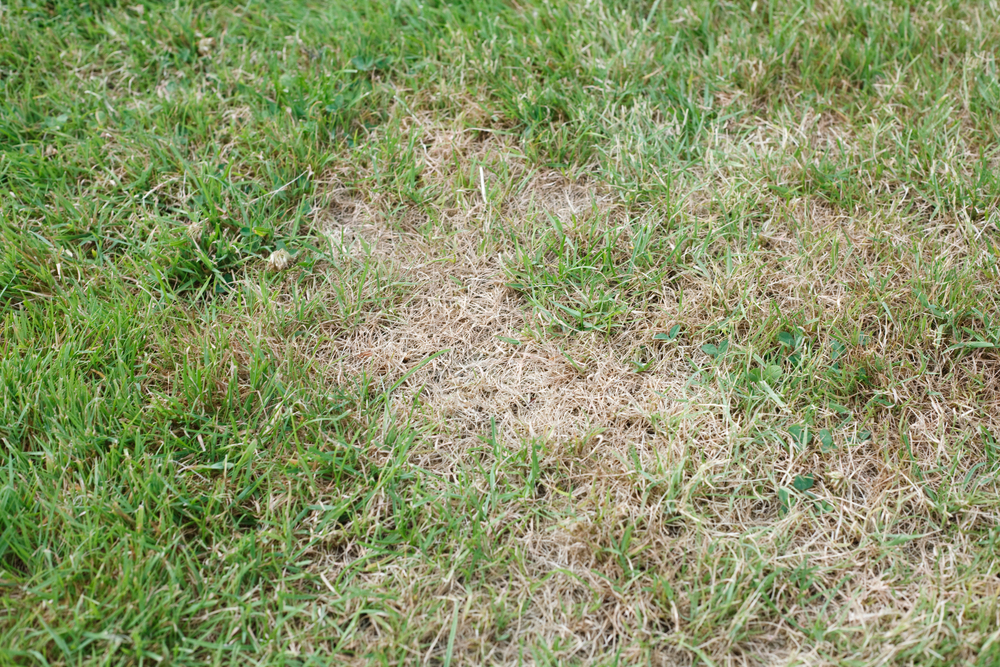
Small, round, straw coloured patches scattered across your lawn in summer, each about the size of a coin and rarely bigger than 5 to 8cm (2 to 3 inches), point to a fungal disease called dollar spot. Look closely in the early morning and you may see fine white cobwebby threads over the patches before the dew dries. The disease takes hold on lawns that are short of nitrogen and stressed by dry soil and long dewy nights. The good news is that dollar spot is one of the most treatable lawn diseases, because the single most effective response is also the simplest: feed the lawn. A nitrogen feed alone clears many outbreaks within two weeks, no fungicide required.
How to Be Sure It Is Dollar Spot
Dollar spot has features that separate it from drought patches and other diseases. The spots are small and round, usually 2 to 8cm across, and start as a slightly sunken bleached or straw coloured patch. Where the lawn is closely mown the patches can be sharp and distinct, like someone pressed a coin into the turf. As the disease spreads, neighbouring spots merge into larger irregular patches, which is when people often notice it.
The deciding test is on the individual blades. Pull a few affected blades close and look for lesions shaped like an hourglass, pale tan in the centre with a darker reddish brown band at each edge running across the width of the blade. No other common lawn disease leaves that hourglass mark, so it is the surest sign. The second clue appears at dawn. When the fungus is actively growing, fine white mycelium that looks like cobweb or candy floss sits over the patches while the dew is on the grass, then vanishes as the surface dries. If you see hourglass lesions and morning cobweb on small straw spots, you can be confident it is dollar spot rather than simple drought.
Why It Appears, and Why Hungry Lawns Suffer Most
Dollar spot is caused by the fungus Clarireedia, until recently grouped under the name Sclerotinia homoeocarpa. It becomes active when daytime temperatures sit between roughly 15 and 30C (60 to 85F), which covers most of summer, and when the grass stays wet for long periods, especially through warm, humid, dewy nights. Long dew periods, morning fog and inconsistent soil moisture create the wet leaf conditions the fungus needs to infect.
The reason underfed lawns suffer worst comes down to growth and recovery. Nitrogen drives leaf growth, and a lawn with plenty of it grows fast enough to push out new healthy tissue and outpace the fungus, while also recovering quickly from any damage. A nitrogen starved lawn grows slowly, cannot replace the infected blades, and lets the disease gain ground. That is why dollar spot is widely read by turf professionals as a sign that the lawn is hungry. It tends to strike in mid to late summer when the spring feed has worn off and many people have stopped feeding, leaving the grass short of nitrogen exactly when the weather favours the fungus. Drought stress makes it worse, because a lawn fighting for water has even less in reserve to fight off disease.
The Fix That Works Without Chemicals
Start with feeding, because it treats the cause. Apply a nitrogen rich summer lawn fertiliser at the rate on the box, typically 35g per square metre. A product such as Miracle-Gro EverGreen or a gentler option like Westland SafeLawn at around £12 ($15) for 150 square metres works well, and a typical 50 square metre lawn needs roughly 1.75kg per application. Choose a slow release granular feed in hot weather rather than a strong quick release one, because a sudden surge of soft growth can stress the grass further in heat. Within a week or two the grass grows away from the disease and the spots fill in with healthy blades.
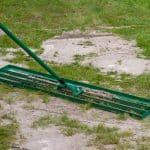
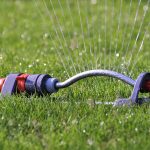
While the feed works, take away the wet leaf conditions the fungus depends on. Water deeply but early in the morning, before 9am, so the blades dry quickly through the day, and never water in the evening, which leaves the grass wet all night. Aim for about 25mm (one inch) a week in one or two soakings rather than daily sprinkles, which keep the surface permanently damp. On still, dewy mornings you can knock the dew off the lawn before the sun is up by dragging a hose or a long pole across it, or simply by mowing, which removes the film of water that the fungus needs and noticeably slows its spread.
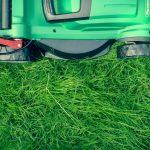
Collect the clippings while the disease is active rather than leaving them, because the fungus travels in infected clippings and on mower blades. Clean the mower deck after cutting an infected lawn so you are not spreading spores at the next mow. Keep the cut at a sensible summer height of 4 to 5cm (about 1.5 to 2 inches), since scalping weakens the grass and gives the fungus an opening. Between feeding, morning watering, dew removal and clipping collection, most outbreaks clear up without any fungicide at all.
Stopping It Coming Back Next Summer
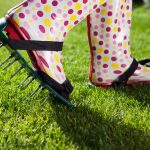
Prevention is mostly a feeding calendar. Keep the lawn on a steady supply of nitrogen through the growing season rather than one big spring feed followed by months of nothing, because the late summer gap is when dollar spot pounces. A light summer feed in June or July keeps the grass growing steadily and rarely gives the disease its opening. Reducing thatch by scarifying in autumn helps too, as a thick thatch layer holds moisture against the base of the grass and harbours fungal material over winter.
It helps to know what dollar spot is not, so you treat the right problem. Drought patches are larger, more irregular and have no hourglass lesions or morning cobweb, and they green up within days once you water, which dollar spot will not. Red thread, the other common summer disease, shows pink or red thread like growth at the tips of the blades rather than tan hourglass lesions across them, and it also signals low nitrogen, so the feeding response is similar. Leatherjacket or chafer grub damage pulls up in spongy patches that lift like a loose carpet and is often torn by birds, with no fungal lesions at all. Matching the symptom to the cause stops you reaching for a fungicide when the lawn simply needs feeding, or feeding when the real issue is grubs in the root zone.
Mowing technique plays a quiet part in prevention too. A sharp blade cuts each leaf cleanly, leaving a small wound that seals quickly, while a blunt blade tears the tip and leaves a ragged, frayed edge that stays open and gives the fungus an easy way in. Sharpen the blade at least once or twice a season, and more often on a large lawn, and the difference in how fast the grass recovers is clear. Collecting clippings during an active outbreak, then switching back to leaving them once the lawn is healthy, gives you the disease control when you need it and the free feed the rest of the time.
Improving airflow and drainage finishes the job. Aerate compacted lawns in autumn to help the surface dry faster after dew and rain, and cut back overhanging shrubs that trap humid air and shade over the lawn, since shaded, still, damp corners are where dollar spot lingers longest. Get those basics right, a fed lawn, morning watering, a sharp higher cut and good airflow, and dollar spot rarely returns with any force. Left untreated it will not usually kill an established lawn, but it leaves unsightly patches that take weeks to recover and invite weeds into the thinned turf, so dealing with it early is always the cheaper path.