Reaching for the weedkiller on a hot, sunny afternoon feels like the obvious time to deal with the dandelions and clover taking over. It is also the time most likely to leave you with scorched grass and weeds that shrug off the treatment and grow back. Selective lawn weedkillers work best inside a fairly narrow temperature band, roughly 10 to 24 degrees Celsius (50 to 75 degrees Fahrenheit), and lose reliability once the air climbs past about 28 to 29 degrees Celsius (around 85 degrees Fahrenheit). Spray in a heatwave and you can hit the worst of both worlds: damage to the lawn you are trying to improve and survival of the weeds you are trying to kill.
The advice you find on a manufacturer label, that no herbicide should be used outside roughly 4 to 29 degrees Celsius (40 to 85 degrees Fahrenheit), is not box covering caution. It comes from how the chemicals behave and how plants respond to heat. Once you understand the biology, the timing rules make sense and you stop wasting product on days when it cannot do its job.
Why Heat Makes a Selective Weedkiller Backfire
Most lawn weedkillers are systemic and selective. Systemic means the chemical is absorbed into the leaf and carried through the plant to the roots, which is how it kills a tap rooted weed like a dandelion rather than just burning the top off. Selective means the active ingredients, commonly 2,4-D, MCPA, dicamba and mecoprop in various blends, target broadleaf weeds while leaving narrow leaved grasses largely unharmed at the correct dose. Both of those properties depend on the weed actively growing and moving water and sugars around, and that is exactly what stops in extreme heat.
When temperatures push above about 29 degrees Celsius and the soil is dry, plants defend themselves. They close the tiny pores on their leaves called stomata to stop losing water, they slow or pause photosynthesis, and a drought stressed weed thickens the waxy cuticle on its leaf surface. A weed in that state absorbs far less of the spray, and what little gets in does not translocate down to the roots because the plant has throttled back its internal transport. The visible result is a weed that browns on top, looks beaten, then regrows from an undamaged root crown a fortnight later. You used the chemical, paid for it, and the dandelion won.
At the same time the heat works against the grass. Some active ingredients, particularly 2,4-D, dicamba and MCPA, turn volatile in high temperatures, meaning they evaporate off the treated leaf as a vapour. That vapour can drift onto plants you never intended to spray, scorching the edges of borders, vegetable beds and even the lawn itself, and the chemical reactions that damage plant tissue speed up as temperatures rise. A lawn already stressed by drought has little spare capacity to shrug off that extra insult, so the grass that should have been spared ends up yellowed or burned. Spraying selective weedkiller in a heatwave can scorch the very grass it is designed to protect.
The Conditions That Actually Get Weeds Killed
The goal is to spray when the weed is growing strongly, well watered, and able to drink the chemical down into its roots. That points to a few clear rules. Aim for a day when the temperature sits between roughly 12 and 24 degrees Celsius (54 to 75 degrees Fahrenheit), with no heatwave forecast for the following 48 hours. If a hot spell has the lawn dry and the weeds wilting, wait for it to break, or water the lawn well a day or two beforehand so the weeds are growing again before you treat. A weed that is turgid and actively pulling water up will pull the herbicide down with it.
Time of day counts within a warm spell. Early morning, after the dew has lifted but before the heat builds, or the cooler hours of early evening, both keep the leaf temperature down and reduce volatility. Avoid the midday sun. Check the wind too, and only spray in still or very light air, because a breeze carries droplets onto plants you want to keep. Do not spray if rain is due within the period the label specifies, often around six hours, since rain washes the chemical off before the leaf has absorbed it. Equally, bone dry soil and a weed under drought stress is a poor target, so the sweet spot is warm but not hot, with moisture in the ground.
Leave the lawn unmown for three to four days before treating, so the weeds have full leaves to catch the spray, and wait a further three to four days after treating before mowing, so the chemical has time to move into the roots before you remove the foliage. Cutting too soon takes off the treated leaf area and stops the kill halfway. If a label allows a reduced rate in warmer conditions, using the lower end of the range and applying in the cool of the day is safer than a full dose at the height of the heat.
Products, Doses and the Spot Treatment Alternative
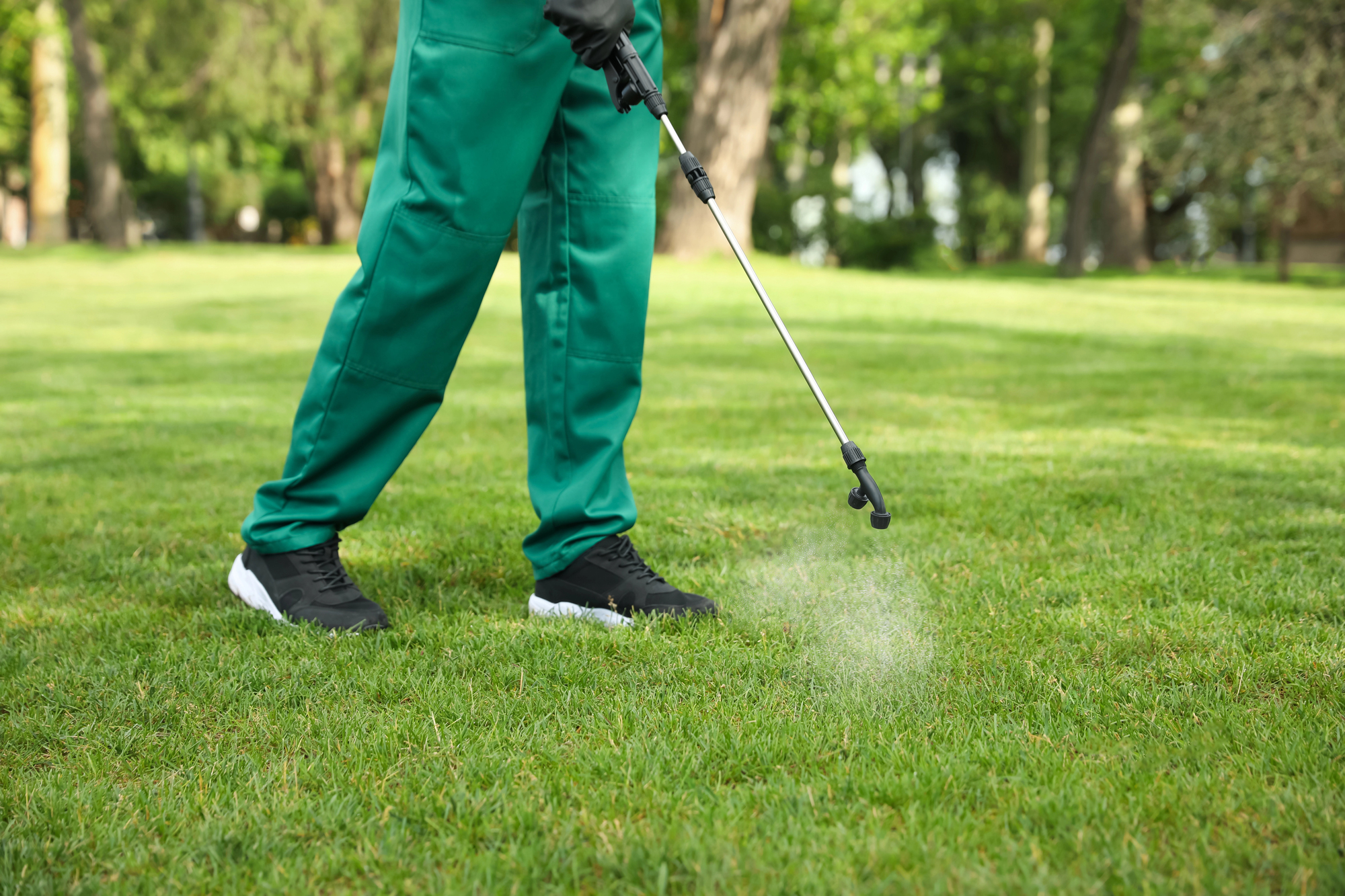
Selective lawn weedkillers are sold both ready to use and as concentrates. A ready to use trigger spray, useful for spot treating a handful of weeds, costs around £8 to £12 (about $10 to $15) at B&Q, Wickes, Home Depot, Lowe’s or Amazon. A concentrate that you dilute and apply through a watering can or pressure sprayer is far better value for a whole lawn, often around £12 to £18 (about $15 to $23) for enough to treat several hundred square metres. Always mix to the exact rate on the label, because doubling the dose to be sure does not kill the weed faster, it simply raises the risk of scorching the grass and wasting chemical. A typical dilution works out at a set number of millilitres per litre of water applied evenly over a stated area, so measure rather than guess.
In high summer the smarter approach for many gardens is to skip the blanket spray altogether and spot treat. Dealing with individual weeds by hand, with a knife or a long handled weed puller for tap rooted offenders like dandelions and plantains, removes the weed without putting any chemical on a heat stressed lawn. For deep tap roots, getting the whole root out is the point, since a snapped root regrows, so loosen the soil and lever the weed up entire. Spot treating with a small amount of ready to use weedkiller on the few weeds that resist hand pulling, on a cooler day, keeps chemical use to a minimum and the grass out of harm’s way.
There is also a timing argument for patience. Many lawn weeds are far easier to kill in the milder, moist conditions of late spring and early autumn, when both the grass and the weeds are growing actively and the heat is not working against you. A dandelion sprayed in September, as the plant is drawing reserves down into its roots for winter, takes the herbicide straight to the root with it and dies properly. The same dandelion sprayed in a July heatwave often survives. Sometimes the most effective thing you can do with the weedkiller in midsummer is put it back on the shelf and wait a few weeks.
What Getting It Wrong Costs You
The price of spraying in the heat is rarely just a wasted afternoon. You can end up with yellow scorch streaks across the lawn where the chemical burned stressed grass, damage to nearby flowers and shrubs from vapour drift, and a weed population that barely flinched and is back within weeks, tempting you into a second dose that compounds the damage. A drought stressed lawn pushed through a herbicide application in a heatwave can take the rest of the season to recover, turning a tidy up job into a repair job.
The takeaway is to treat temperature as the deciding factor, not the calendar or your free time. Keep applications inside the 10 to 24 degree Celsius window, on weeds that are growing and watered rather than wilting, in the cool of the morning or evening, with no heat or rain due. When the forecast is hot, hand pull what you can and wait for the weather to turn. The weeds will still be there, and a cooler day will kill them properly without taking the grass down with them.